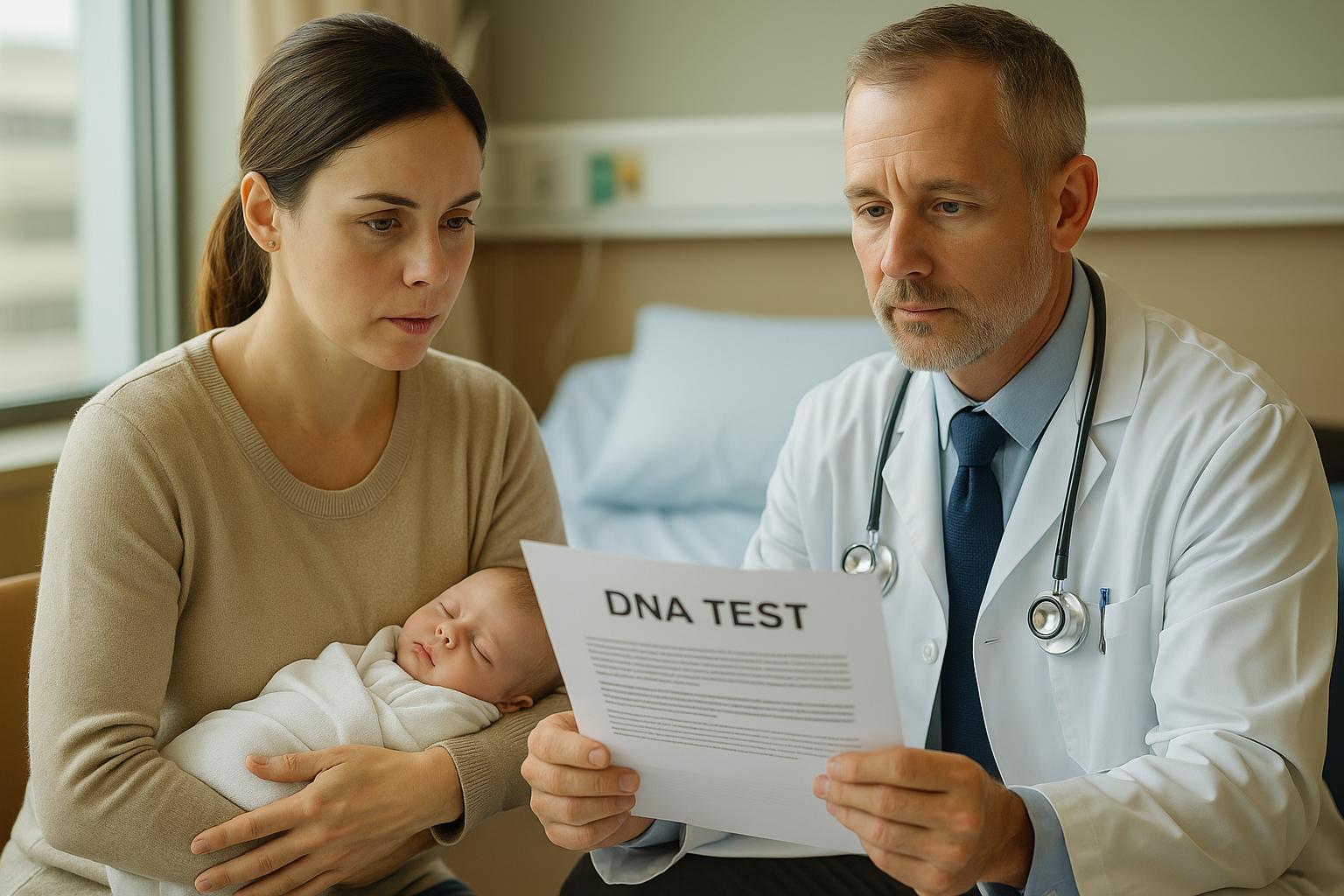
Ohio parents could soon be offered DNA testing for their newborns under a new proposal aimed at giving families greater certainty about parentage and reducing long-term legal disputes. The legislation, known as the Right to Know Act, was introduced by State Representative Josh Williams, a Republican from Toledo who serves as Majority Whip in the Ohio House of Representatives.
If enacted, the bill would require hospitals to inform new parents that they have the option to undergo DNA testing immediately after birth to confirm both maternity and paternity. The testing would remain strictly voluntary. “Parents have the right to know,” Williams said while outlining the bill. “This allows families to establish paternity early and avoid costly and emotionally draining legal battles years down the line.”
Williams said the bill is designed to address a growing number of paternity disputes in Ohio, particularly among unmarried parents. Under current law, fathers who wish to establish paternity must often go through the court system, incurring legal fees, filing costs, and delays that can stretch for months. “Right now, if a father wants to establish paternity, he’s looking at court filing fees, attorney costs, and time off work,” Williams said. “This simplifies the process and cuts down on conflict.”
The proposal would require hospitals to notify both parents of the option for genetic testing after birth, ensuring that the decision is mutual and fully informed. Either parent, however, could decline the offer. The measure stops short of mandating testing, instead emphasizing informed choice and transparency. Hospitals would not be responsible for conducting the tests themselves but would provide information on how to access certified laboratories offering the service.
Williams, who represents Ohio’s 44th District, said the legislation also supports broader efforts to promote family stability. He cited research from Bowling Green State University showing that family instability can contribute to behavioral and emotional challenges in children. “If questions of paternity come up five, six, seven years later, it can be traumatic for the child,” he said. “We’re trying to avoid that and support strong, stable families.”
The proposed Right to Know Act is part of Williams’ larger “Family First” legislative agenda, which aims to strengthen family bonds and improve child welfare across the state. Other components of the package include the Baby Bonus Act, which offers financial support to new parents, the Invest in Marriage Act, a paid paternity leave initiative, and expanded insurance coverage for in-vitro fertilization treatments.
The bill has drawn attention for its potential to reshape how Ohio handles paternity establishment and family disputes. Supporters argue that early testing could prevent years of legal battles and emotional stress for families, particularly in cases where parentage is uncertain. Advocates also believe that early genetic confirmation can provide greater security for children, ensuring that both parents are recognized and legally accountable from the start.
However, some observers have raised questions about the potential costs and logistics of implementing the law. The state is currently awaiting a fiscal analysis to determine whether hospitals or public agencies would need additional funding to meet notification requirements. Williams said he expects the financial impact to be minimal, as the testing itself would remain optional and privately funded by families choosing to participate.
Williams emphasized that the proposal’s primary goal is to promote clarity and trust within families, not to impose government oversight. “This is about giving families clarity from the very beginning,” he said. “That’s something every child deserves.”
The legislation is expected to move into committee hearings in the coming months, where lawmakers will examine details such as privacy protections, parental consent, and hospital responsibilities. Williams expressed optimism that bipartisan support could help the measure advance quickly, noting that both conservative and progressive lawmakers have expressed interest in policies that strengthen family cohesion.
If approved, Ohio would become one of the first states in the nation to formally offer DNA testing as an optional service for new parents through hospitals. The move could set a precedent for other states exploring similar measures aimed at reducing family court caseloads and promoting stable childhood environments.
As debate over the Right to Know Act continues, supporters maintain that the bill represents a forward-looking approach to family policy — one that blends modern science with the traditional values of responsibility and transparency. For Williams, the initiative marks another step in his mission to prioritize family well-being in Ohio’s legislative agenda. “Our goal,” he said, “is to make sure every parent starts from a place of truth, and every child grows up in a home built on certainty and care.”