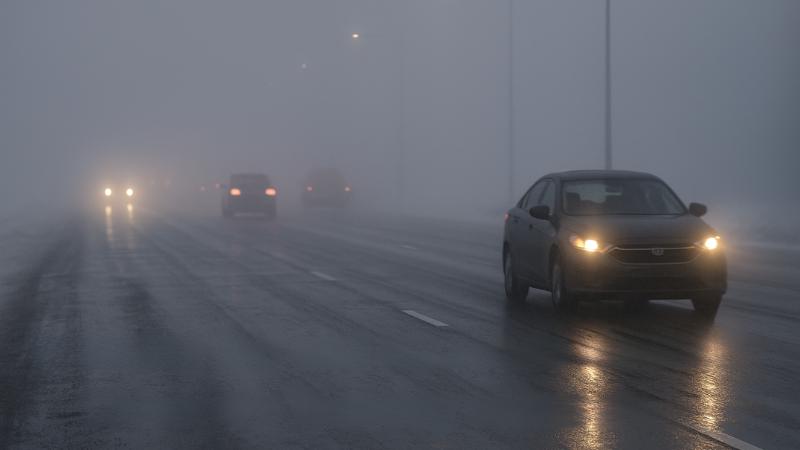
Patchy and freezing fog settling over parts of the Chicago area early Tuesday led to difficult travel conditions during the morning rush, with officials cautioning motorists about sudden visibility drops and the potential for slick roads. The National Weather Service noted that the rapidly forming fog created visibility of half a mile or less in several communities, particularly in areas south and west of the city. The agency added that the combination of frozen surfaces and lingering moisture made travel especially challenging as temperatures hovered below freezing shortly before dawn.
The hazardous start to the day followed a round of Monday night snowfall that added another layer of difficulty for drivers. The snowfall caused widespread delays throughout the region, contributing to ground stops and prompting the cancellation of hundreds of flights at both O’Hare International Airport and Midway International Airport. Airline travelers continued to experience residual delays into Tuesday as crews worked to clear taxiways and maintain safe operations. Transportation officials emphasized that winter conditions remain unpredictable, and even light snowfall can create significant disruptions when paired with freezing temperatures.
By early morning, the Illinois Department of Transportation’s “Getting Around Illinois” road conditions map indicated that most major routes throughout the Chicago metropolitan area were either partly or mostly covered with snow or ice. The agency urged drivers to reduce speed and allow extra travel time, noting that untreated roads, bridges, and overpasses can become especially slick during periods of freezing fog. Road crews continued salting and plowing operations through the morning, though officials warned that the fog slowed some efforts and limited visibility for plow drivers as well.
The National Weather Service stated that the freezing fog was expected to linger through at least 8 a.m., coinciding with the heaviest commuting period. Forecasters explained that freezing fog forms when supercooled water droplets freeze on contact with cold surfaces, creating a thin but dangerous glaze that can be difficult for drivers to detect. Motorists were urged to use low-beam headlights, maintain increased following distance, and remain alert for sudden patches of dense fog that could reduce visibility without warning.
Despite the challenging conditions, no major closures were reported early in the morning, though officials said minor collisions and traffic slowdowns were likely as commuters adjusted to the slippery pavement. Weather forecasters noted that conditions were expected to gradually improve after sunrise, but warned that shaded and untreated surfaces could remain slick for several hours. Travelers across the Chicago area were encouraged to monitor updates throughout the day as changing temperatures and lingering moisture could continue to affect road conditions.
The combination of freezing fog, recent snowfall, and colder-than-average temperatures reminded residents that winter weather hazards can develop quickly and create widespread impacts. Authorities reiterated that even short-lived weather events can create significant risks, urging all drivers to proceed with caution until conditions fully stabilize.