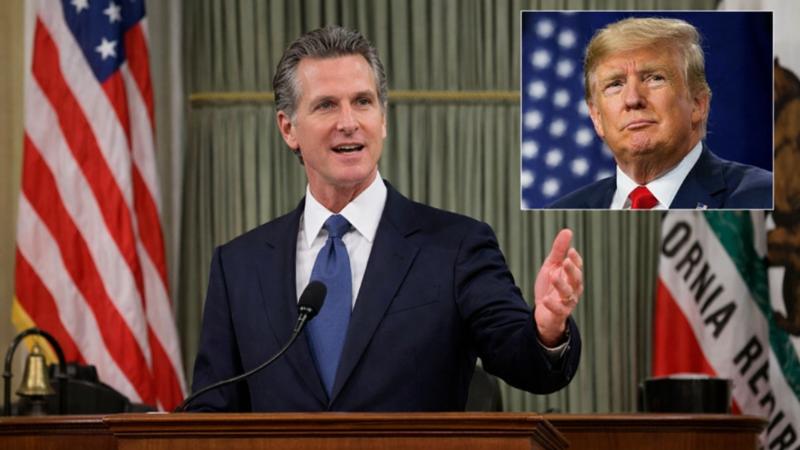
California Gov. Gavin Newsom is set to use his final State of the State address on Thursday to portray the state as a governing model for the nation, drawing a sharp contrast with what he describes as instability and dysfunction at the federal level under President Donald Trump. The Democratic governor plans to argue that California’s policy direction and values stand in opposition to those coming from Washington, positioning the state as both a counterweight and an alternative to the current federal leadership.
According to excerpts released ahead of the address, Newsom intends to warn that the country is facing a profound challenge to democratic norms and core principles. He is expected to frame the moment as one of unusual gravity, saying the values he believes define California are under direct pressure. The remarks come as Newsom approaches the end of his second and final term, with growing national attention focused on his political future and possible presidential ambitions in 2028.
In outlining his administration’s record, Newsom plans to highlight state efforts to confront long-standing issues including homelessness, crime, rising housing costs, and health care affordability. He is expected to renew calls for action against large investment firms purchasing significant numbers of residential properties, arguing that such practices are driving up rents and placing homeownership further out of reach for many Californians. Housing policy has been a central focus of his tenure, as the state continues to struggle with supply shortages and affordability pressures despite sustained economic growth.
Newsom has historically used the annual address to defend California against critics who point to its high cost of living and its nation-leading homeless population. In past speeches, he has emphasized the state’s economic scale, technological innovation, and climate initiatives, while also pushing back against claims that progressive governance has weakened public safety or economic opportunity. This year, he is expected to reprise those themes and dismiss persistent criticism as politically motivated, using pointed language to characterize what he views as exaggerated attacks on the state.
The timing of the speech is also significant, coming one day after California marked the one-year anniversary of devastating wildfires in the Los Angeles region that killed 31 people and destroyed entire neighborhoods. In the aftermath of the fires, Newsom sought billions of dollars in federal aid to support recovery and rebuilding efforts. Those requests have gone unanswered, deepening already strained relations between the governor and the Trump administration during the president’s return to office.
Tensions between Sacramento and Washington have extended well beyond disaster funding. The two sides have clashed over the deployment of National Guard troops in Los Angeles, environmental regulations, and the federal government’s decision to block California’s planned ban on the sale of new gas-powered vehicles by 2035. The state has filed more than 50 lawsuits against the Trump administration, underscoring the breadth of the legal and political battles between them.
Newsom has also taken a prominent role in national political strategy, supporting redistricting efforts aimed at improving Democratic prospects in congressional elections. He has repeatedly questioned Trump’s commitment to democratic norms, citing the events of Jan. 6, 2021, as a defining moment. Those concerns are expected to inform the broader message of his address, which analysts say is aimed not only at lawmakers in the Capitol but also at a national Democratic audience.
In addition to the address, Newsom is scheduled to release his proposed state budget on Friday, following several years marked by fiscal pressures and budget shortfalls. The proposal is likely to reflect the competing demands of maintaining social programs, addressing climate-related costs, and managing revenue volatility.
Thursday’s address will mark Newsom’s first in-person State of the State before lawmakers since 2022. In recent years, he has opted for written or prerecorded messages, citing the challenges posed by dyslexia when delivering lengthy speeches live. With the state constitution barring him from seeking a third term, the speech is widely viewed as a capstone moment, offering both a summation of his governorship and a signal of how he hopes California’s record will be judged on the national stage.