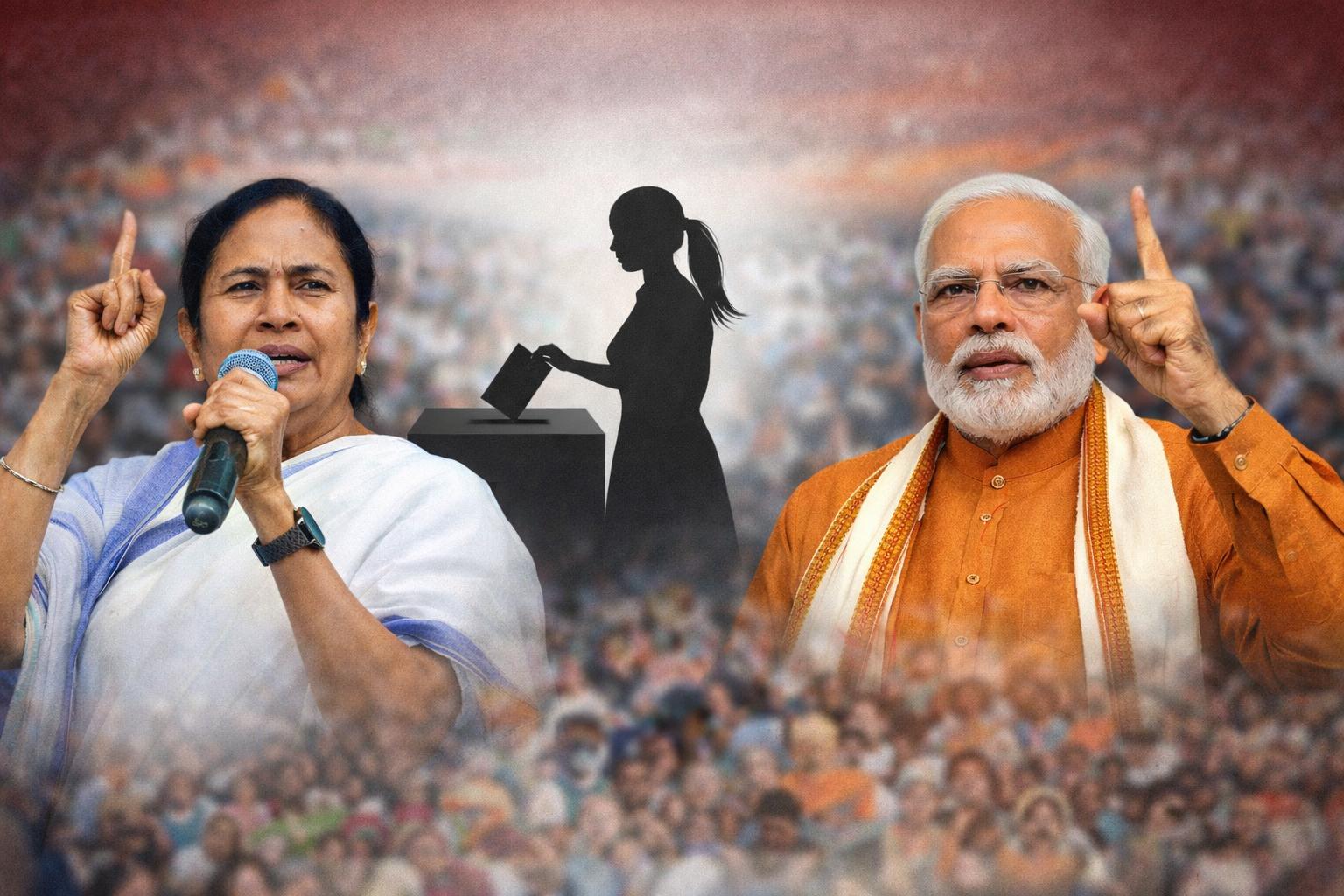
The upcoming West Bengal Assembly elections in 2026 are shaping up to be a high-stakes political battle, but the real deciding factor may not be traditional party loyalties or leadership narratives. Instead, the spotlight is firmly on women voters, a powerful and steadily growing electoral force that could ultimately determine the outcome. With polling scheduled in two phases on April 23 and April 29, both the ruling Trinamool Congress and the Bharatiya Janata Party have intensified efforts to connect with this crucial demographic.
Women now make up nearly half of Bengal’s electorate, with over 3.4 crore registered voters. Their consistent participation in elections has made them a reliable and influential voting bloc. In the 2021 Assembly polls, women turnout slightly exceeded that of men, continuing a trend that has strengthened their political importance over time. Their voting patterns have often played a decisive role in close contests, making them central to campaign strategies in 2026.
The BJP has crafted a focused outreach campaign aimed at women, combining financial promises with broader narratives around safety and empowerment. A key highlight is the promise of providing Rs 3,000 per month to women, positioning it as a significant upgrade over existing state schemes. Additionally, initiatives like the Lakhpati Didi scheme, which aims to help women achieve financial independence, are being promoted as part of a larger national effort to empower women economically. The party has also emphasized issues of safety and dignity, citing recent incidents to question the current administration’s governance.
On the other side, Chief Minister Mamata Banerjee is relying on a well-established network of welfare programs and grassroots engagement that has helped her build strong support among women voters over the years. Schemes like Laxmir Bhandar, which provides monthly financial assistance, have become central to her political strategy. Other initiatives such as Kanyashree and Rupashree have further strengthened this connection by addressing education and social welfare needs. These programs are not isolated efforts but part of a broader framework designed to ensure consistent support from women across the state.
The contest between the two sides highlights a key political divide. While the BJP is attempting to shift the conversation towards safety, dignity, and increased financial benefits, the TMC is focusing on its track record of delivering welfare and maintaining trust among voters. This creates a defining question for the electorate: whether immediate financial support and continuity matter more, or whether concerns around safety and governance will drive a shift in voter preference.
The Rise of Women as Decisive Voters
Across India, women voters have emerged as a decisive force in recent elections, and Bengal reflects this broader national trend. Their growing participation and independent decision-making have reshaped electoral strategies, pushing political parties to design policies that directly address their needs. Unlike traditional voting patterns influenced by family or community, women voters are increasingly seen as making independent choices based on issues that impact their daily lives.
In Bengal, this trend is particularly significant because of the consistent gender gap in voting preferences. In the previous Assembly election, a larger proportion of women supported the ruling party compared to men, creating a crucial advantage that contributed to the final outcome. This gap remains a key battleground in 2026, with the BJP aiming to reduce it and the TMC working to maintain its lead.
Welfare Versus Safety Narrative
The central theme of the election has evolved into a contest between welfare delivery and concerns about safety. Mamata Banerjee’s campaign emphasizes continuity, highlighting the success and expansion of existing schemes that provide direct financial support to women. This approach is built on long-term trust and tangible benefits that voters have experienced over the years.
The BJP is attempting to redefine priorities by focusing on law and order issues and promising higher financial incentives. By combining economic promises with narratives around dignity and representation, the party is seeking to create a broader appeal among women voters who may be reconsidering their choices.
One of the most intriguing aspects of this voter group is its unpredictability. Women voters in Bengal are often described as silent voters who do not openly express their preferences, making it difficult to gauge their leanings through surveys or public discourse. This adds an element of uncertainty to the election, as their final decision is revealed only on polling day.
As the state heads towards voting, it is clear that women voters will play a decisive role in shaping the political future of Bengal. With nearly half the electorate and a history of influencing outcomes, their choices will not only determine the next government but also signal the direction of political strategies in the years to come.