West Bengal Orders Direct Deportation of Illegal Immigrants to BSF
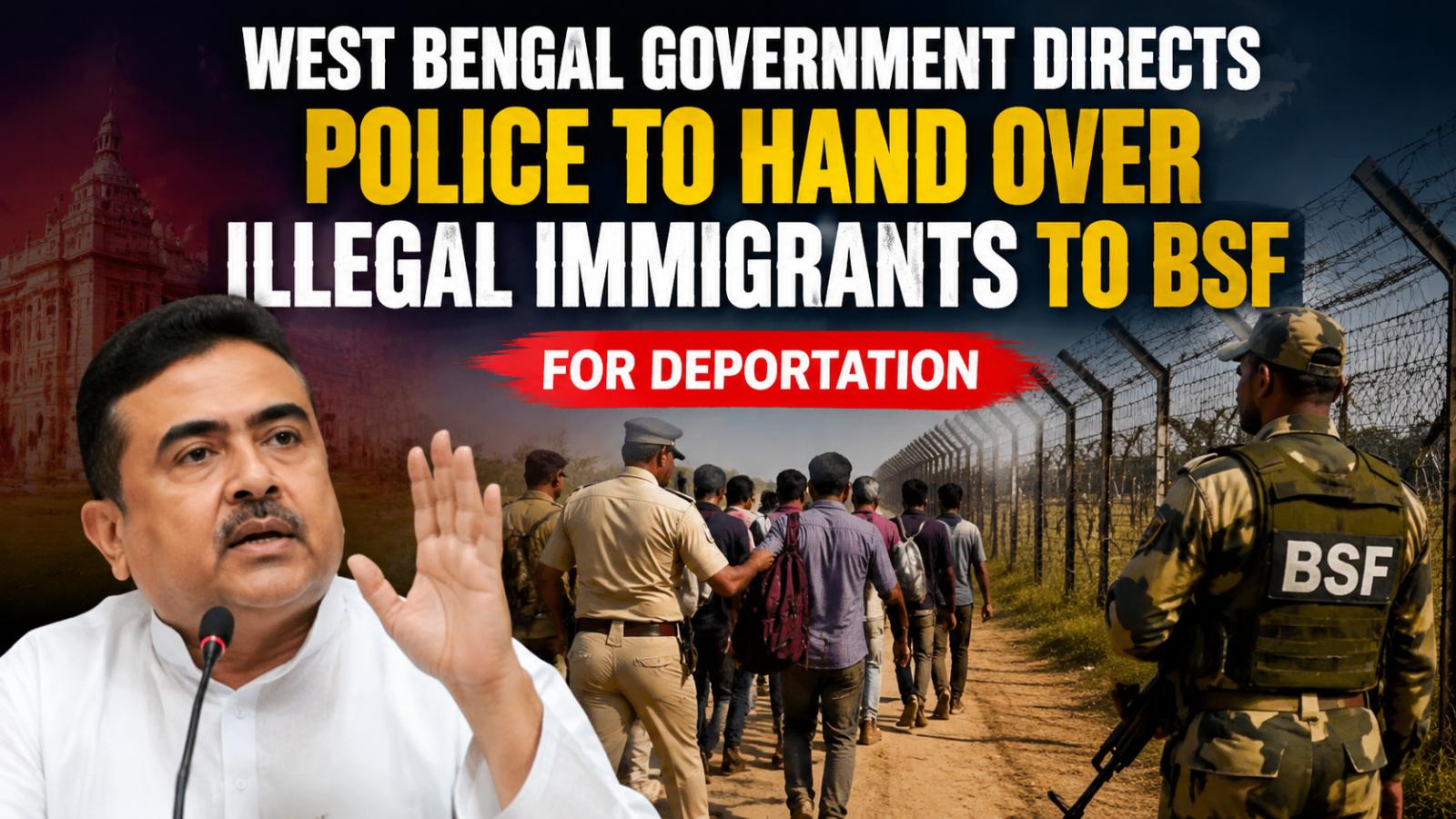
In a major administrative shift announced on 22 May 2026, West Bengal chief minister Suvendu Adhikari has directed state police and the Railway Protection Force to stop producing illegal immigrants in court and instead hand them over directly to the Border Security Force (BSF) for deportation to Bangladesh. The decision applies specifically to those illegal immigrants who are not covered by the Citizenship Amendment Act (CAA), which provides certain exemptions and protections for specific undocumented communities.
During an administrative meeting in Howrah, the chief minister emphasized that the new protocol is intended to streamline and accelerate the removal of illegal entrants from the state. Law enforcement officials have been instructed to adopt the updated process immediately, especially in high‑traffic areas like Howrah railway station where undocumented migrants are frequently intercepted.
The order underscores a stricter enforcement posture on illegal immigration, reflecting the state government’s intent to reduce procedural delays associated with court proceedings and instead rely on cooperation with central security forces to expedite repatriation.
New Protocol to Hand Over Migrants to BSF
Under the new directive, when state police apprehend illegal immigrants who do not qualify for protections under the CAA, they are to be transported directly to designated India‑Bangladesh border outposts. These include key handover points such as the Petrapole border post at Bongaon and the Basirhat border outpost. Upon transfer, BSF units will assume responsibility for the deportation process.
The chief minister clarified that this procedure replaces the traditional model, which often involved court hearings that slowed down action and kept undocumented immigrants in custody for extended periods. By cutting out the judicial stopgap, the state government intends to reduce judicial backlog and remove illegal immigrants from West Bengal more rapidly.
Officials tasked with implementing the order have been told to ensure that those being handed over to the BSF are provided adequate food and basic care during transit. The state government has publicly stated that the welfare of detainees remains a concern even as enforcement tightens.
Weekly Reporting Mandate to Chief Minister’s Office
To increase transparency and maintain close oversight of the new deportation strategy, Chief Minister Suvendu Adhikari has mandated that the director general of police send a weekly report to the Chief Minister’s Office (CMO). This report must include the number of illegal immigrants handed over to the BSF during that week.
The weekly reporting mechanism is aimed at providing state leadership with up‑to‑date information on enforcement outcomes and trends. Officials said this will help the government evaluate the effectiveness of the policy, make necessary course corrections, and maintain clear records in coordination with central agencies.
The order signals a move toward a data‑driven enforcement strategy and reflects the chief minister’s intent to monitor results closely.
Border Security Expansion and Land Transfer to BSF
The chief minister’s announcement follows West Bengal’s recent decision to transfer land to the BSF to facilitate fencing work along a 27‑kilometer stretch of the India‑Bangladesh border. This fencing is part of ongoing border security enhancements aimed at reducing illegal cross‑border movement.
The land transfer was carried out in accordance with a central government directive that prioritizes physical border strengthening and coordinated security operations. State and central agencies have said the fencing work will complement the updated deportation process by creating clearer physical boundaries and operational lanes for security forces.
Officials from local administration and BSF units have described the strategy as a multi‑layered approach to stopping illegal infiltration and improving overall border management.
Response from Law Enforcement and Local Officials
State police officers and Railway Protection Force personnel present at Thursday’s meeting acknowledged the new directives and confirmed they are implementing procedural changes immediately. Senior railway officials, as well as Shibpur BJP MLA Rudranil Ghosh, also attended the session where the policy was formalized.
Sources within the police department indicated that initial efforts will focus on hotspots such as busy transportation hubs and border‑adjacent districts where undocumented persons are frequently intercepted.
Officials also affirmed that coordination with BSF counterparts has already begun and that transition protocols are being developed to ensure continuity of enforcement without operational gaps.
Political Context and Additional Announcements
Apart from immigration enforcement, Chief Minister Adhikari used the administrative meeting to update attendees on other state priorities, including the long‑awaited municipal elections in Howrah. He indicated that elections for the Howrah Municipal Corporation will soon be held after a nearly 13‑year gap, signaling a push to restore local democratic processes.
Adhikari also hinted at broader efforts to crack down on illegal activities and strengthen governance in the greater Howrah metropolitan area, located just across the Hooghly River from Kolkata.
Related Legal Development
In parallel news from North 24 Parganas, one of three suspects arrested in connection with the murder of Adhikari’s personal assistant, Chandranath Rath, was released earlier Thursday following a court order. The individual, Raj Singh of Ballia in Uttar Pradesh, had been held by state police before the Central Bureau of Investigation (CBI) took over the probe. CBI officials determined that Singh was mistakenly identified and was not involved in the crime, leading to his release after judicial review.
The development highlights ongoing legal complexities surrounding high‑profile investigations in the state, even as the government implements tougher policy measures on immigration.