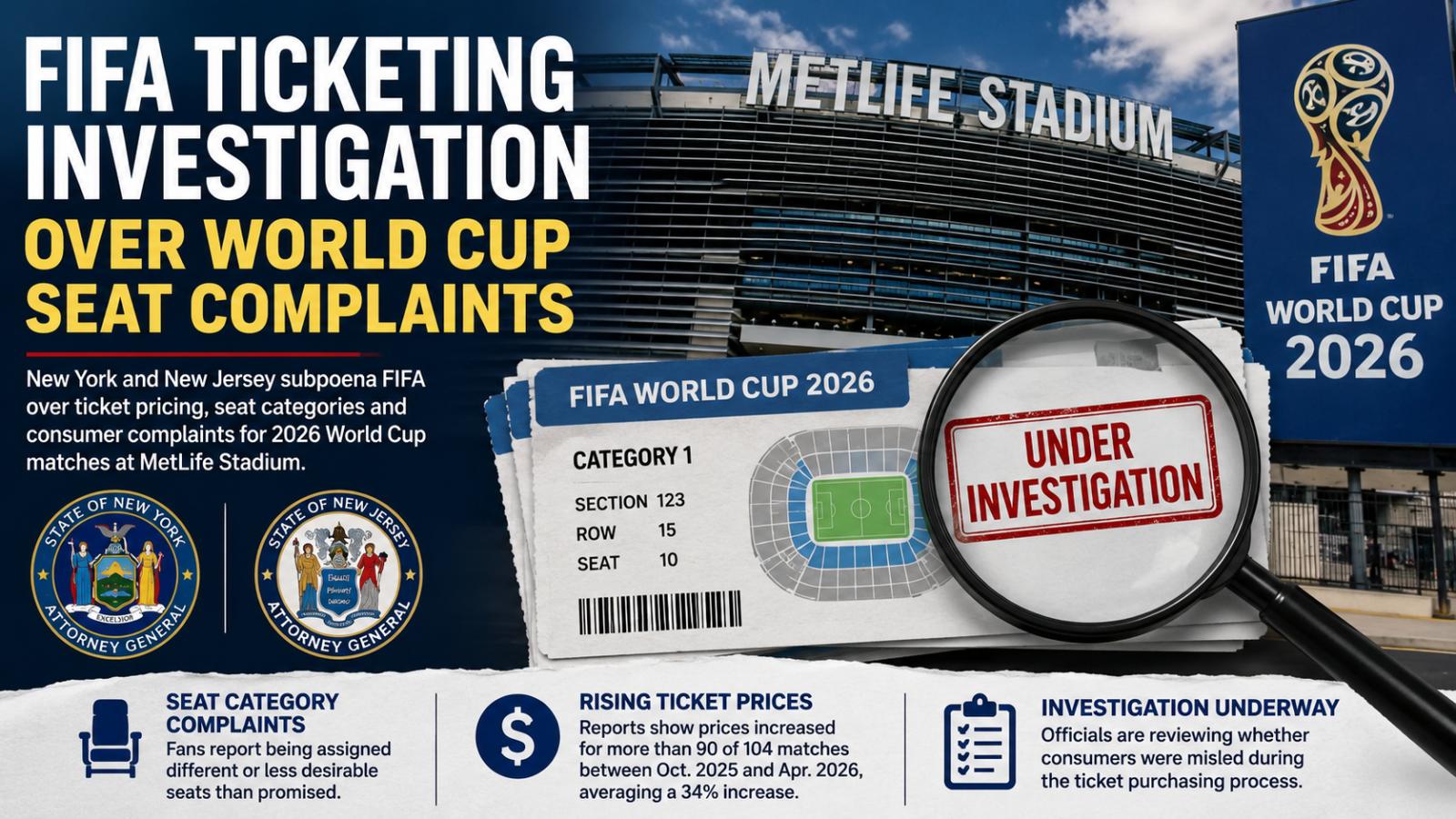
A FIFA ticketing investigation has been launched by New York and New Jersey officials over complaints about 2026 World Cup seat assignments and rising ticket prices.
New York Attorney General Letitia James and New Jersey Attorney General Jennifer Davenport subpoenaed FIFA on Wednesday, May 27, 2026, seeking information about ticketing practices for matches at MetLife Stadium in East Rutherford, New Jersey. The stadium is scheduled to host eight World Cup matches, including the final on Sunday, July 19, 2026.
Why FIFA’s World Cup Ticketing Is Under Review
The investigation focuses on whether fans were misled about the seats they were buying. Officials said FIFA initially divided stadium seating into four categories, with Category 1 described as the most desirable seating area.
After many tickets were purchased, FIFA introduced new “Front Categories” that included more desirable seats at higher prices. Authorities are reviewing whether earlier buyers were excluded from those seats and later assigned less favorable locations, including seats farther from the field or behind goals.
Ticket Category Complaints Add Pressure
Some fans reportedly said they paid for Category 1 tickets but were assigned seats that appeared to be in Category 2 areas. Officials said the probe will examine whether FIFA’s ticket descriptions, seat maps and ticket release process created confusion for consumers.
The inquiry also covers FIFA’s use of variable pricing, which changes ticket prices based on demand. Officials cited reports that ticket prices rose for more than 90 of the tournament’s 104 matches between October 2025 and April 2026, with the three main ticket categories increasing by an average of 34%.
What Fans Should Know
The World Cup will be hosted across the United States, Canada and Mexico from Thursday, June 11, 2026, to Sunday, July 19, 2026. Reuters reported that FIFA declined to comment on the subpoena.
Officials in New York and New Jersey said fans who believe they did not receive the World Cup tickets or seating they paid for can file consumer complaints. The case matters because it could shape how ticket transparency, pricing and seat disclosures are handled for one of the biggest sporting events hosted in North America.