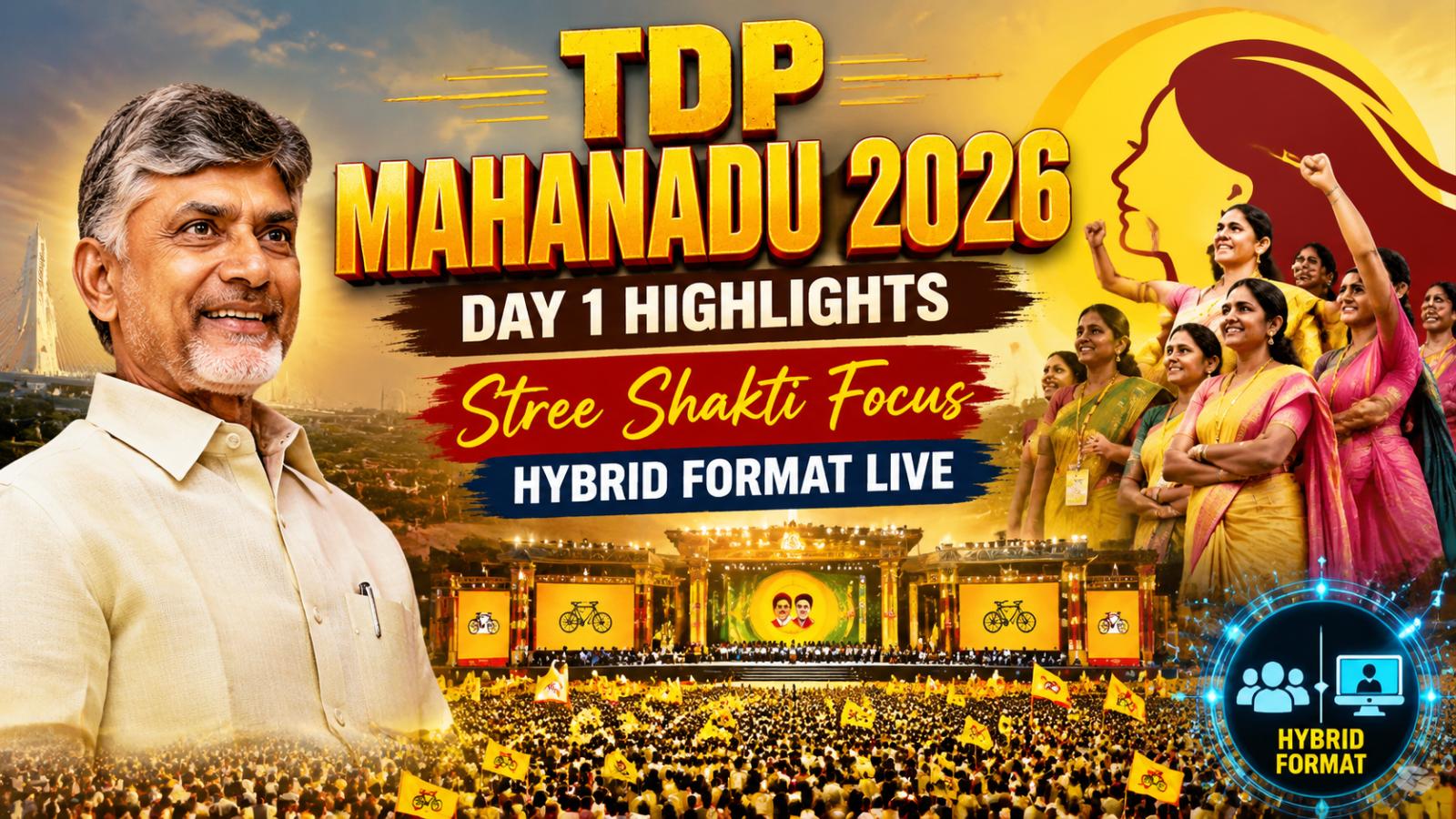
Hybrid Format and Opening Ceremony
The Telugu Desam Party (TDP) launched Day 1 of Mahanadu 2026 on May 27, 2026, in Amaravati with a hybrid format designed to combine in-person attendance with digital connectivity. The program commenced at 9:40 AM at the TDP headquarters, where party leaders hoisted the flag and paid tribute to the party founder N. T. Rama Rao (NTR) and martyrs. Instead of a single massive rally, over 1,800 LED screens and cluster hubs connected supporters across Andhra Pradesh, providing a cost-effective solution that also expanded participation. This approach reflects a strategic shift in political events to balance visibility, safety, and budget while maintaining energy and enthusiasm among party workers.
Party president and Andhra Pradesh Chief Minister Chandrababu Naidu addressed the gathering along with senior leaders. Palla Srinivasa Rao, state president, delivered the inaugural address outlining key organizational priorities and the party’s vision for upcoming elections. The hybrid setup allowed simultaneous participation from thousands of party workers statewide, demonstrating a modern approach to political mobilization that leverages technology without sacrificing scale or engagement.
Emphasis on Stree Shakti and Leadership Addresses
A major highlight of Day 1 was the focus on women’s empowerment under the Stree Shakti agenda. Senior leaders emphasized the role of women in politics, community engagement, and grassroots development. Working president Nara Lokesh addressed both physical attendees and virtual participants, highlighting initiatives aimed at empowering women and involving them more actively in the party’s social and political strategies. The speeches reinforced the party’s commitment to inclusive growth and the importance of engaging youth and women in decision-making processes.
In addition, approximately 20 resolutions were proposed, covering political strategy, governance achievements, and social development initiatives. Many resolutions were designed to strengthen the party ahead of local body elections, formalizing roles for women’s and youth wings and creating accountability frameworks. The focus on digital engagement, hybrid participation, and Stree Shakti highlighted TDP’s intention to combine traditional political energy with modern outreach strategies.
Event Atmosphere and Strategic Outlook
The atmosphere throughout Day 1 was one of disciplined planning and enthusiastic participation. Cluster hubs reported active engagement, with attendees interacting via local feedback channels. Party organizers emphasized open communication lines to ensure continuous engagement throughout the second day of Mahanadu. Analysts observed that while technical challenges existed, the hybrid format was a strong move to increase reach while reducing logistical expenses.
Day 1 set a clear strategic tone for TDP, emphasizing women’s empowerment, digital engagement, and readiness for local and state elections. By combining Stree Shakti-focused messaging with a hybrid approach, the party positioned itself to leverage grassroots energy and digital participation. The resolutions and strategies introduced on this day are expected to guide organizational strengthening and enhance political influence, setting the stage for a decisive Day 2.