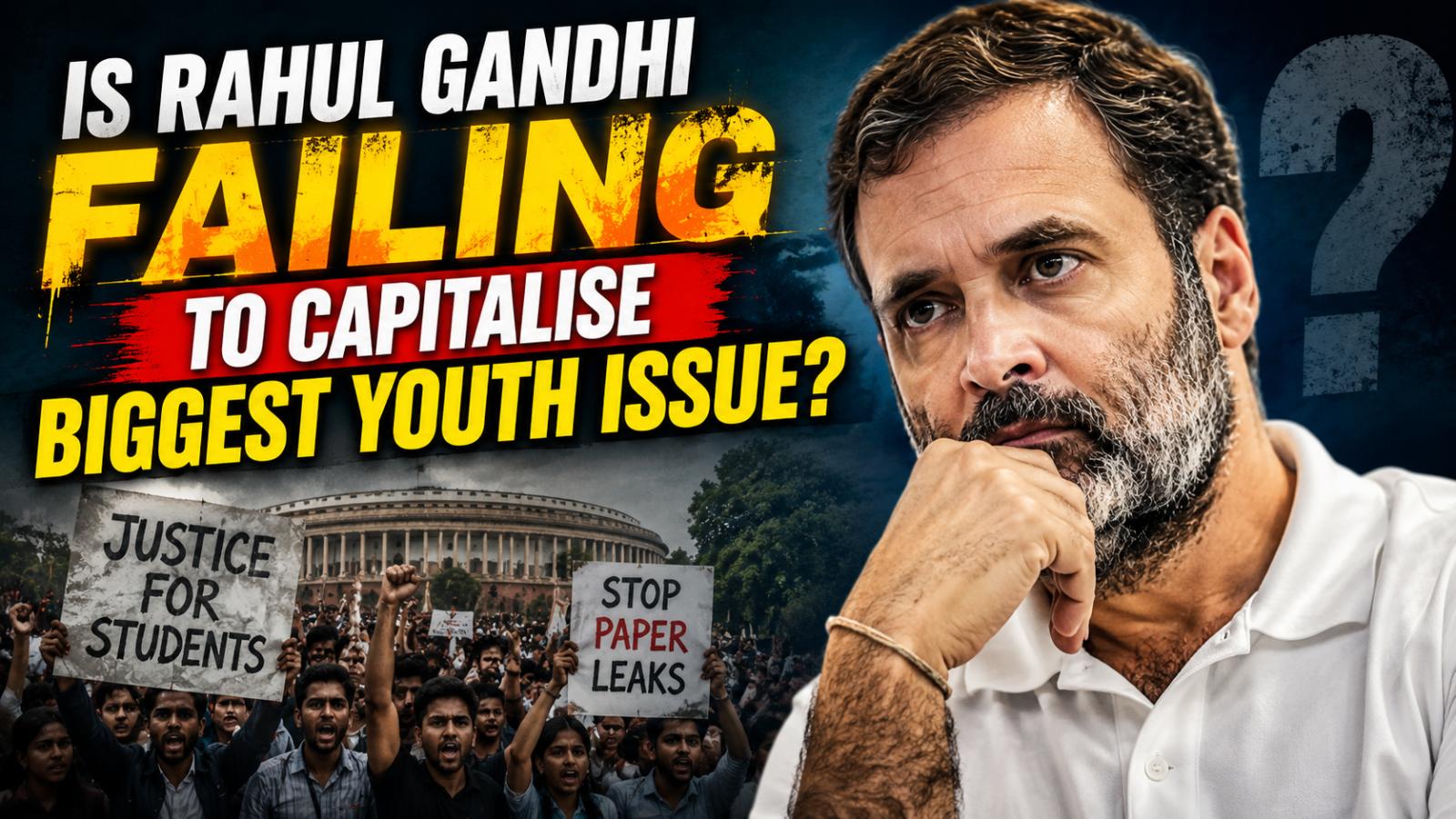
Rahul Gandhi’s response to the youth-led CJP protest has drawn political scrutiny. Although critics questioned his absence from Jantar Mantar, he later joined Priyanka Gandhi and Congress MPs in a protest outside the Prime Minister’s residence in Delhi.
Rahul Gandhi Faces Questions Over Youth Protest Strategy
India’s youth-led Cockroach Janta Party movement has become a political flashpoint as students demand accountability over examination irregularities, paper leaks and failures in the education system. The agitation intensified when protesters tried to march from Jantar Mantar towards Parliament, leading to clashes with police and injuries. Organisers have continued the protest while reconsidering further marches.
Rahul Gandhi Youth Protest Strategy Draws Scrutiny
As Leader of the Opposition in the Lok Sabha, Rahul Gandhi faces pressure to respond visibly when a large youth movement challenges the government. Questions initially arose because he had not appeared at the Jantar Mantar protest site even as the campaign gained national attention. His position as Leader of the Opposition is confirmed by the Lok Sabha’s official website.
That criticism now needs an update. On July 21, Rahul Gandhi, Priyanka Gandhi Vadra and several Congress MPs protested outside Prime Minister Narendra Modi’s residence over the reported police action against students. Gandhi had also criticised the handling of demonstrators and raised concerns about repeated examination failures.
Youth Protest Movement Creates a Political Test
The CJP campaign has grown from an online movement into a street protest focused on education reform and government accountability. Its supporters are demanding the resignation of Union Education Minister Dharmendra Pradhan, action over alleged examination failures and relief for affected students and families.
For the Opposition, this is both an opportunity and a responsibility. A political presence could amplify student concerns, but political parties must avoid appearing to take control of a movement with its own youth-led identity. Support must remain visible without overshadowing the organisers.
Congress Response Must Go Beyond Statements
Rahul Gandhi’s protest outside the Prime Minister’s residence weakens the claim that he has completely ignored the issue. Congress has also promoted its Chhatron Ki Goonj campaign around examination scams, administrative failures and student concerns.
The larger question is whether this support will become sustained parliamentary pressure, direct engagement with organisers and a clear reform plan. Political credibility will depend on proposing solutions for paper leaks, recruitment delays, examination accountability and youth unemployment.
Political Opportunity Depends on Sustained Action
It is too early to conclude that Rahul Gandhi has failed to capitalise on the youth issue. The criticism over his earlier absence from Jantar Mantar was understandable, but his July 21 demonstration represented a more direct intervention.
The real test is what follows. If Gandhi keeps the issue active in Parliament and presents practical policy proposals, he could strengthen his connection with younger voters. If his involvement remains limited to statements and symbolic protests, critics may still argue that the Opposition failed to make full use of a major youth-driven political moment.