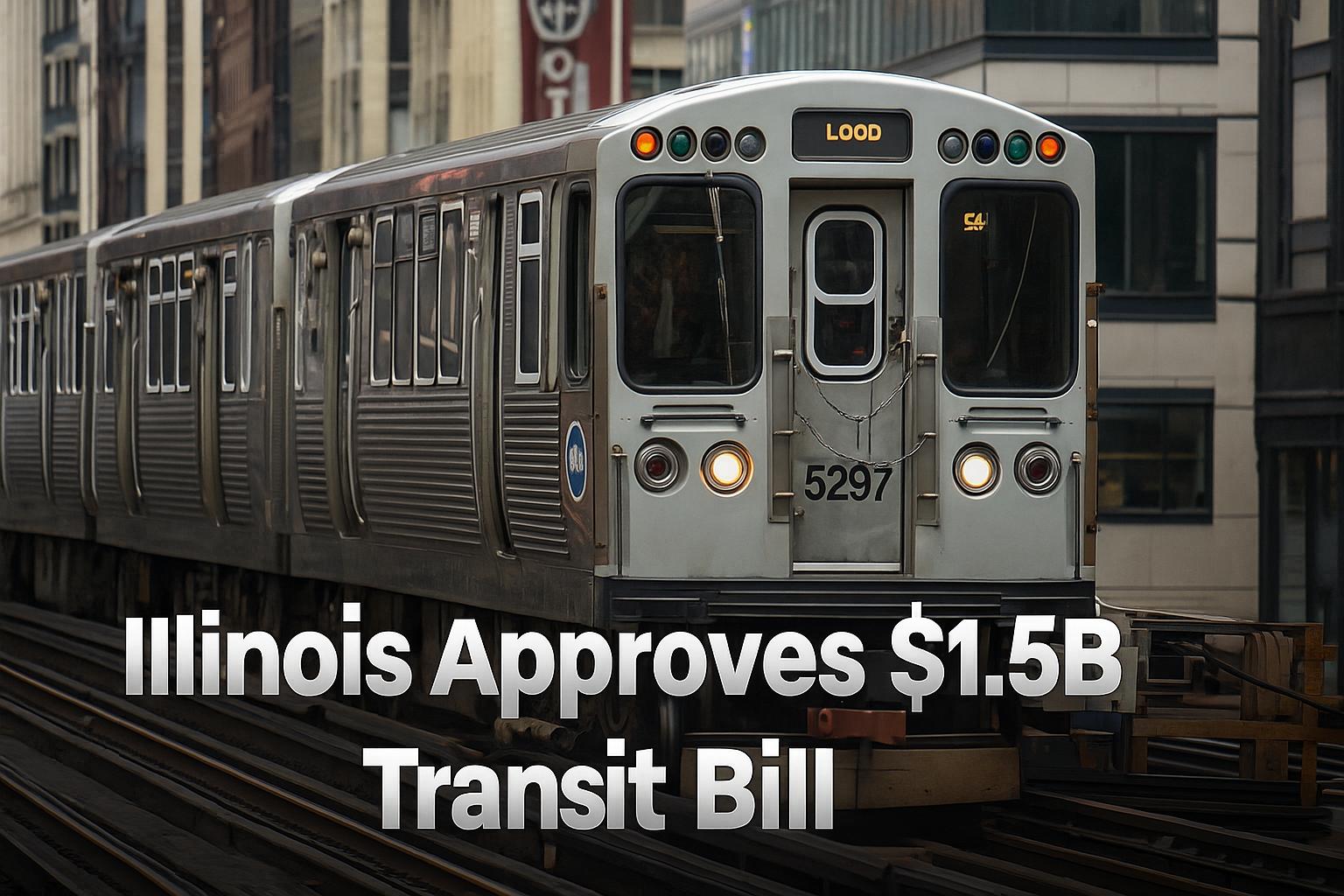
SPRINGFIELD — In a decisive move to address a looming financial crisis in the state’s transportation network, Illinois lawmakers approved a new $1.5 billion public transit funding bill in the early hours of Friday morning. The legislation, passed during the final moments of the veto session, aims to secure the future of Chicago’s major transit systems and prevent what officials described as a potential “fiscal cliff.”
The new measure, which avoids the more controversial statewide tax increases previously proposed, focuses on localized adjustments. Proposals such as a tax on streaming services, a $5-per-ticket entertainment surcharge, and suburban speed cameras were removed from the final version. However, residents of Chicago and surrounding suburbs will see moderate increases in sales tax and Illinois Tollway fares under the new plan.
At the heart of the legislation is the creation of a new governing body — the Northern Illinois Transit Authority (NITA) — which will assume oversight of the Chicago Transit Authority (CTA), Metra, and Pace. The NITA will replace the Regional Transit Authority (RTA), consolidating management to improve coordination and efficiency across northern Illinois’ public transportation network.
The bill, known as Senate Bill 2111, passed with a 36–21 vote, largely along party lines. It now awaits the signature of Governor J.B. Pritzker and, if enacted, will take effect on June 1. Lawmakers say the bill represents the most ambitious reform in Illinois’ transportation history.
“This isn’t just another transportation bill — it’s a transformation bill,” said State Representative Kam Buckner after the vote. “For 50 years, Illinois has been trying to fix transit piece by piece. This is a unified system built on coordination, not fragmentation.”
The funding overhaul is designed to fill a projected $771 million shortfall in the state’s public transportation system caused by the expiration of federal COVID-19 relief funds. A major portion of the revenue, roughly $860 million, will come from diverting state tax revenue generated through motor fuel sales, while another $200 million will be reallocated from interest earned on the state’s road fund — traditionally reserved for construction and maintenance projects.
In addition, sales tax rates in the Chicago metropolitan area will increase by 0.25 percentage points, bringing the rate to 1% in Lake, McHenry, Kane, DuPage, and Will counties, and 1.25% in Cook County. These changes are expected to generate nearly half a billion dollars in additional annual revenue for transit operations.
To offset the reduction in road funding, the legislation also increases toll rates on the Illinois Tollway by $0.45 per trip — a rise of roughly 60%. For instance, a standard passenger trip to O’Hare International Airport will now cost $1.20, up from $0.75. Supporters project that the increase could bring in $1 billion annually to maintain and upgrade road infrastructure.
While supporters call the bill a long-term investment in transit stability, some critics argue it shifts too much of the financial burden onto suburban commuters and motorists.
In a statement following the bill’s passage, the Regional Transit Authority called it a “landmark moment for public transit in Illinois,” adding that the legislation “provides the stable funding and governance reforms needed to protect transit service for millions of daily riders and thousands of frontline workers.”
The new framework marks the most significant restructuring of Illinois’ transit governance in decades and represents a critical step toward modernizing transportation across the Chicago metropolitan region. With Governor Pritzker’s approval expected soon, the bill could reshape how Illinois funds, manages, and operates public transit for generations to come.