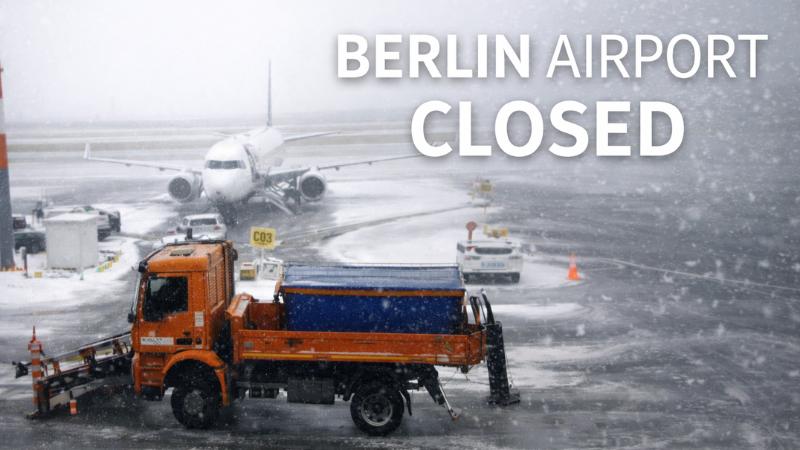
Berlin’s main airport remained closed on Friday as dangerous black ice and freezing weather conditions made flight operations unsafe, disrupting travel plans for thousands of passengers and forcing airlines to cancel or delay services across the region. Airport authorities said persistent ice on runways and taxiways had made it impossible for aircraft to safely take off or land, with no immediate timeline for when normal operations could resume.
The disruption began a day earlier when snowfall and freezing rain created hazardous surfaces around the airfield. As conditions deteriorated, airlines were compelled to delay departures and cancel scheduled flights. By Thursday evening, airport officials announced that all takeoffs and landings had been suspended due to safety concerns, effectively halting activity at one of Germany’s busiest transport hubs.
Authorities confirmed that both departures and arrivals scheduled for later in the evening were scrapped as sheet ice spread across northeastern Germany. A spokesperson described the airfield as comparable to an “ice rink,” underscoring the severity of the conditions. With runways and service areas coated in ice, ground crews were unable to maintain safe operating standards despite de-icing efforts and continuous monitoring.
Around 30 flights had been scheduled to depart after the shutdown time, while approximately 70 incoming services were expected to land. Those flights were either diverted or canceled. Since early Thursday morning, departures have not been possible, and several landings were also called off. Officials noted that exact cancellation figures were difficult to confirm because the situation continued to evolve rapidly as weather systems shifted.
The national weather service issued a red ice warning for large parts of eastern Germany, covering areas from southwestern Berlin to the Baltic Sea. The alert signaled an elevated risk of accidents and significant disruptions to transport networks. Forecasters cautioned that freezing rain combined with sub-zero temperatures would likely prolong hazardous conditions on roads, railways, and airport facilities.
Beyond the airport, the cold snap triggered multiple traffic incidents across the region. On a highway near Potsdam, a series of crashes reportedly injured about 20 people, highlighting the broader safety risks posed by the weather. In Berlin, icy roads also prompted renewed debate over the use of salt treatments to improve traction, despite environmental concerns associated with widespread salting.
Meteorological data showed that January temperatures in Germany have been considerably colder than the national average recorded over the past three decades, contributing to the persistence of snow and ice. Officials advised travelers to check directly with airlines before heading to the airport and to expect further delays as crews work to restore safe operating conditions.
With winter weather expected to continue, authorities said the priority remains passenger safety. The airport will reopen only when runways and surrounding infrastructure can support normal airline transport without risk, leaving many travelers to adjust plans until conditions improve.