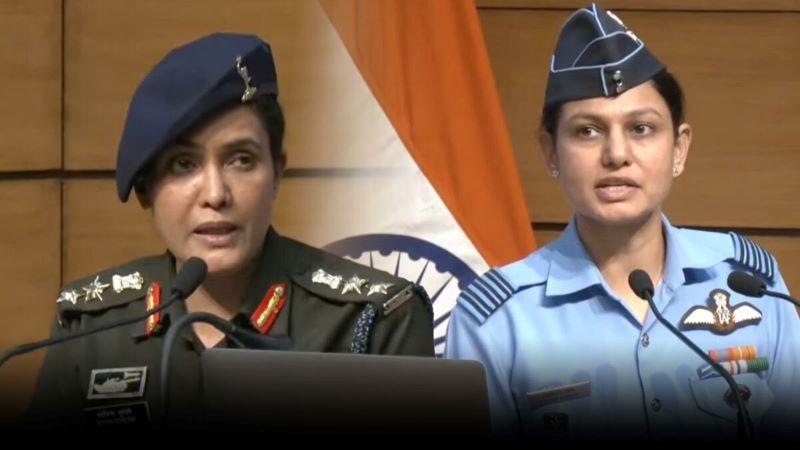
In a significant and symbolic move, the Indian government’s official briefing on Operation Sindoor the precision military strike against terrorist camps in Pakistan and Pakistan-occupied Kashmir (PoK) was led by two distinguished women officers, Wing Commander Vyomika Singh of the Indian Air Force and Colonel Sofiya Qureshi of the Indian Army. Their leadership not only marked a major milestone in military communication but also sent a resounding message of strength, resilience, and inclusion in the face of national adversity.
Operation Sindoor was India’s measured military response to the brutal terror attack in Pahalgam, Jammu and Kashmir, on April 22, 2025, which left 26 civilians and soldiers dead. At 1:05 am on May 6, Indian forces launched 24 precision missile strikes across nine identified terrorist locations in Pakistan and PoK. Within just 25 minutes, the coordinated attack decimated nine terror camps, reportedly killing 70 terrorists and injuring over 60 others.
The operation, as stated by the government, was a demonstration of strategic resolve. It involved advanced munitions like HAMMER bombs, SCALP missiles, and hovering precision weapons capable of verifying targets before detonation. These strikes were carefully timed to avoid escalation, and no Pakistani military installations were hit, as clarified by the Indian military command.
The name "Operation Sindoor" itself is an emotional tribute to the widows of soldiers and civilians who lost their lives in the attack, underscoring both sacrifice and resolve.
The presence of two senior women officers at the forefront of this high-stakes national security briefing drew widespread attention and praise. Wing Commander Vyomika Singh is an accomplished helicopter pilot in the Indian Air Force. A former National Cadet Corps (NCC) member and an engineering graduate, she received her permanent commission in the IAF flying branch in 2019. Known for her fearless service in challenging terrains like Jammu & Kashmir and the Northeast, she has operated iconic helicopters such as Chetak and Cheetah and played a key role in several rescue operations.
Colonel Sofiya Qureshi, a decorated officer from the Indian Army’s Corps of Signals, holds the distinction of being the first woman to lead an Indian Army contingent in a multinational military exercise held in Pune. Her career is marked by pioneering leadership and strategic expertise in communications and defense.
Their selection to represent India’s military strategy not only highlighted gender parity but also served to honor the strength and sacrifice of women both in uniform and those affected by conflict.
During the briefing, Colonel Sofiya Qureshi emphasized that all targets were selected based on credible intelligence and directly linked to cross-border terrorism, adding that no military installations in Pakistan were hit. She confirmed the destruction of nine terrorist camps in the brief but decisive assault. Wing Commander Vyomika Singh reiterated India's stance of strategic restraint, while also warning that the Armed Forces are fully prepared to respond decisively should Pakistan attempt to escalate the situation further.
Following the operation, Pakistan responded with artillery shelling and indiscriminate firing across the Line of Control (LoC), resulting in the tragic deaths of 10 civilians, including two children, in the Poonch sector of Jammu and Kashmir. The Indian Army has strongly condemned this act of retaliation, calling it a deliberate escalation and a humanitarian tragedy.
Operation Sindoor stands as a pivotal moment not only in India’s counter-terrorism doctrine but also in the evolution of its military leadership narrative. With women officers at the helm of communication, the operation’s briefing has added a powerful layer of representation to India’s defense strategy. As India continues to balance firm military responses with measured diplomacy, the inclusion of women in national security leadership roles sends a bold message India’s strength lies not just in its arsenal, but in the diversity and courage of those who serve.
Operation Sindoor was India’s measured military response to the brutal terror attack in Pahalgam, Jammu and Kashmir, on April 22, 2025, which left 26 civilians and soldiers dead. At 1:05 am on May 6, Indian forces launched 24 precision missile strikes across nine identified terrorist locations in Pakistan and PoK. Within just 25 minutes, the coordinated attack decimated nine terror camps, reportedly killing 70 terrorists and injuring over 60 others.
The operation, as stated by the government, was a demonstration of strategic resolve. It involved advanced munitions like HAMMER bombs, SCALP missiles, and hovering precision weapons capable of verifying targets before detonation. These strikes were carefully timed to avoid escalation, and no Pakistani military installations were hit, as clarified by the Indian military command.
The name "Operation Sindoor" itself is an emotional tribute to the widows of soldiers and civilians who lost their lives in the attack, underscoring both sacrifice and resolve.
The presence of two senior women officers at the forefront of this high-stakes national security briefing drew widespread attention and praise. Wing Commander Vyomika Singh is an accomplished helicopter pilot in the Indian Air Force. A former National Cadet Corps (NCC) member and an engineering graduate, she received her permanent commission in the IAF flying branch in 2019. Known for her fearless service in challenging terrains like Jammu & Kashmir and the Northeast, she has operated iconic helicopters such as Chetak and Cheetah and played a key role in several rescue operations.
Colonel Sofiya Qureshi, a decorated officer from the Indian Army’s Corps of Signals, holds the distinction of being the first woman to lead an Indian Army contingent in a multinational military exercise held in Pune. Her career is marked by pioneering leadership and strategic expertise in communications and defense.
Their selection to represent India’s military strategy not only highlighted gender parity but also served to honor the strength and sacrifice of women both in uniform and those affected by conflict.
During the briefing, Colonel Sofiya Qureshi emphasized that all targets were selected based on credible intelligence and directly linked to cross-border terrorism, adding that no military installations in Pakistan were hit. She confirmed the destruction of nine terrorist camps in the brief but decisive assault. Wing Commander Vyomika Singh reiterated India's stance of strategic restraint, while also warning that the Armed Forces are fully prepared to respond decisively should Pakistan attempt to escalate the situation further.
Following the operation, Pakistan responded with artillery shelling and indiscriminate firing across the Line of Control (LoC), resulting in the tragic deaths of 10 civilians, including two children, in the Poonch sector of Jammu and Kashmir. The Indian Army has strongly condemned this act of retaliation, calling it a deliberate escalation and a humanitarian tragedy.
Operation Sindoor stands as a pivotal moment not only in India’s counter-terrorism doctrine but also in the evolution of its military leadership narrative. With women officers at the helm of communication, the operation’s briefing has added a powerful layer of representation to India’s defense strategy. As India continues to balance firm military responses with measured diplomacy, the inclusion of women in national security leadership roles sends a bold message India’s strength lies not just in its arsenal, but in the diversity and courage of those who serve.