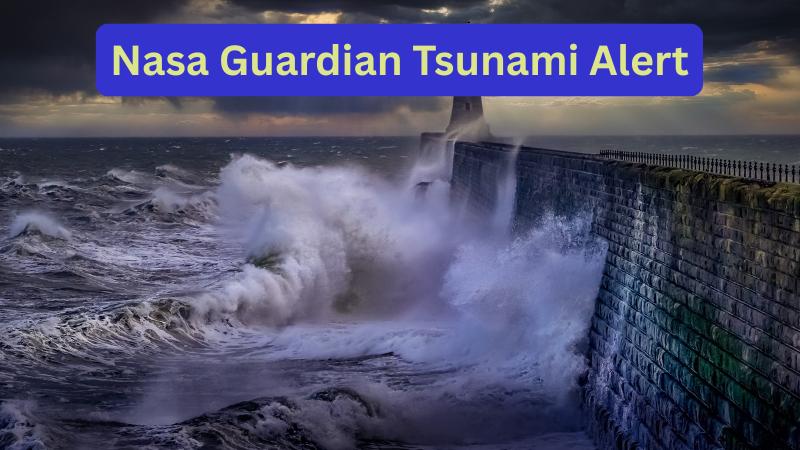
A massive 8.8 magnitude earthquake that struck off Russia’s Kamchatka Peninsula in late July 2025 triggered a tsunami racing across the Pacific Ocean. While the waves caused minimal damage, the event provided a critical real-world test for Nasa’s Guardian system, an advanced disaster detection technology developed at the Jet Propulsion Laboratory in California. Guardian detected atmospheric disturbances created by the tsunami within 20 minutes of the quake and issued alerts 30 to 40 minutes before landfall in Hawaii and other Pacific regions. This capability gave experts and authorities valuable extra time to assess risks and initiate evacuation measures.
Guardian, which stands for GNSS Upper Atmospheric Real-time Disaster Information and Alert Network, is designed to complement existing tsunami warning systems. Traditionally, forecasting relies on seismic data and costly deep-ocean pressure sensors to confirm wave activity, but Guardian leverages a global network of more than 350 GNSS stations to monitor how tsunamis displace both sea and air. These disturbances subtly distort GNSS radio signals, allowing the system to detect the advancing waves in near real time. With its AI-driven analysis and rapid messaging prototype, Guardian can deliver snapshots of tsunami-related atmospheric effects within just 10 minutes of receiving data.
The July test showed Guardian’s potential as one of the fastest tsunami monitoring technologies in the world. According to Nasa scientists, the extra minutes of early knowledge can save lives by expanding evacuation windows. Experts from NOAA and the United Nations also hailed the system as a paradigm shift, emphasizing its ability to underpin next-generation forecasting. In the future, Guardian could provide alerts as much as 1 hour and 20 minutes ahead of landfall, making it a game-changing addition to global disaster preparedness. Its success marks a step forward in harnessing space technology and AI for safeguarding vulnerable coastal communities.