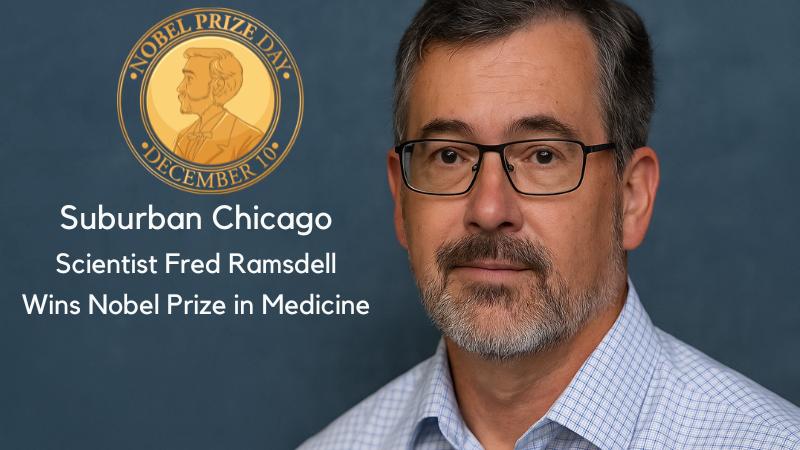
A suburban Chicago native, Fred Ramsdell, has earned one of science’s highest honors, sharing the 2025 Nobel Prize in Physiology or Medicine with Mary E. Brunkow and Dr. Shimon Sakaguchi for their pioneering discoveries on peripheral immune tolerance. Their groundbreaking work unveiled how the body prevents immune cells from attacking its own tissues—a finding that has revolutionized the field of immunology and paved the way for new treatments for autoimmune diseases and cancer.
Ramsdell, aged 64 and originally from Elmhurst, Illinois, is a scientific adviser at Sonoma Biotherapeutics in San Francisco. His co-laureate Mary E. Brunkow, also 64, serves as a senior program manager at the Institute for Systems Biology in Seattle. The third winner, Dr. Shimon Sakaguchi, 74, is a distinguished professor at Osaka University’s Immunology Frontier Research Center in Japan. Together, their research has transformed the understanding of how the immune system maintains balance and self-tolerance.
The Nobel Committee recognized the trio for identifying the immune system’s “security guards,” known as regulatory T cells, or T-regs, which play a vital role in preventing immune cells from attacking the body’s own tissues. The committee praised the discoveries for providing deep insight into how the immune system operates and why most people are protected from autoimmune disorders. The discoveries, which began with Sakaguchi’s work in 1995, opened an entirely new area of study that continues to influence medical research worldwide.
Sakaguchi’s 1995 discovery of a previously unknown subset of T cells revealed the existence of regulatory T cells that suppress immune overreactions. In 2001, Brunkow and Ramsdell identified mutations in a gene called Foxp3, which controls the development of these regulatory T cells. This gene was later found to be directly linked to rare human autoimmune conditions, establishing the genetic and molecular foundation for understanding how immune tolerance functions. By 2003, Sakaguchi demonstrated that the Foxp3 gene was essential for the development and regulation of T-regs, solidifying the connection between gene function and immune regulation.
These insights have fundamentally changed the way scientists understand immune system balance. The discoveries not only explain how the body avoids attacking itself but also laid the groundwork for therapeutic approaches that harness regulatory T cells to treat autoimmune disorders, allergies, and even cancer. Researchers today are exploring ways to manipulate T-reg cells to suppress harmful immune responses or enhance beneficial ones, marking a major step forward in precision immunotherapy.
Olle Kämpe, chair of the Nobel Committee, stated that the laureates’ contributions have been decisive for understanding why humans do not all develop severe autoimmune diseases. Their findings provided a crucial missing piece in the complex puzzle of immune system behavior and tolerance mechanisms. According to Thomas Perlmann, Secretary-General of the Nobel Committee, the committee informed Dr. Sakaguchi of the honor early Monday morning, catching him at his laboratory in Japan. Perlmann described the laureate as “grateful and deeply moved” upon hearing the news, noting that messages were also left for Brunkow and Ramsdell to share the announcement.
This recognition marks the first Nobel announcement of 2025. Following the medicine award, the Nobel Prize in Physics will be announced on Tuesday, Chemistry on Wednesday, Literature on Thursday, and the Peace Prize on Friday. The Nobel Memorial Prize in Economic Sciences will follow on October 13. The annual award ceremony will take place on December 10, the anniversary of Alfred Nobel’s death, as tradition dictates. The laureates will share prize money totaling 11 million Swedish kronor, equivalent to nearly 1.2 million U.S. dollars.
The Nobel Prize in Medicine has long celebrated research that transforms the understanding of life and health. The achievements of Ramsdell, Brunkow, and Sakaguchi exemplify the power of collaboration across continents and decades, proving how curiosity-driven research can lead to discoveries that change lives. Their work continues to inspire scientists pursuing cures for diseases rooted in immune dysfunction, from diabetes and lupus to multiple sclerosis and rheumatoid arthritis. As the field of immunology advances, their discoveries remain a cornerstone—reminding the world that understanding the body’s defense system is key to protecting it.