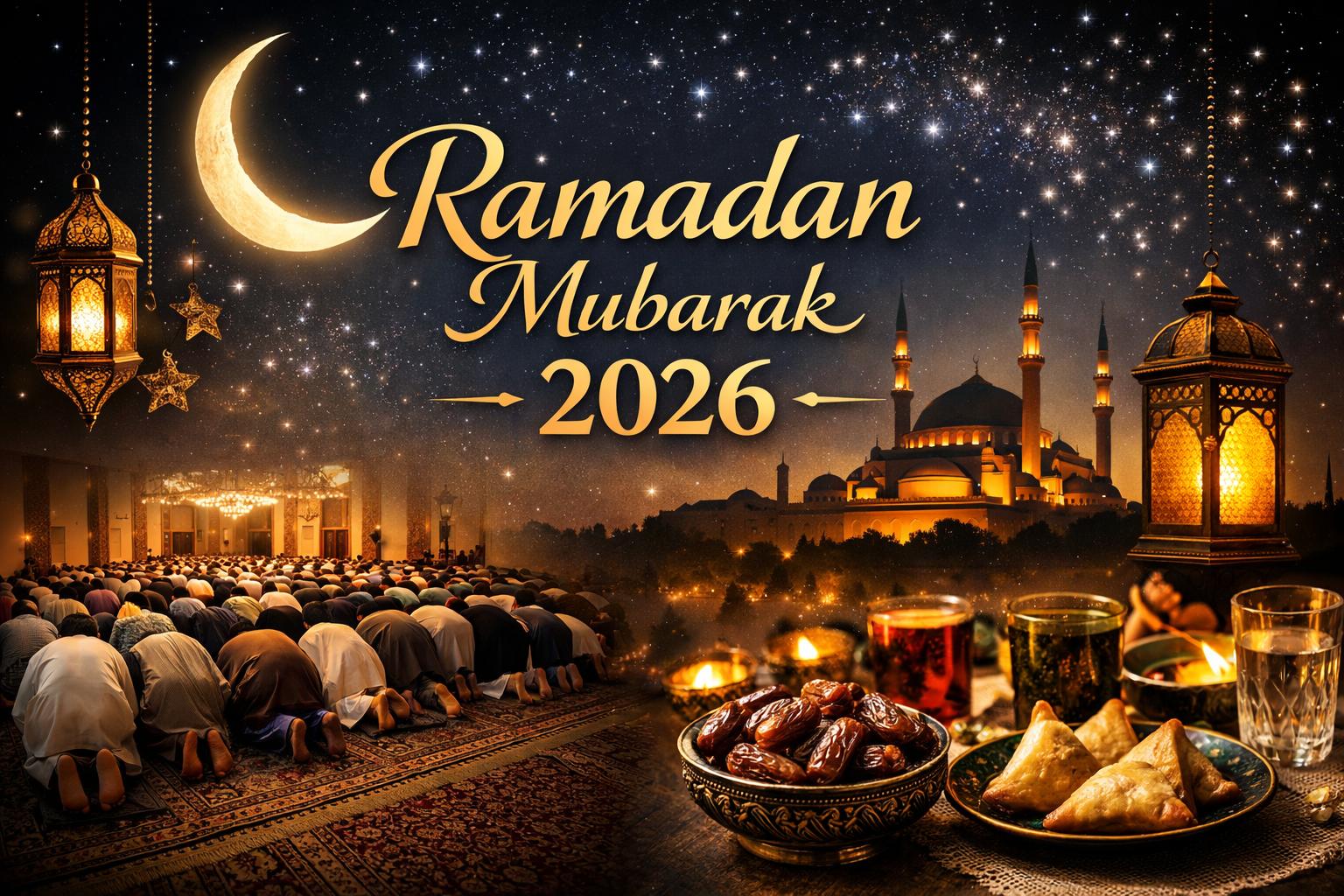
Ramadan Mubarak 2026 has officially begun, bringing a period of deep spiritual reflection, fasting, prayer, and charity for Muslims across the world. Observed during the ninth month of the Islamic lunar calendar, Ramadan is considered the holiest month in Islam. In 2026, Ramadan is expected to be observed from the evening of February 17 until March 19, depending on the sighting of the crescent moon. During this time, millions of Muslims in countries such as India, Saudi Arabia, UAE, Indonesia, Turkey, the United States, and the United Kingdom participate in fasting and religious practices that strengthen their faith and discipline.
Fasting during Ramadan is observed from dawn to sunset and is considered one of the Five Pillars of Islam, which are the core acts of worship. Muslims begin their day with a pre-dawn meal called Suhoor and break their fast at sunset with Iftar, often starting with dates and water, following Islamic tradition. However, fasting is not limited to avoiding food and drink. It also involves practicing patience, avoiding anger, staying away from negative thoughts, and focusing on self-improvement. Ramadan is a time when Muslims aim to purify their hearts, reconnect with their faith, and develop empathy for those less fortunate.
Spiritual Significance And Religious Practices
Ramadan holds special importance because Muslims believe it was during this month that the first verses of the Quran were revealed to Prophet Muhammad. As a result, Muslims increase their worship and religious activities during Ramadan. Mosques become centers of prayer and reflection, and believers spend more time reading the Quran, offering prayers, and seeking forgiveness.
Key religious practices during Ramadan include:
• Observing daily fasting from dawn to sunset
• Performing the five daily prayers regularly and with greater devotion
• Offering special nightly prayers called Taraweeh
• Reading and completing the Quran during the holy month
• Giving charity to help the poor and needy
• Practicing self-control, patience, and kindness
• Avoiding negative behavior such as anger, gossip, and arguments
The last ten days of Ramadan are considered the most sacred. During this period, Muslims seek Laylat al Qadr, also known as the Night of Power. It is believed that prayers and good deeds performed on this night bring immense blessings and forgiveness.
Daily Life And Global Ramadan Traditions
Ramadan brings a unique spiritual atmosphere to Muslim communities worldwide. Families wake up early for Suhoor, attend prayers at mosques, and gather together for Iftar in the evening. Streets and homes are often decorated, and special foods are prepared to break the fast. Community gatherings and charity drives become more common, promoting unity and compassion.
Common traditions and daily activities during Ramadan include:
• Preparing Suhoor and Iftar meals with family
• Attending mosque prayers and religious lectures
• Helping the poor through charity and donations
• Strengthening relationships with family and community
• Increasing personal reflection and spiritual growth
• Participating in community Iftar gatherings
• Spending more time in prayer, meditation, and reading religious texts
Ramadan concludes with Eid al Fitr, one of the most important Islamic festivals. On this day, Muslims offer special prayers, wear new clothes, visit family and friends, and share festive meals. Charity is also given before Eid prayers to ensure that everyone can celebrate the festival. Ramadan Mubarak 2026 serves as a powerful reminder of faith, discipline, compassion, and unity. It is a time when Muslims renew their spiritual commitment, strengthen relationships, and focus on becoming better individuals both spiritually and morally.