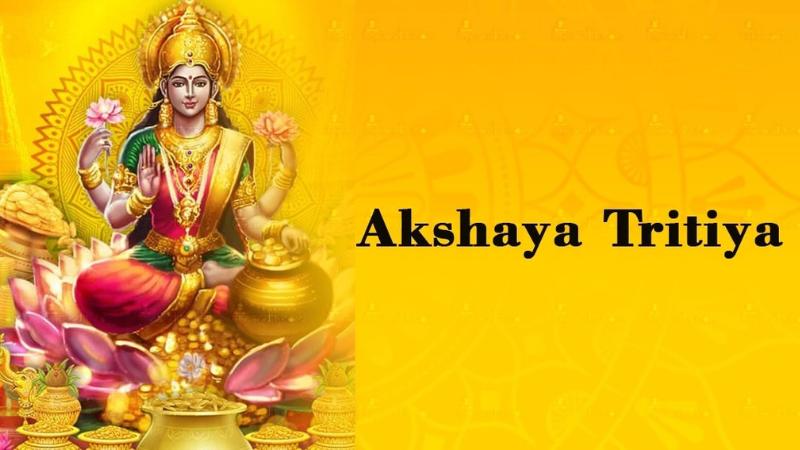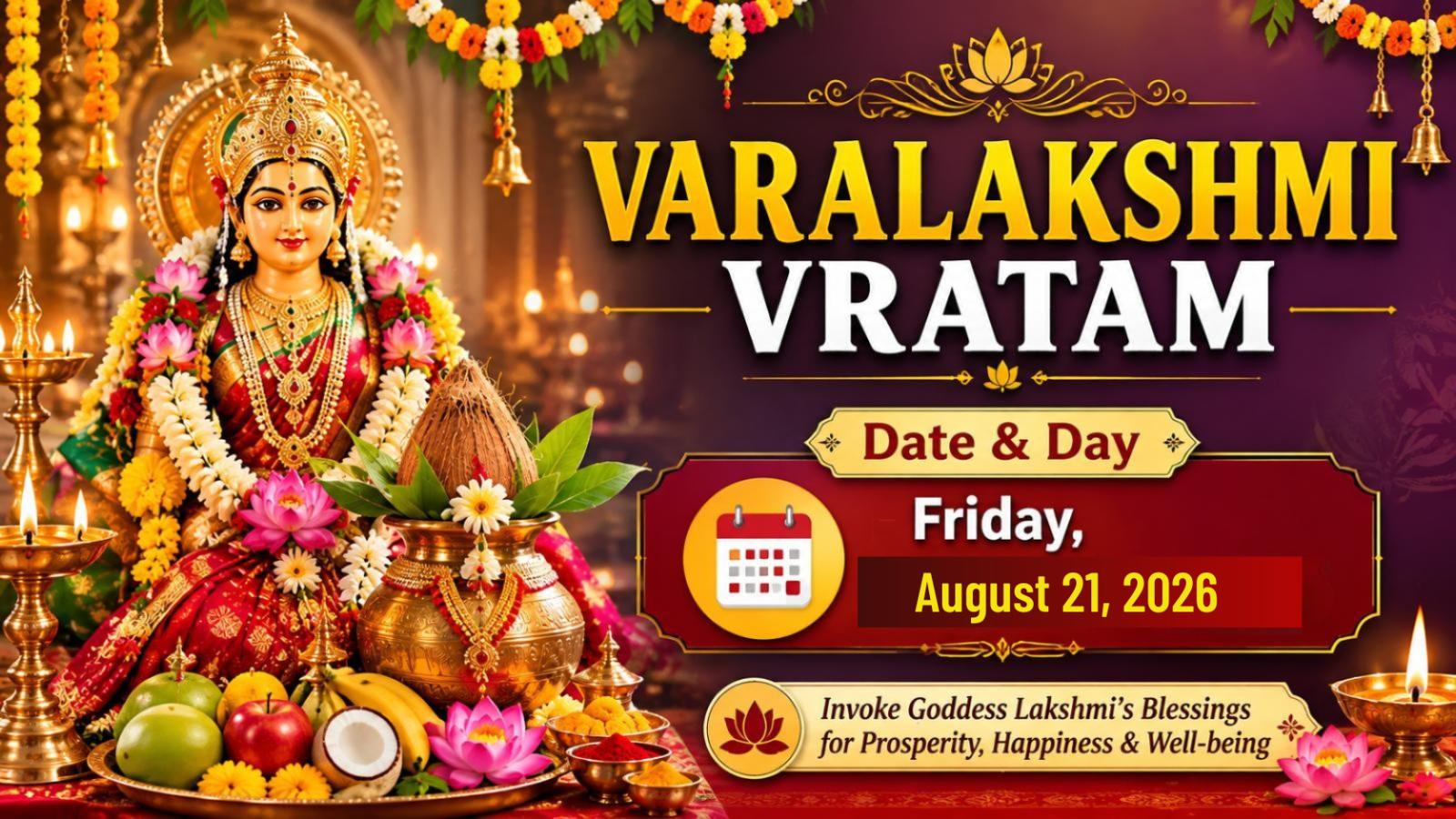
Varalakshmi Vratam is a Hindu observance dedicated to Goddess Varalakshmi, a form of Lakshmi associated with prosperity, auspiciousness and family well-being. Observed especially in South India, the vratam brings together Lakshmi worship, Kalasha puja, traditional offerings and prayers for the welfare of the household.
Varalakshmi Vratam meaning and significance
The name Varalakshmi combines “Vara,” commonly understood in this context as a boon or blessing, with Lakshmi, the goddess associated with prosperity and auspiciousness. Devotees therefore worship Varalakshmi seeking blessings that extend beyond material wealth to health, harmony, happiness and overall family prosperity.
The observance is particularly prominent in Andhra Pradesh, Telangana, Karnataka and Tamil Nadu, although customs differ between communities and families. Indian families living overseas also continue the tradition, often adapting the scale of the celebration while preserving its devotional purpose.
Varalakshmi worship is also commonly associated with the broader concept of Ashta Lakshmi, the eight manifestations of Lakshmi representing different forms of prosperity and abundance.
When Varalakshmi Vratam is observed
Varalakshmi Vratam is traditionally observed on a Friday during the Hindu month of Shravana, generally on the Friday preceding the full moon. Exact dates and puja timings should be checked against the appropriate regional panchang, as calendar conventions and local timings can differ.
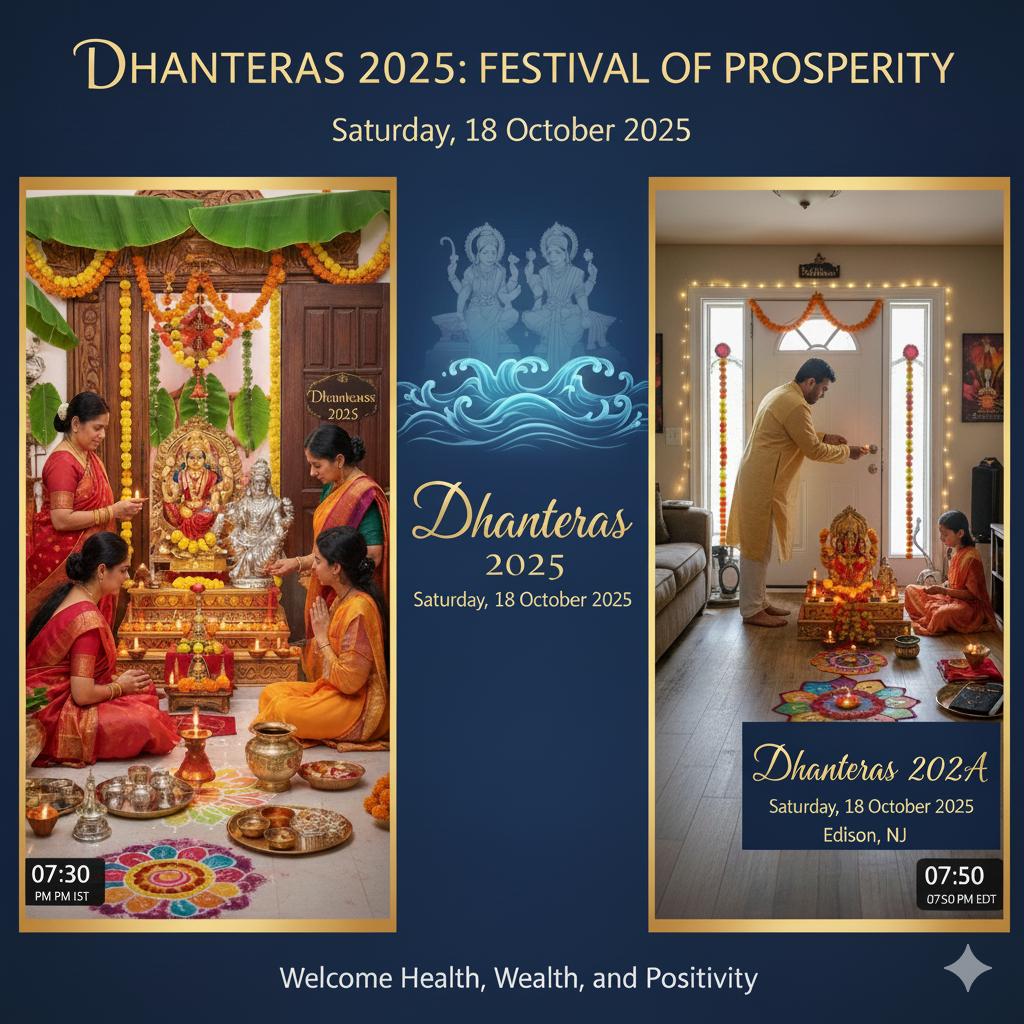
Preparations usually begin with cleaning the home and preparing a dedicated puja space. Families may decorate the area with flowers, mango leaves, lamps and rangoli or muggu before beginning the rituals.
Varalakshmi puja rituals and Kalasha worship
The decorated Kalasha is one of the most recognizable elements of Varalakshmi puja. Depending on family tradition, the vessel is prepared with auspicious items and topped with mango leaves and a coconut. A representation of Goddess Lakshmi may then be placed with the Kalasha and decorated with flowers, fabric, jewelry and garlands.
Devotees perform Sankalpa and offer turmeric, kumkum, flowers, fruits, incense and lamps. Prayers may include Lakshmi stotras, Lakshmi Ashtottara Shatanamavali and the traditional Varalakshmi Vratam story. Some traditions also include worshipping and tying a sacred thread.
There is no single ritual sequence followed by every household. Regional customs and practices inherited within families can determine how the vratam is performed.
Varalakshmi Vratam naivedyam and traditions
Naivedyam also varies by region and household. Devotees may prepare traditional sweets, payasam and other festive dishes along with fruits and coconut. Rather than treating an online list of puja items or foods as universally mandatory, families generally follow their established customs.
The deeper significance of Varalakshmi Vratam should not be reduced to seeking financial wealth. For devotees, the occasion represents gratitude, auspiciousness, family welfare and continuity of tradition. From elaborate celebrations to simple home worship, the central focus remains devotion to Goddess Lakshmi and prayers for a prosperous, harmonious and healthy household.