In 1945, the world was on the edge of significant change, driven by the destructive forces of war. The United States and Japan, two powerful nations, found themselves on a path of inevitable conflict, forever altering the course of history. Japan’s imperial ambitions across Asia and the Pacific created rising tensions with the U.S. and Western nations. The United States had long condemned Japan’s expansion, particularly its invasion of China and occupation of French Indochina, but it was the attack on Pearl Harbor on December 7, 1941, that officially thrust both nations into the Pacific War.
Japan’s refusal to halt its military conquests and its subsequent assault on the U.S. naval base in Hawaii led to the U.S. declaring war. The surprise attack crippled much of the U.S. Pacific Fleet and intensified America’s resolve to halt Japan’s imperial ambitions. As the war escalated, it became clear that the conflict would continue until one side surrendered.
By mid-1945, Japan’s military power had been significantly weakened, but its government remained determined to fight. With its refusal to surrender, President Harry S. Truman faced a critical decision. The U.S. had developed a new weapon—the atomic bomb—which could end the war in a matter of seconds. Developed under the secretive Manhattan Project, this weapon promised unprecedented destruction.
The U.S. aimed to bring the war to a swift end, minimizing both American and Japanese casualties. The prospect of a prolonged invasion of Japan, with certain massive losses, led Truman to approve the use of atomic bombs. This would not only force Japan to surrender but also demonstrate the growing technological might of the United States.
Before the bombings, the Battle of Okinawa in the spring of 1945 showed the intense resistance the U.S. would face if it invaded Japan. The battle, marked by kamikaze attacks and fierce resistance, highlighted Japan’s unwavering commitment to fight until the very end. This high level of resistance convinced U.S. military leaders that atomic weapons were the only way to quickly end the war.
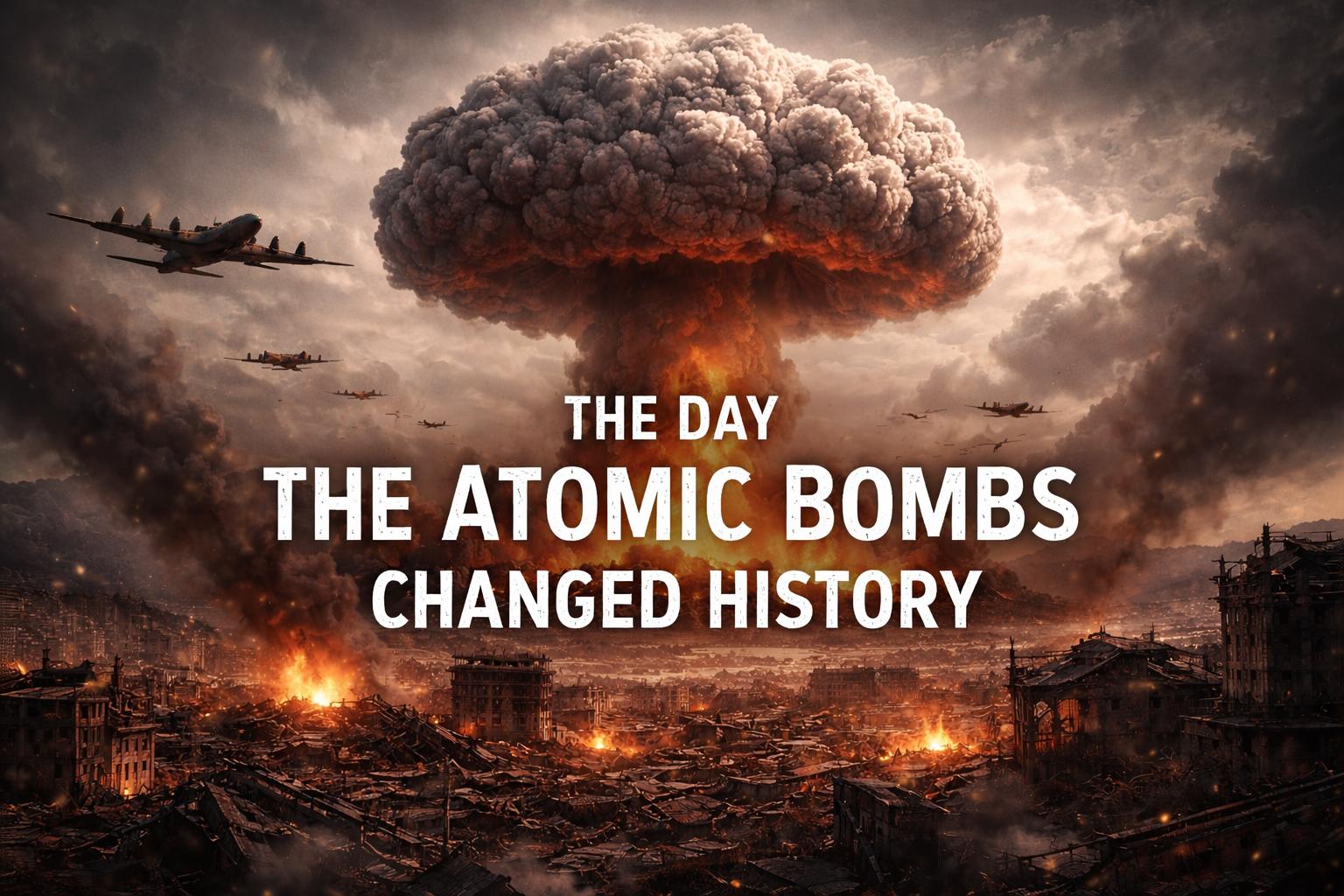
On August 6, 1945, the first atomic bomb, "Little Boy," was dropped on Hiroshima, a city of 350,000 people. The explosion immediately killed an estimated 70,000–80,000 people, with many more dying in the following months from radiation and injuries. The devastation was unimaginable, reducing the city to rubble. The intent was clear: force Japan’s leadership to surrender.
Just three days later, on August 9, 1945, the second atomic bomb, "Fat Man," was dropped on Nagasaki. The city’s location in a valley provided some natural protection, but the bomb still wrought massive destruction, killing between 40,000 and 75,000 people. The use of the second bomb was a direct push to Japan’s breaking point.
The bombings led to Japan’s surrender on August 15, 1945, and formal capitulation was signed on September 2, 1945, aboard the USS Missouri, marking the official end of World War II. The atomic bombings forever changed global warfare and demonstrated the immense destructive power of nuclear weapons.
The legacy of Hiroshima and Nagasaki continues to spark debates about the morality of using nuclear weapons. These bombings also sparked the nuclear arms race during the Cold War, with nations like the Soviet Union developing their own nuclear weapons. The world entered a new age where the threat of nuclear conflict loomed large, shaping international relations for decades to come.
In the next part, we will explore nuclear weapon deals between countries and the adverse effects if a nuclear war were to occur, examining how the world continues to grapple with the shadow of nuclear conflict.