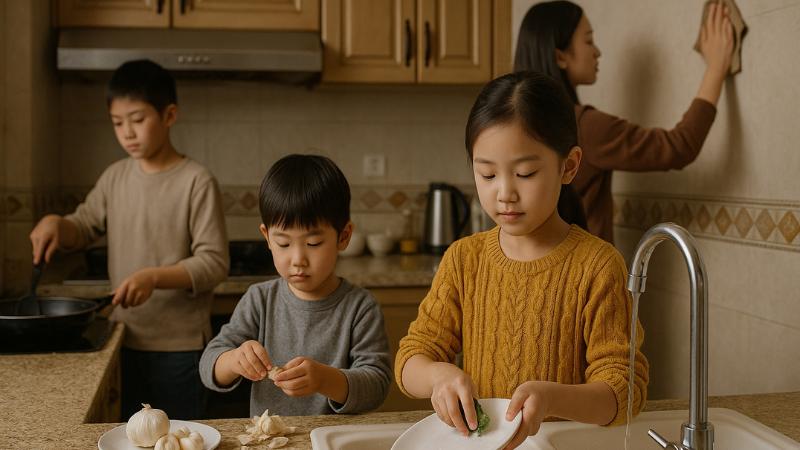
Videos of young Chinese children cooking meals, scrubbing floors, and folding laundry without adult help are going viral across platforms like Douyin, capturing global attention. From toddlers peeling garlic to elementary school kids making dumplings, the rising visibility of these domestic mini-experts reflects a larger cultural shift in parenting, discipline, and societal expectations in China.
This trend is being called xiaozhi, meaning “Little Grown-Ups” children taking on adult responsibilities at an early age. Unlike the past, where the infamous "Little Emperor Syndrome" saw single children overly pampered due to China’s former one-child policy, today's kids are being raised with more emphasis on contribution, discipline, and gratitude.
What’s Behind the Xiaozhi Phenomenon?
-
Changing Parenting Styles: Chinese millennial parents are moving away from an academically obsessed, nanny-dependent upbringing. Instead, they encourage their children to engage in daily chores like cooking and cleaning as a way to build real-life skills, emotional intelligence, and empathy.
-
Government-Backed Labor Education: In 2021, China's Ministry of Education introduced labor education as a mandatory school subject. Students are graded not just on academics but also on their ability to manage practical tasks. This shift aims to instill dignity in labor, independence, and appreciation for household responsibilities.
-
Social Media Influence: Platforms like Douyin have played a crucial role. Videos showing children baking, cooking, and tidying up have gone viral. These clips, often shared by parents, serve both as parenting inspiration and proof of evolving norms, sparking similar behavior among other families.
-
Urbanization and Smaller Families: With modern Chinese families often having fewer children and both parents working full-time jobs, children are expected to contribute more at home. It’s not about discipline alone; it’s about necessity and survival in dual-income urban households.
China is not alone in promoting early self-sufficiency in kids. Countries around the world have similar traditions but vary in their approach:
Japan: The Culture of Self-Reliance
In Japan, children learn responsibility from a very young age. Schools do not employ janitors — students clean classrooms and restrooms themselves. Kids as young as six walk to school, run errands, and manage tasks alone. Shows like Old Enough! on Netflix spotlight this remarkable trust and independence embedded in Japanese culture.
South Korea: Structured with Cultural Hierarchies
South Korean children, though known for intense academic schedules, are also expected to assist with chores and family responsibilities. Respect for elders and adherence to Confucian values shape their domestic roles, much like in China.
Scandinavian Countries: Freedom with Accountability
In Sweden and Denmark, children enjoy high levels of freedom but are also taught to take responsibility for their choices. Chores are normalized, and parenting leans towards democratic engagement. It’s not about control but about preparing children to be capable, self-reliant adults.
In a digital age where many children are glued to screens and overscheduled with classes and activities, the emphasis on practical life skills like cooking, cleaning, and caretaking offers a counterbalance. These early responsibilities promote confidence, resilience, and a deeper understanding of shared family duties. The xiaozhi movement highlights a broader societal realization that raising children isn’t just about test scores or technology proficiency. It’s about building grounded, compassionate, and capable human beings. Whether it’s the Chinese kitchen, the Japanese classroom, or a Danish living room, the message is clear: real-world skills are back at the heart of childhood.