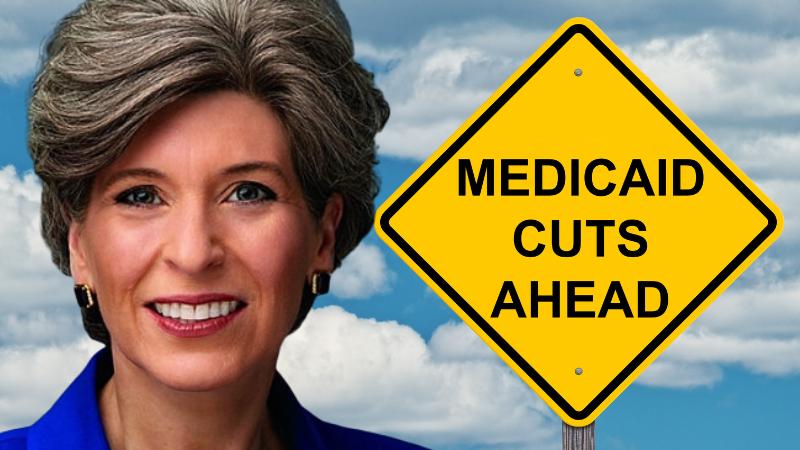
Senator Joni Ernst, a Republican from Iowa, found herself at the center of controversy during a town hall event in her home state, as constituents repeatedly challenged her over proposed Medicaid cuts included in the House's budget bill. Tensions escalated when an attendee accused the cuts of potentially leading to deaths, prompting Ernst to respond with a remark that drew immediate jeers from the crowd.
"People are not—well, we all are going to die, so, for heaven’s sakes," Ernst said, attempting to downplay the impact of the proposed changes. Her comment, however, was met with a resounding wave of disapproval from those in attendance, many of whom expressed concerns about the implications for vulnerable populations. The exchange began with a constituent voicing frustration that the proposed budget favors tax breaks for the ultrawealthy while simultaneously stripping away vital support programs like Medicaid and food assistance for struggling Americans. The attendee claimed the bill would ultimately leave many without coverage or aid.
In response, Ernst maintained that the changes target only those who were never intended to be on Medicaid under the original eligibility guidelines. She asserted that those who do not meet the criteria will be removed from the rolls, thereby ensuring the program is preserved for individuals who truly qualify. "They’re not currently eligible by the original definition of Medicaid, and they will be moved off of those Medicaid rolls, again still allowing those that are truly eligible for Medicaid to remain on those rolls," she said.
Ernst also referenced a figure that has been widely circulated among Republicans, including by the White House, claiming that 1.4 million undocumented immigrants are receiving Medicaid benefits. This number is based on a Congressional Budget Office analysis that found the bill would result in 1.4 million people losing coverage. However, the analysis includes a broader group beyond those with unverifiable immigration status. Still, Ernst insisted, "They are not eligible, so they will be coming off," which drew a sharp interjection from an attendee shouting, "People are going to die!"
It was at this moment Ernst made her now-viral comment about the inevitability of death. Following the backlash, she told the attendee, "What you don’t want to do is listen to me when I say that we are going to focus on those that are most vulnerable," trying to steer the conversation back toward the goal of reforming Medicaid responsibly.
Democratic leaders wasted no time in condemning Ernst’s remarks. Democratic National Committee Chair Ken Martin accused Ernst of revealing the Republican Party's indifference to human suffering. He argued that the budget's priority is to protect wealth over lives, saying the proposal would deprive millions of Americans, including children and seniors, of crucial healthcare and food assistance. He said Ernst’s flippant acknowledgment of mortality underlines a troubling lack of concern for the well-being of her constituents.
Ernst’s spokesperson pushed back on the criticism, saying, “While Democrats fearmonger against strengthening the integrity of Medicaid, Senator Ernst is focused on improving the lives of all Iowans. There’s only two certainties in life: death and taxes, and she’s working to ease the burden of both by fighting to keep more of Iowans’ hard-earned tax dollars in their own pockets and ensuring their benefits are protected from waste, fraud, and abuse.”
During the Butler County town hall, the senator was also questioned about cuts to programs like DOGE and her support for Defense Secretary Pete Hegseth. However, the spotlight remained firmly on the issue of Medicaid, with repeated questions from the audience about the consequences of the proposed changes. When attendees voiced concerns that benefits were being stripped, Ernst disputed the claim.
"Everyone says that Medicaid is being cut. People are going to see their benefits cut. That’s not true," she declared earlier during the town hall. Her statement was met with skepticism and vocal disagreement from attendees. Ernst defended the proposed changes by arguing that redirecting resources toward those who meet the eligibility standards would strengthen Medicaid in the long term.
"What we do need to do is make sure that those that are part of a vulnerable population have access to Medicaid and receive those full benefits. So, what we’re trying to do is strengthen Medicaid by directing the dollars to the people that actually meet the requirements of the program," Ernst said. "We will do much better."
Despite her insistence that the changes are aimed at reducing fraud and misuse, critics argue that the proposed budget will inevitably cause real harm, especially among low-income individuals and marginalized communities. The controversy surrounding her remarks has added to the growing tension between Republican lawmakers and voters concerned about the direction of healthcare policy in the country. As debate over the federal budget continues, Ernst's comments may serve as a flashpoint for future political discussions around healthcare, government responsibility, and economic justice.