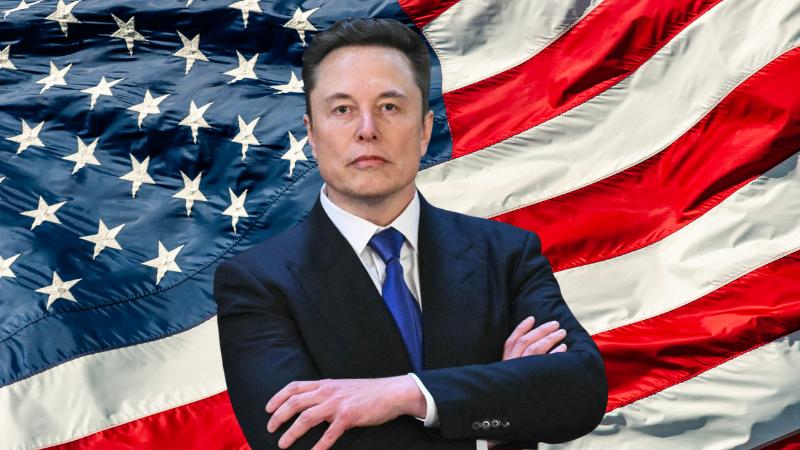
In a dramatic turn of events in American politics, billionaire entrepreneur Elon Musk has announced the launch of a new political party called the America Party, signaling a major break with former ally President Donald Trump. The announcement follows a bitter public fallout between the two high-profile figures over Trump’s massive domestic spending plan, which Musk has described as fiscally irresponsible and a threat to the nation’s economic stability.
Once among Trump’s most influential backers, including significant campaign donations and his leadership role in the controversial Department of Government Efficiency (DOGE), Musk has shifted gears, now painting both major political parties as complicit in enabling uncontrolled federal spending. His vocal criticism culminated in the creation of a new political force designed to challenge what he calls the “one-party system,” a term he uses to criticize the bipartisan support for what he sees as wasteful and excessive budgetary decisions.
The feud intensified following Trump’s push to pass a sweeping legislative package known as the One Big Beautiful Bill, a cornerstone of his domestic agenda. Musk sharply opposed the bill, warning it would add trillions of dollars to the national debt and calling it an act of “debt slavery.” The bill ultimately passed Congress, despite significant backlash from fiscal conservatives and public figures like Musk, who accused Republican lawmakers of betraying their campaign promises to rein in spending.
In response, Musk declared his intention to hold those lawmakers accountable, announcing the formation of the America Party to provide an alternative for voters dissatisfied with the traditional two-party system. His announcement came on July 6, just days after posting a poll on his social media platform, X, where over 1.2 million users responded to the question of whether they desired independence from the long-standing Republican-Democrat dominance. According to Musk, the results—two-thirds in favor—underscored a clear public demand for political change.
He further underscored his vision by sharing a symbolic meme portraying a two-headed snake, representing the major parties, captioned “End the Uniparty.” Through this, Musk positioned the America Party as a platform of reform, promising to restore what he calls true democratic choice.
The impact of Musk’s new political endeavor remains uncertain, particularly ahead of the 2026 midterm elections and the 2028 presidential race. However, he has hinted at a strategic approach to reshape the political landscape by targeting a handful of Senate and House races. Musk suggested focusing on two to three Senate seats and eight to ten House districts to create leverage and possibly become the deciding vote on major policy decisions.
Musk’s efforts are aimed not only at challenging incumbents but also at influencing the broader conversation on government accountability, spending discipline, and institutional reform. He accused certain lawmakers of campaigning on fiscal conservatism only to vote in favor of ballooning expenditures once in office. In a post earlier this week, Musk vowed political consequences for those who supported the bill, stating that “they will lose their primary next year if it is the last thing I do on this Earth.”
Tensions between Trump and Musk have escalated since the spending dispute, culminating in Trump suggesting he might explore stripping federal funds from Musk’s companies and even raising the possibility of deportation. While Musk has been a US citizen since 2002, his South African origins have been invoked by Trump in what many interpret as a political threat.
Despite these tensions, Musk appears determined to press forward with his vision. On July 5, he outlined a basic blueprint for political influence, emphasizing a hyper-targeted electoral strategy that could disrupt the power balance in tightly contested districts. He believes this would provide the America Party with the opportunity to become a kingmaker, if not a direct governing force.
While historical examples, such as Ross Perot’s third-party bid in 1992, raise concerns about vote-splitting and unintended political consequences, Musk seems undeterred. He argues that the current political structure has failed to prevent fiscal irresponsibility and that only a new political movement can restore accountability and transparency in governance.
The America Party’s formation marks a significant escalation in Musk’s political activism. No longer confined to commentary, campaign donations, or behind-the-scenes lobbying, Musk is now stepping into the arena as a political actor in his own right. With vast financial resources, a powerful media platform, and a growing following of disaffected voters, the tech mogul may yet emerge as a disruptive force in American politics—one capable of reshaping debates and challenging the status quo.
Whether the America Party gains enough traction to become a legitimate contender or fades into the crowded history of third-party experiments in the US remains to be seen. But one thing is clear: Musk’s entry into the political fray ensures that the coming election cycles will be anything but ordinary.