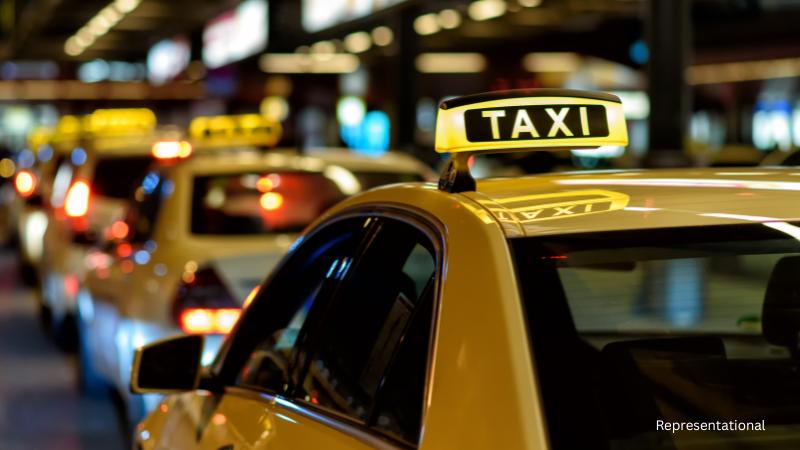
Tesla is reportedly preparing to launch its robotaxi service in the Bay Area as early as this weekend, signaling a major step forward in its autonomous vehicle ambitions. An internal communication shared with employees suggests the company plans to deploy self-driving vehicles starting Friday, moving up its previously anticipated timeline. The rollout includes a designated service area that reportedly covers regions not currently served by existing autonomous vehicle operators, giving Tesla a potential edge in early market positioning.
This decision follows a recent dip in the company’s quarterly sales and profit, which analysts view as a motivating factor in accelerating new initiatives. By bringing its robotaxi service to the Bay Area sooner than expected, Tesla appears to be positioning itself to recapture momentum and shift focus toward innovation-driven offerings that could enhance its long-term brand strength and customer engagement.
The version of the robotaxi service Tesla is preparing for the Bay Area closely resembles the trial recently conducted in another U.S. city. That test involved vehicles equipped with a human safety driver who retained access to braking and steering functions to intervene if necessary. Despite the vehicles operating autonomously, this safeguard ensured compliance with regulatory expectations and provided additional assurance during public testing phases. The same model is expected to be followed in the Bay Area’s early-phase deployment.
At this stage, access to Tesla’s robotaxi service will reportedly be restricted to invited users only. The invite-only model allows Tesla to control early testing, gather performance data, and fine-tune its system before opening the service more broadly to the public. This phased approach aligns with the company’s pattern of iterative development and real-world experimentation, especially for products heavily reliant on artificial intelligence and sensor-driven navigation systems.
Technology observers note that Tesla’s early rollout may be part of a larger strategy to position itself more competitively against existing players in the self-driving market. Unlike its competitors, which have already launched public robotaxi services in select California cities, Tesla’s reported service area includes neighborhoods not yet reached by rival fleets. This could offer a unique opportunity to claim untapped regions and demonstrate the scalability of its Full Self-Driving platform in dense urban environments.
Concerns about safety, reliability, and public acceptance remain important considerations. While Tesla has made significant advancements in its autonomous driving software, there is ongoing scrutiny surrounding the readiness of its systems for large-scale deployment. The Bay Area, with its complex road networks and traffic patterns, presents a rigorous testing ground that may highlight both the capabilities and limitations of Tesla's current technology.
The rollout also comes amid a broader conversation about the role of automation in public transportation and private mobility. With cities increasingly exploring smart infrastructure and AI-powered services, Tesla’s initiative could serve as a high-profile case study in how private companies integrate emerging technologies into everyday commuting experiences. However, the limited access model and the lack of official public launch details mean that its full impact may take time to assess.
No formal announcement has been made publicly by Tesla, and full details on pricing, availability, and service scope remain unavailable. However, the internal planning and employee briefings suggest a clear intent to proceed imminently. If the service does launch as scheduled, it would mark Tesla’s most visible step into autonomous ride-hailing in California, adding momentum to its broader mission of transforming transportation through automation.
For now, residents in parts of the Bay Area may begin seeing autonomous Tesla vehicles on local roads as part of this pilot phase. How the public responds, how the technology performs, and how regulators view the deployment will likely shape the path forward—not just for Tesla, but for the future of autonomous mobility in urban spaces.
This decision follows a recent dip in the company’s quarterly sales and profit, which analysts view as a motivating factor in accelerating new initiatives. By bringing its robotaxi service to the Bay Area sooner than expected, Tesla appears to be positioning itself to recapture momentum and shift focus toward innovation-driven offerings that could enhance its long-term brand strength and customer engagement.
The version of the robotaxi service Tesla is preparing for the Bay Area closely resembles the trial recently conducted in another U.S. city. That test involved vehicles equipped with a human safety driver who retained access to braking and steering functions to intervene if necessary. Despite the vehicles operating autonomously, this safeguard ensured compliance with regulatory expectations and provided additional assurance during public testing phases. The same model is expected to be followed in the Bay Area’s early-phase deployment.
At this stage, access to Tesla’s robotaxi service will reportedly be restricted to invited users only. The invite-only model allows Tesla to control early testing, gather performance data, and fine-tune its system before opening the service more broadly to the public. This phased approach aligns with the company’s pattern of iterative development and real-world experimentation, especially for products heavily reliant on artificial intelligence and sensor-driven navigation systems.
Technology observers note that Tesla’s early rollout may be part of a larger strategy to position itself more competitively against existing players in the self-driving market. Unlike its competitors, which have already launched public robotaxi services in select California cities, Tesla’s reported service area includes neighborhoods not yet reached by rival fleets. This could offer a unique opportunity to claim untapped regions and demonstrate the scalability of its Full Self-Driving platform in dense urban environments.
Concerns about safety, reliability, and public acceptance remain important considerations. While Tesla has made significant advancements in its autonomous driving software, there is ongoing scrutiny surrounding the readiness of its systems for large-scale deployment. The Bay Area, with its complex road networks and traffic patterns, presents a rigorous testing ground that may highlight both the capabilities and limitations of Tesla's current technology.
The rollout also comes amid a broader conversation about the role of automation in public transportation and private mobility. With cities increasingly exploring smart infrastructure and AI-powered services, Tesla’s initiative could serve as a high-profile case study in how private companies integrate emerging technologies into everyday commuting experiences. However, the limited access model and the lack of official public launch details mean that its full impact may take time to assess.
No formal announcement has been made publicly by Tesla, and full details on pricing, availability, and service scope remain unavailable. However, the internal planning and employee briefings suggest a clear intent to proceed imminently. If the service does launch as scheduled, it would mark Tesla’s most visible step into autonomous ride-hailing in California, adding momentum to its broader mission of transforming transportation through automation.
For now, residents in parts of the Bay Area may begin seeing autonomous Tesla vehicles on local roads as part of this pilot phase. How the public responds, how the technology performs, and how regulators view the deployment will likely shape the path forward—not just for Tesla, but for the future of autonomous mobility in urban spaces.