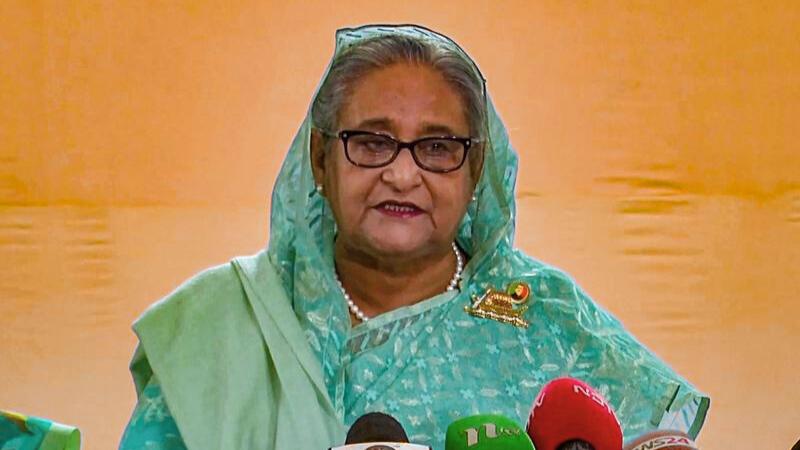
Bangladesh has issued one of its most severe political judgments in history, sentencing former Prime Minister Sheikh Hasina to death for crimes against humanity allegedly committed during the 2024 student protests. However, the ruling is complicated by the fact that Hasina is currently in India, where she has been living for over a year since fleeing Dhaka after her government collapsed. With the International Crimes Tribunal passing the harsh verdict in her absence, Bangladesh’s interim administration has renewed pressure on New Delhi to extradite her.
The extradition request, first formally submitted in December 2024, remains unanswered. Bangladesh’s interim leader Muhammad Yunus and senior officials have repeatedly urged India to send Hasina back to face the legal process. They argue that India, as a treaty partner, has a responsibility to comply. Dhaka’s foreign affairs adviser Md Towhid Hossain confirmed that multiple communications have been sent, while government representatives accused India of sheltering a convicted criminal and undermining bilateral trust. Statements from Dhaka have grown increasingly sharp, hinting that continued refusal could be viewed as hostility towards Bangladesh.
India and Bangladesh signed an extradition treaty in 2013, but its clauses give New Delhi considerable space to deny the request. The treaty clearly states that extradition may be refused if the offence appears political in nature, a defense Hasina has consistently invoked. The treaty also includes exceptions for cases where the judiciary may lack impartiality, or if accusations are not made in good faith. While murder and other violent crimes are excluded from being labelled political offences, the broader context of political unrest and rapid regime change in Bangladesh raises legal questions India must examine before making a decision.
Following the verdict, Bangladesh sent another diplomatic note insisting that India must return Hasina immediately. Meanwhile, India’s Ministry of External Affairs has taken a cautious approach. Officials confirmed receiving the request but have avoided committing to a position, instead emphasising that India’s priority remains peace, stability and democratic processes in Bangladesh. Foreign ministry representatives also noted that Hasina arrived in India seeking safety and continues to stay without any declared plans to leave. Analysts believe India will not rush a decision, especially with concerns about judicial fairness and recent incidents of violence in Bangladeshi courts.
Experts on South Asian politics argue that India is unlikely to extradite Hasina under current circumstances. Diplomatic relations between the two nations have been strained over the past year, and concerns remain about the environment she would face if returned. India may ask for stronger assurances from Dhaka about her safety, fair trial rights and protection from political retaliation. Alternatively, India could delay the process indefinitely while maintaining a neutral diplomatic posture.
Hasina’s immediate fate rests squarely with New Delhi. Whether India chooses legal caution, political diplomacy or moral reasoning, its next steps will determine not only the future of the former Bangladesh leader but also the direction of India-Bangladesh relations in the months ahead.