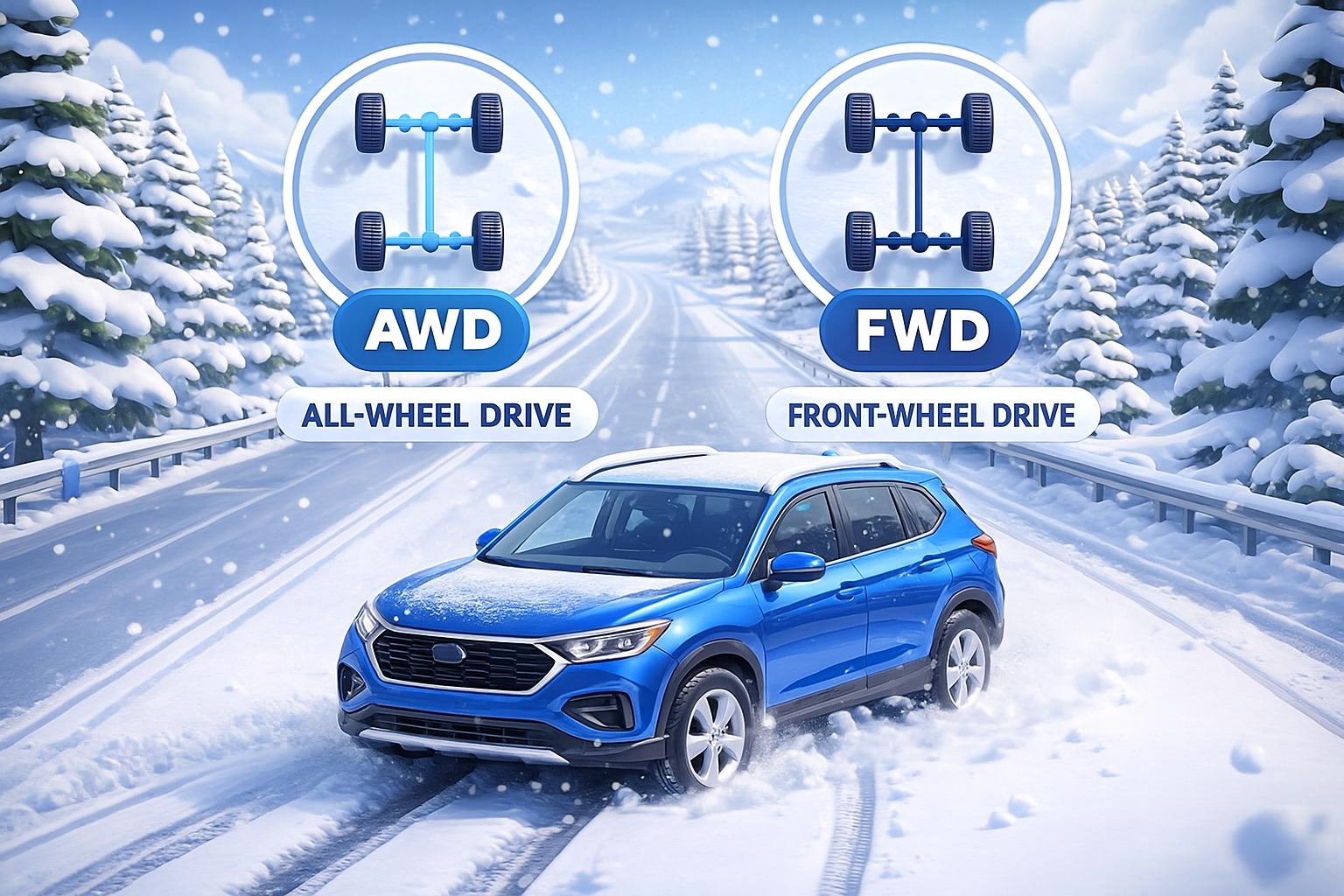
Winter driving brings challenges such as slippery roads, reduced visibility, and unpredictable traction. Two common drivetrain options people compare for snowy conditions are All-Wheel Drive (AWD) and Front-Wheel Drive (FWD). Both can handle winter roads, but they perform differently based on the depth of snow, road conditions, and driving style.
🚗 What is Front-Wheel Drive (FWD)?
FWD vehicles send power only to the front wheels.
The front wheels both pull the car forward and steer the vehicle.
✔️ Advantages of FWD in Snow
- Good traction for light to moderate snow
- Engine weight over front wheels improves grip
- More fuel efficient than AWD
- Cheaper to buy and maintain
- Ideal for city driving where roads are regularly plowed
❌ Limitations of FWD in Snow
- Struggles in deep or heavy snow
- Less stable on icy hills or steep roads
- Front wheels may spin when accelerating hard
- Not ideal for rural or poorly maintained roads
🚙 What is All-Wheel Drive (AWD)?
AWD vehicles automatically send power to all four wheels, distributing torque based on traction needs.
✔️ Advantages of AWD in Snow
- Much better traction on snow and ice
- Helps maintain control and stability in slippery conditions
- Performs well in deep snow
- Better acceleration from a stop on icy surfaces
❌ Limitations of AWD in Snow
- Does NOT improve braking distance
- More expensive to purchase and maintain
- Heavier and slightly less fuel-efficient
- Still requires good winter tires for best performance
⭐ AWD is better for driving in snow overall.
It offers superior traction, fewer wheel slips, and more stability in winter weather.
However:
👉 AWD + winter tires = best possible snow performance
👉 FWD + winter tires = good performance for light to moderate snow
If you live in an area with:
- Frequent snowfall
- Mountains or steep roads
- Icy conditions
→ AWD is highly recommended.
If you live in:
- Cities with mild winters
- Flat areas
- Places where roads are regularly cleared
→ FWD with proper tires is usually enough.
🛑 Important Reminder❗ AWD does NOT help you stop faster on snow or ice.
Braking ability depends only on tires, not drivetrain.
| Feature | AWD | FWD |
|---|---|---|
| Traction in Snow | ⭐⭐⭐⭐ | ⭐⭐⭐ |
| Deep Snow Capability | ⭐⭐⭐⭐ | ⭐⭐ |
| Stability on Ice | ⭐⭐⭐ | ⭐⭐ |
| Fuel Efficiency | ⭐⭐ | ⭐⭐⭐⭐ |
| Maintenance Cost | Higher | Lower |
| Best For | Heavy winter areas | Mild winter areas |