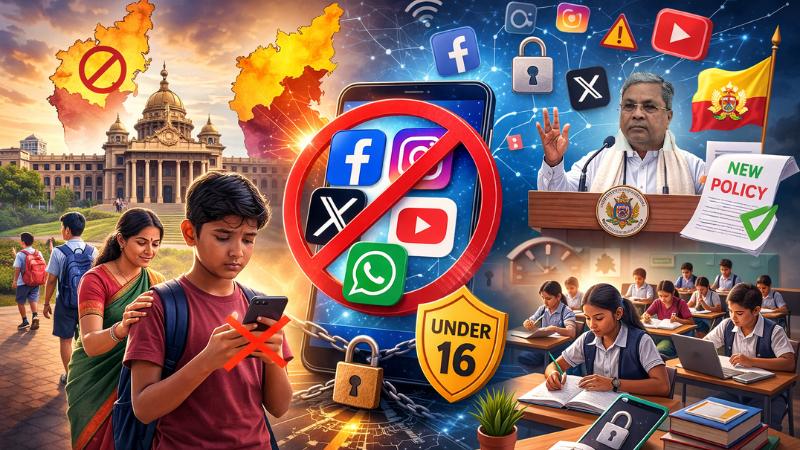
In a historic move, Karnataka’s Chief Minister Siddaramaiah announced a ban on social media use for children under the age of 16 during the state’s 2026–27 Budget presentation. This decision is driven by growing concerns about smartphone addiction, online safety risks, and excessive screen exposure, which have become major issues for young users. Karnataka is now the first state in India to take a definitive stance on regulating children’s access to social media, with other states like Andhra Pradesh and Goa also considering similar measures. The government has been discussing this issue for some time, with officials raising concerns about the adverse effects of unregulated social media use, especially on education and family dynamics.
The initiative aligns with a global debate on social media regulations for young users, with countries like Australia, the United Kingdom, and Finland already experimenting with restrictions on social media access for children. In Europe, countries like France and Spain have introduced measures to limit smartphone use in schools, reflecting concerns about distractions and online risks. Karnataka’s announcement follows ongoing discussions within the state, with leaders like Health Minister Dinesh Gundu Rao and IT Minister Priyank Kharge expressing concerns about the effects of excessive screen time on children’s mental and physical well-being. The idea of limiting smartphone use, particularly for children under 16, was also discussed with university vice chancellors.
Experts warn, however, that regulating children’s digital exposure is more complicated than imposing outright bans. While excessive smartphone use has been linked to anxiety, sleep issues, and academic stress, children’s exposure to personal data risks, such as privacy violations, online grooming, and cyberbullying, remains a major concern. Social media platforms collect vast amounts of sensitive information about users, which can be exploited for manipulation or surveillance. Additionally, artificial intelligence-driven algorithms increase the risk of children being exposed to harmful content or being manipulated through chatbots and targeted recommendations. Despite these risks, digital platforms also provide opportunities for education, creativity, and entrepreneurship, which complicates the issue further.
Many experts suggest a balanced approach that includes privacy protections, digital literacy programs, age-based safeguards, and parental controls. Rather than relying solely on prohibitions, policymakers are exploring ways to empower children with the knowledge and tools to navigate the digital world safely while mitigating the risks. As Karnataka takes a significant step toward restricting social media access for children, this move adds to the ongoing global challenge of balancing online safety with the benefits that the digital age offers to young users.