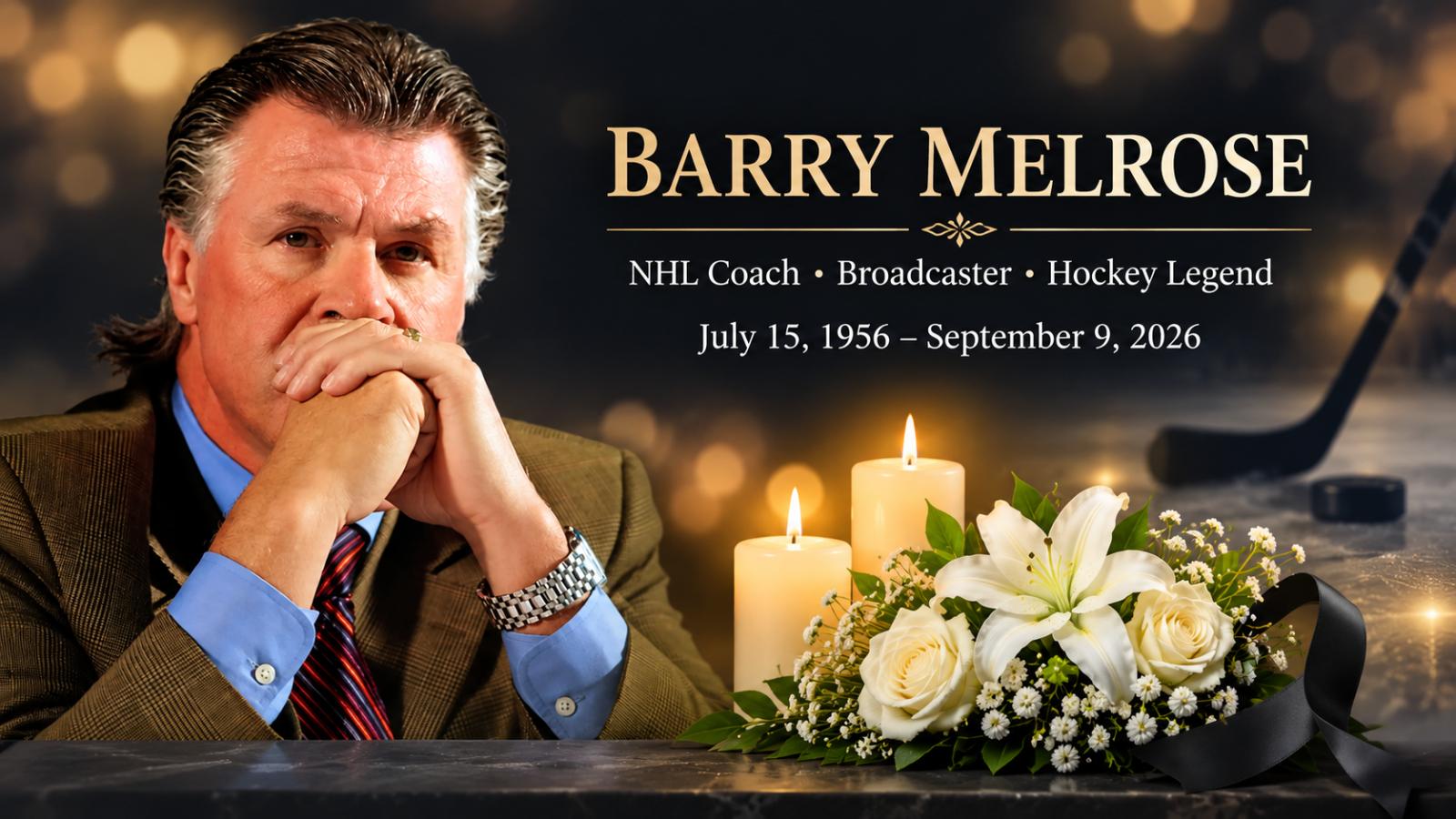
Barry Melrose, the former NHL coach, professional hockey player and Emmy-winning television analyst who became one of the sport’s most recognizable personalities in the United States, has died at the age of 70.
Melrose died on Wednesday, September 9, 2026, three years after stepping away from broadcasting following his Parkinson’s disease diagnosis in 2023.
For more than five decades, Melrose remained closely connected to hockey as a player, coach and television analyst. His distinctive mullet, colorful suits, lively personality and enthusiastic analysis made him instantly recognizable to generations of hockey fans.
Barry Melrose’s career in hockey
Born on July 15, 1956, in Kelvington, Saskatchewan, Melrose was selected by the Montreal Canadiens with the 36th overall pick in the second round of the 1976 NHL Draft.
He made his NHL debut with the Winnipeg Jets on October 10, 1979. The defenseman went on to appear in 300 NHL games during a career that included time with the Winnipeg Jets, Toronto Maple Leafs and Detroit Red Wings.
His final NHL appearance came in February 1986, but his influence on the game continued through coaching and broadcasting.
Melrose began his coaching career with Medicine Hat in the Western Hockey League during the 1987-88 season. He guided the team to a Memorial Cup championship and later coached Adirondack in the American Hockey League, winning the Calder Cup during the 1991-92 season.
Led Los Angeles to 1993 Stanley Cup Final
Melrose reached one of the biggest milestones of his coaching career after taking charge of Los Angeles ahead of the 1992-93 season.
With Wayne Gretzky leading a talented roster, Melrose guided the club to a 39-35-10 regular-season record and an impressive postseason run.
Los Angeles defeated Calgary and Vancouver before overcoming Toronto in a dramatic seven-game conference final. The team then advanced to the 1993 Stanley Cup Final, where Montreal won the championship in five games.
Melrose remained behind the Los Angeles bench for two more seasons before moving into television broadcasting.
He later made a brief return to NHL coaching with Tampa Bay during the 2008-09 season. His second coaching stint lasted 16 games before he returned to broadcasting.
Melrose became one of hockey’s best-known broadcasters
After moving from coaching into television, Melrose developed a reputation as one of hockey’s most recognizable analysts.
His straightforward analysis, humor and enthusiasm helped introduce the sport to a wider American television audience. Over the years, he covered major hockey events including All-Star Games, playoff series and Stanley Cup Finals.
His unique appearance also became part of his public identity. The combination of his famous mullet, long suit jackets and energetic personality helped distinguish him from other analysts.
Former players, colleagues and hockey executives remembered Melrose as someone whose passion for the sport extended far beyond television.
Wayne Gretzky, who played under Melrose during the historic 1993 playoff run, previously praised his contribution to hockey and described him as an important figure within the sport’s wider community.
Los Angeles hockey executive Luc Robitaille also remembered Melrose for his influence on the growth and popularity of hockey in the United States.
Parkinson’s diagnosis ended broadcasting career
Melrose announced his retirement from television in 2023 after being diagnosed with Parkinson’s disease.
At the time, he said he wanted to devote more attention to his health and family after spending more than 50 years playing, coaching and analyzing hockey.
His retirement triggered an outpouring of support from former players, colleagues and fans who had followed his career for decades.
Melrose’s impact stretched across several generations. He experienced professional hockey as a player, led teams from behind the bench and later became a familiar television presence who helped explain the game to millions of viewers.
He is survived by his wife, Cindy, and their sons, Tyrell and Adrien.
Barry Melrose leaves behind a legacy defined by his passion for hockey, his memorable coaching career and a broadcasting style that made him one of the sport’s most distinctive personalities.