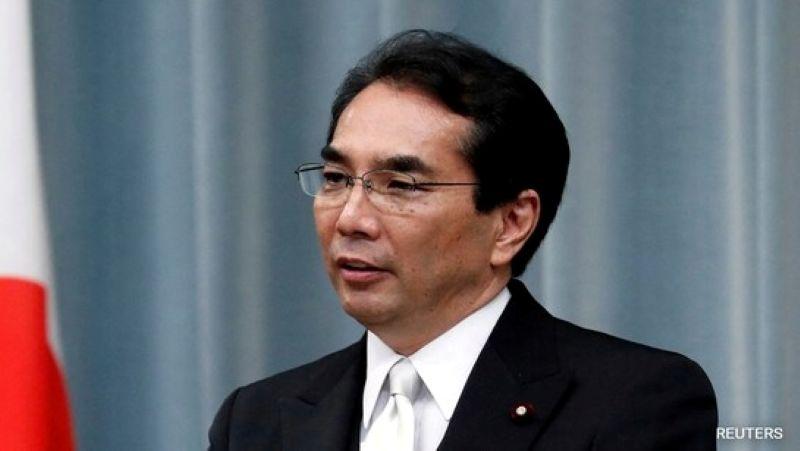
Japan's farm minister, Taku Eto, has issued a public apology after a controversial statement claiming he “never had to buy rice” triggered backlash among citizens struggling with record-high food costs. The comment, made during a political fundraiser on Sunday, was first reported by Kyodo News and quickly went viral, amplifying public frustration over rising staple prices and government inaction.
Retail rice prices in Japan have doubled compared to the previous year, driven by a combination of extreme heat impacting harvests and increased demand fueled by a booming tourism sector. As the nation copes with this inflation, the minister’s remark was perceived as tone-deaf and elitist. During the event, Eto remarked that he had so much rice from supporters that he had “enough to sell.” Video footage from NHK, Japan’s public broadcaster, showed him standing at a podium delivering the line to an amused audience. However, the wider public did not share that sentiment.
Online reactions were swift and furious. “You are done. Hurry up and resign,” one user posted on X, formerly known as Twitter. Others condemned the comment as insensitive, especially at a time when rice has become increasingly unaffordable for many households. Speaking to reporters the following day, Eto attempted to walk back his statement, saying, “I may have exaggerated to entertain the crowd. I misspoke.” He also tried to lighten the moment, saying, “I just got scolded by my wife over the phone. She told me that when we run out of rice, she’s the one who actually goes and buys it.”
Despite the apology, Eto avoided directly addressing whether he plans to resign. His remarks could not have come at a worse time for Prime Minister Shigeru Ishiba’s Liberal Democratic Party (LDP), which is already facing declining public approval ahead of the July upper house elections.
A new Kyodo News poll released the same day as Eto’s statement shows voter support for PM Ishiba at a record low of 27.4%, with nearly nine out of ten Japanese voters expressing dissatisfaction with the government's handling of rising rice costs. To mitigate the crisis, the Japanese government began releasing rice from emergency stockpiles as early as March. However, these measures have done little to stabilize prices or ease consumer concerns. The continued rise in prices reflects a deeper problem in Japan’s food supply system one that is now becoming a politically sensitive issue as elections approach. The incident underscores the growing disconnect between government officials and the daily struggles of ordinary citizens, as food inflation becomes one of the most pressing issues facing Japanese voters in 2025.