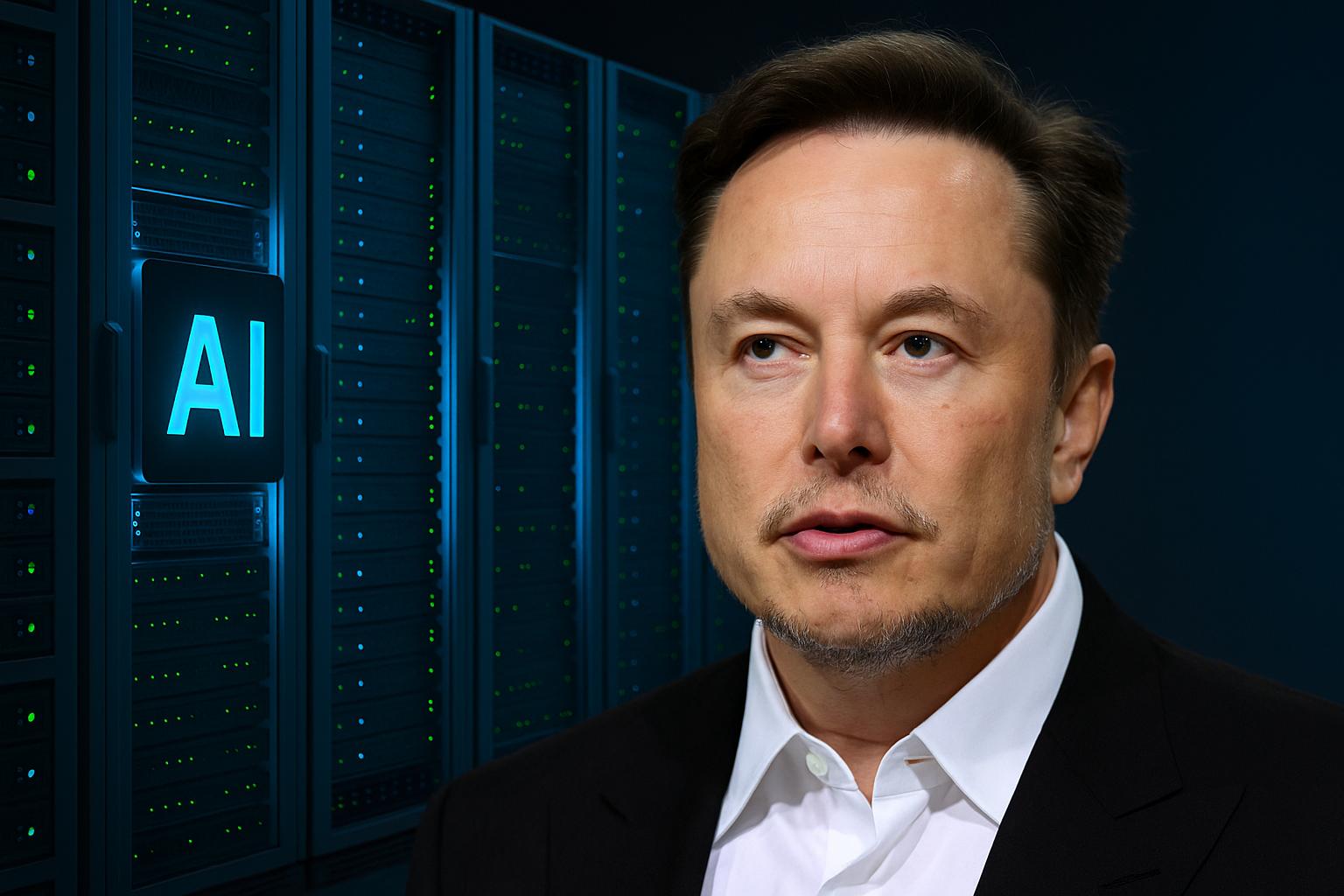
Elon Musk pushed back Wednesday against reports that his artificial intelligence company xAI had raised $15 billion in new capital, calling the claim false shortly after sources familiar with the matter indicated the funding round had closed. The initial reports suggested that investors had added $5 billion to an earlier $10 billion round disclosed in September, which placed the company’s valuation at roughly $200 billion. According to individuals close to the fundraising efforts, much of the capital was expected to be directed toward the purchase of graphic processing units, the critical hardware used to train and scale large language models.
Artificial intelligence companies continue to attract record levels of investor interest, driving valuations to unprecedented heights across the industry. Over the past year, the competition among major AI developers has accelerated as demand for high-performance foundational models has grown rapidly. In September, Anthropic secured $13 billion in funding, a move that nearly tripled its valuation compared to early 2024. In a similar trajectory, OpenAI completed a $6.6 billion share sale in October at a valuation of $500 billion, and recent reports indicate the company is preparing for a potential initial public offering that could push its value to $1 trillion.
Musk’s own AI ambitions have generated considerable controversy, particularly as xAI expands its data center operations. The company is rapidly building facilities in Memphis that rely on natural gas-powered turbines, raising concerns among local researchers about air quality and emissions in surrounding neighborhoods. The scale and speed of development have drawn heightened scrutiny as community groups and environmental experts warn of long-term health impacts.
Beyond infrastructure, xAI has also faced criticism for its products. The company’s chatbot, Grok, as well as its newly launched online encyclopedia Grokipedia, have both come under fire for producing false information and, in some instances, amplifying antisemitic content and other forms of hate speech. These issues have sparked debate about the safety and oversight of emerging AI systems, especially as companies race to deploy increasingly powerful tools.
In March, xAI acquired the social media platform X through an all-stock transaction valued at $33 billion, further intertwining Musk’s technology holdings. Meanwhile, Tesla—another company led by Musk—maintains various business relationships with xAI. Newer Tesla models include the Grok chatbot in their infotainment systems, and xAI has purchased tens of millions of dollars’ worth of Tesla’s battery energy storage products to power its data centers in Memphis.
The ties between the two companies became a point of discussion during Tesla’s annual shareholder meeting held last week. Investors approved a compensation plan for Musk that could yield up to $1 trillion in Tesla shares over the next decade if certain performance milestones are met. Shareholders also voted on a proposal that would have permitted Tesla to invest directly in xAI, but the measure did not receive enough support for the board to proceed with such an arrangement.
Tesla’s general counsel and corporate secretary, Brandon Ehrhart, acknowledged during the meeting that the company is evaluating how to move forward on the matter. He noted that while the proposal failed to reach the required threshold, the topic remains active within the company as it assesses future strategic decisions.
Despite Musk’s public denial of the reported $15 billion funding round, interest in xAI’s trajectory continues to grow as the company positions itself as a major competitor in an industry marked by rapid expansion, escalating infrastructure demands and increasing regulatory attention.