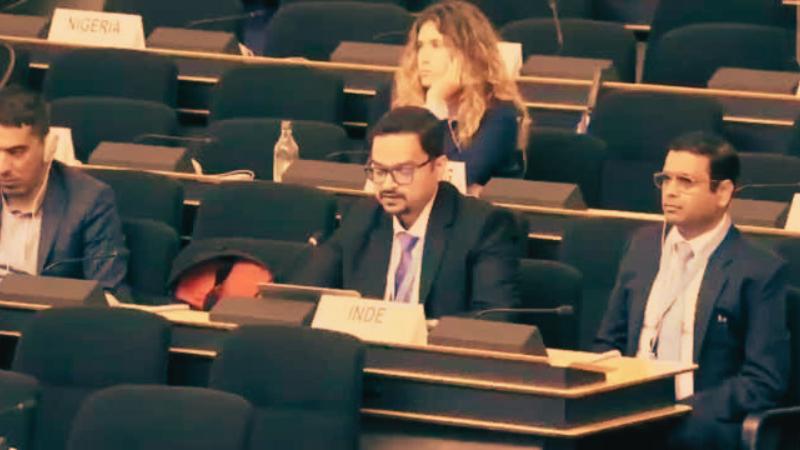
India issued a sharp rebuttal to Switzerland during the 60th Session of the UN Human Rights Council in Geneva after the Swiss delegation expressed concerns about the treatment of minorities in India. Representing New Delhi, Kshitij Tyagi, Counsellor at India’s Permanent Mission in Geneva, described Switzerland’s comments as “surprising, shallow, and ill-informed.” He emphasized that as the current president of the UNHRC, Switzerland should set an example by focusing on addressing its own deep-rooted issues such as racism, systematic discrimination, and xenophobia instead of making what India termed as “blatantly false” claims.
Mr Tyagi highlighted India’s identity as the world’s largest democracy with a historic embrace of pluralism and diversity. He stated that India remains open to assisting Switzerland in tackling its challenges related to racism and xenophobia rather than wasting time on narratives that distort India’s reality. The strong rebuttal underlined India’s position that external criticism on domestic issues must be grounded in fairness and not used as diplomatic posturing.
On the same day, India also engaged in a heated exchange with Pakistan at the Council. Responding to Islamabad’s remarks, Mr Tyagi accused Pakistan of misusing the forum to push political propaganda and reminded the chamber of Pakistan’s long record of sponsoring cross-border terrorism. He cited multiple terror attacks including Pulwama, Uri, Pathankot, Mumbai, and the recent Pahalgam attack in April, calling it an example of Pakistan’s continued export of violence.
Tyagi noted that Pakistan’s credibility has been eroded globally, recalling its role in sheltering Osama bin Laden in Abbottabad until his death in a US Navy SEAL operation. He linked the timing of Pakistan’s falsehoods with the anniversary of the 9/11 attacks, underscoring global memory of terrorism. In strong words, Tyagi said India required no lessons from “a terror sponsor, a persecutor of minorities, and a state that has squandered its own credibility.”
The exchanges at the UNHRC highlighted the growing friction in multilateral platforms where human rights debates often intertwine with political rivalries. India’s response to Switzerland and Pakistan signals its readiness to defend its record while pushing back against what it views as biased or politically motivated criticism.