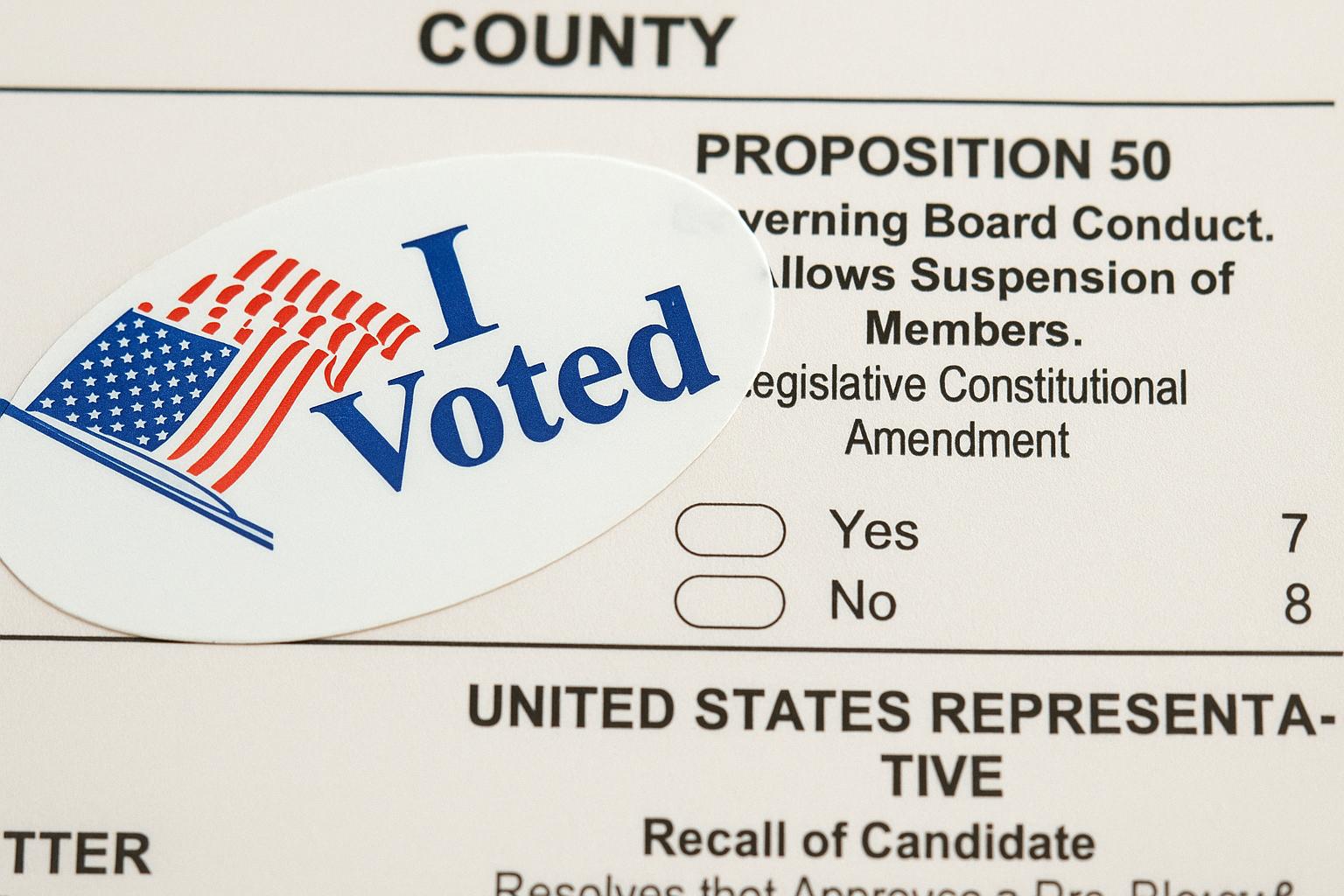
Proposition 50 gained strong support statewide and was projected to pass comfortably by Tuesday evening. Its approval opens the path for legislative adjustments and potential shifts in representation, with Democrats expected to benefit in several congressional districts once final tallies are confirmed. The measure’s success reflects California’s continued trend toward progressive decision-making and civic engagement on statewide initiatives.
In the Bay Area, local voters faced several significant measures and elections. In Marin County, residents of Fairfax voted on whether to recall certain local officials. The recall drew intense public attention, centered on issues of community leadership and local accountability. Supporters viewed it as a step toward greater transparency in government, while opponents argued it risked disrupting ongoing municipal projects and policy continuity.
Santa Clara County voters were tasked with deciding on a proposed sales tax increase designed to support infrastructure improvements, transportation systems, and social programs. The ballot also included the race for a new county assessor, with candidates focusing on fair property assessment and fiscal responsibility. These local contests highlighted the region’s focus on financial stability, public services, and community growth amid broader economic challenges.
County election offices began mailing ballots on October 6, allowing residents to vote early through California’s well-established vote-by-mail system. Ballots could be returned by mail, dropped off at official locations, or delivered directly to county offices. State regulations require all mail-in ballots to be postmarked on or before November 4 and received by November 12 to be counted in the official results.
While many contests produced clear outcomes by late Tuesday night, some close races remained undecided as counting continued into the week. Officials noted that mail-in ballots often take several days to process, particularly when turnout is high or when ballots are submitted close to the deadline. Voters were reminded that this extended counting period ensures accuracy and integrity in final reporting. The November election demonstrated steady civic participation throughout the Bay Area and across California, even in an off-year cycle. Voter engagement remained strong, driven by local issues such as taxation, governance, and public accountability, as well as statewide initiatives with broader implications.
As final counts are completed, the approval of Proposition 50 and the outcomes of Bay Area local races will help shape California’s next phase of governance. From fiscal policy to public services, the results highlight a combination of local decision-making and state-level vision that continues to define the region’s political identity. The election reaffirmed California’s reputation for active voter participation and issue-driven politics. With final results expected in the coming days, the November special election serves as both a reflection of community priorities and a preview of evolving political trends across the state.