India delivered a firm rebuttal to Pakistan at the United Nations after Islamabad once again raised the issue of Jammu and Kashmir during a session of the General Assembly, reiterating New Delhi’s position that the matter is an internal issue and not subject to international mediation. Indian officials accused Pakistan of repeatedly misusing multilateral forums to promote a divisive political narrative that does not reflect realities on the ground.
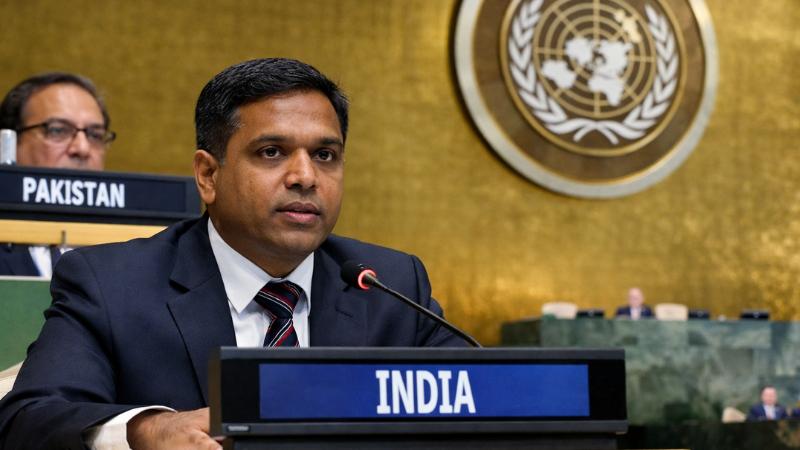
The response followed comments made by Pakistan’s Permanent Representative to the United Nations, who referred to Jammu and Kashmir during his address to the General Assembly. Speaking during the plenary discussion on the Secretary-General’s annual report, India’s representative dismissed the remarks as inappropriate and politically motivated, stressing that such references detract from the broader objectives of the UN.
Presenting India’s national statement, Eldos Mathew Punnoose, Counsellor at India’s Permanent Mission to the United Nations, said Pakistan has developed a pattern of politicising international platforms to advance narrow national agendas. He noted that while multilateral institutions are intended to foster cooperation and collective problem-solving, Pakistan continues to divert discussions toward bilateral disputes that have no place in such forums.
Punnoose reaffirmed that Jammu and Kashmir is an inseparable part of India and said attempts to question its status are unjustified. He added that repeated efforts by Pakistan to internationalise the issue have failed to gain meaningful global support, reflecting the international community’s understanding of the matter as a bilateral issue governed by India’s constitutional framework.
Addressing broader principles, India cautioned against the selective interpretation of self-determination. While acknowledging it as a foundational principle of the United Nations, Punnoose warned that misusing the concept to legitimise separatist agendas risks undermining democratic and pluralistic societies. He urged responsible discourse that respects sovereignty, territorial integrity, and established international norms, and called on Pakistan to refrain from making allegations that misrepresent facts.
Beyond the bilateral exchange, India used the platform to highlight concerns of the Global South, emphasizing the need for sustained international attention to development challenges, inequality, and access to resources. Punnoose said India has consistently worked to amplify these issues across UN forums and called for concrete follow-up actions to translate collective commitments into measurable outcomes for developing nations.
India also expressed concern over the United Nations’ limited effectiveness in responding to ongoing global conflicts, warning that prolonged inaction erodes the organisation’s credibility. With conflicts intensifying in several regions, Punnoose said the international community expects the UN to play a decisive role in reducing human suffering, supporting peace processes, and upholding international peace and security.
He noted that the UN is at a critical juncture, facing heightened expectations across its core mandates of peace and security, development, and human rights. India, he said, remains committed to constructive engagement within the UN system while urging all member states to act responsibly and avoid politicising platforms meant to serve global interests.