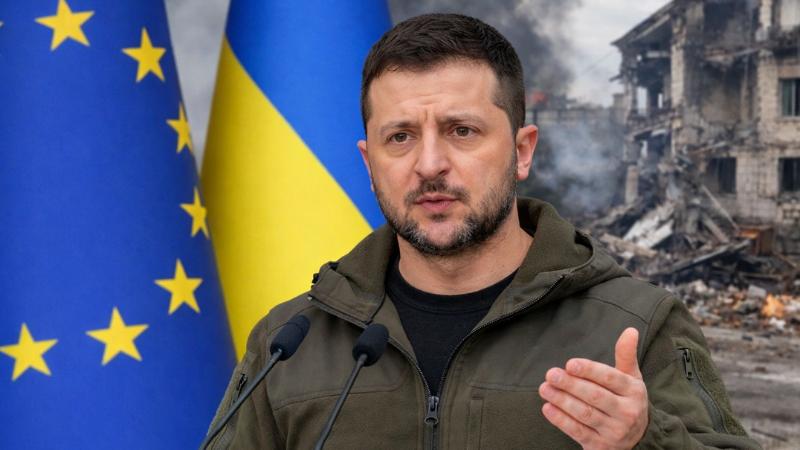
Ukrainian President Volodymyr Zelenskyy has stated that Ukraine expects to become a member of the European Union in 2027, underlining that a clear accession timeline must be part of any future peace agreement. Speaking during a joint press conference with the presidents of Lithuania and Poland in Vilnius on Tuesday, Zelenskyy stressed that a fixed date for EU membership would serve as a crucial security guarantee for Ukraine and reduce the risk of political or procedural delays in the accession process.
The president said that Ukraine’s integration into the European Union is not only a strategic objective for Kyiv but also an essential element of long-term stability for the continent. According to Zelenskyy, a defined accession date would reinforce confidence among international partners and help anchor Ukraine firmly within Europe’s political, economic, and security framework at a time when the country continues to face sustained military pressure from Russia.
Zelenskyy also held a telephone conversation with Austrian Chancellor Christian Stocker, during which the two leaders discussed Ukraine’s path toward EU membership and the worsening energy situation caused by repeated Russian attacks. Ukraine’s energy infrastructure has been targeted extensively in recent months, resulting in widespread disruptions to electricity and heating supplies across several regions.
In a statement shared on social media, Zelenskyy said the daily strikes on energy facilities were aimed at leaving millions of Ukrainians without basic services, particularly during critical periods. He welcomed Austria’s recent decision to allocate financial assistance to support Ukraine’s energy sector, calling the move an important signal of solidarity. The discussion also covered additional measures that could help stabilize and protect Ukraine’s power system against ongoing attacks.
Beyond energy concerns, Zelenskyy briefed the Austrian chancellor on recent trilateral discussions involving Ukrainian, American, and Russian representatives that took place in the United Arab Emirates. Those talks, he noted, focused primarily on military matters and potential security guarantees, reflecting continued diplomatic efforts to address the broader conflict.
Reiterating his position on European integration, Zelenskyy said that Ukraine’s EU membership would strengthen not only national security but also Europe’s collective resilience. He argued that Ukraine brings significant security, technological, and economic capabilities that would contribute positively to the European Union as a whole. For this reason, he emphasized the importance of setting 2027 as a concrete target and expressed confidence that partner nations would support this goal.
Zelenskyy also extended an invitation to Chancellor Stocker to visit Ukraine for in-person discussions, signaling Kyiv’s intention to maintain active diplomatic engagement despite the ongoing war.
Meanwhile, Russian attacks continued to take a toll on civilians. Ukrainian regional authorities reported multiple fatalities following drone strikes and shelling in several areas. In the southern port city of Odesa, a drone barrage resulted in two deaths and left dozens of people injured. In eastern Donetsk region, a couple aged 45 and 48 were killed in the city of Sloviansk, while a 58-year-old resident was killed in a drone strike on a home in the Zaporizhzhia region. Another civilian, a 72-year-old woman, died in her home in the southern Kherson region as a result of shelling.
As the conflict persists, Ukrainian officials continue to frame EU accession as a central pillar of the country’s future security and recovery, linking political integration with Europe to broader efforts to end the war and rebuild national resilience.


 Joyful
0%
Joyful
0%
 Cool
0%
Cool
0%
 Thrilled
0%
Thrilled
0%
 Upset
0%
Upset
0%
 Unhappy
0%
Unhappy
0%