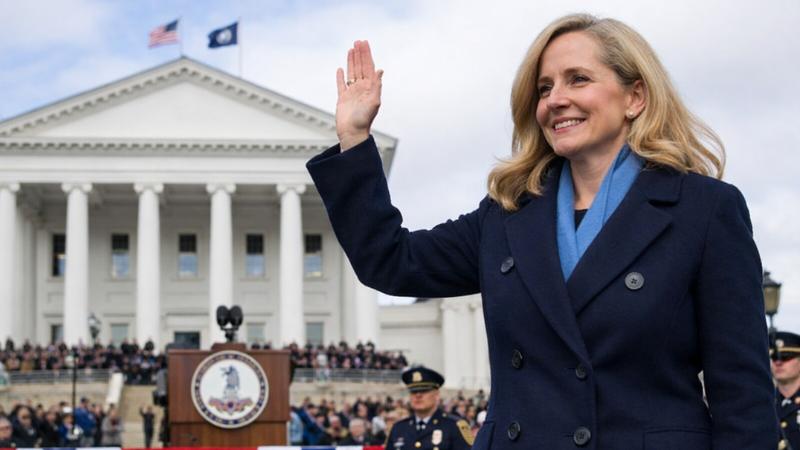
RICHMOND, Va. — Virginia is set to mark a historic milestone on Saturday as Governor-elect Abigail Spanberger is sworn in as the Commonwealth’s first woman to hold the state’s highest office. The inauguration ceremony will take place in Richmond, drawing state leaders, invited guests, and residents to an event that underscores a significant shift in Virginia’s nearly 250-year political history.
Spanberger will officially assume office during a midday ceremony outside the Virginia Capitol, formally beginning her term as governor. The inauguration will be streamed live on a local television station’s digital platform, allowing viewers across the state and beyond to watch the proceedings in real time or on demand through connected televisions, mobile devices, and online streaming services.
As preparations continue, Spanberger has reflected publicly on the broader meaning of the moment, noting that her campaign focused primarily on policy goals and the everyday challenges facing Virginians. In recent days, however, she said the symbolic weight of becoming the first woman to serve as governor has become more apparent, particularly through interactions with residents who see the moment as deeply personal and generational.
Spanberger recounted conversations with parents and young people who expressed surprise that the state had not previously elected a woman to the role. She said those exchanges reinforced the idea that her inauguration represents more than an individual achievement, signaling a shift in expectations for future generations. According to Spanberger, seeing women in positions of executive leadership will increasingly be viewed as normal, whether the work involves ceremonial duties or navigating difficult policy decisions during times of uncertainty.
The governor-elect will take office on Jan. 17 following a decisive victory in November’s election, where she defeated Republican Lt. Gov. Winsome Earle-Sears by a wide margin. Her win was viewed as a significant result for Democrats statewide and came amid a broader national political landscape that has raised questions about shifting voter sentiment ahead of upcoming midterm elections.
Spanberger, a former member of Congress, has said her experience in Washington shaped her approach to governance, particularly during periods of divided leadership at the federal level. She has emphasized a willingness to work across party lines when policies align with Virginia’s economic interests and shared priorities, while also making clear that she intends to firmly oppose actions she believes could harm the state’s workforce, economy, or communities.
At the start of her term, Spanberger plans to focus on economic relief measures aimed at addressing cost-of-living pressures. Her early agenda includes proposals to strengthen tenant protections against eviction and initiatives designed to reduce prescription drug costs for residents. She has framed these priorities as essential steps to provide stability for families facing rising expenses.
Critics from conservative circles have raised concerns about the potential economic impact of her policy plans, arguing they could increase costs for residents during a period marked by economic uncertainty, declining federal funding, and inflationary pressures. Supporters, however, view her proposals as necessary interventions to protect vulnerable households and support long-term economic resilience.
As Virginia prepares for the inauguration, the ceremony represents both a formal transfer of power and a symbolic turning point. For many residents, Spanberger’s swearing-in signals a redefinition of leadership in the Commonwealth and sets a precedent that may influence the political aspirations of future generations.