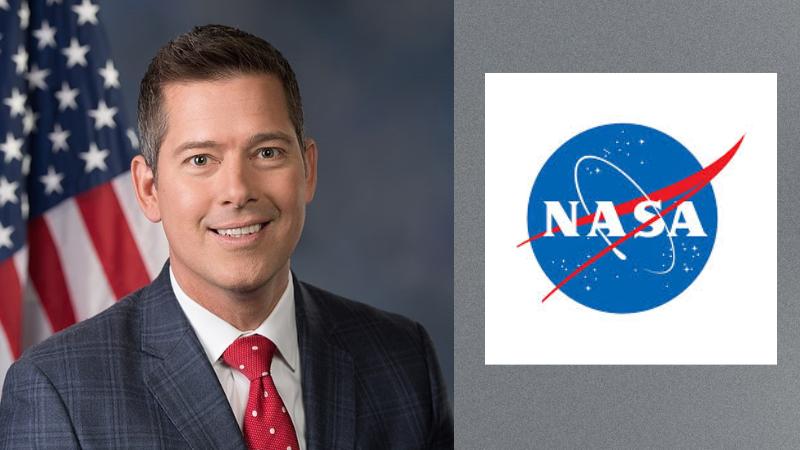
President Donald Trump has appointed current Transportation Secretary Sean Duffy as interim administrator of NASA, signaling a renewed push to align the agency with his administration’s broader national agenda. The decision, announced Wednesday, highlights the increasing strategic importance of space in U.S. defense, technological innovation, and economic development.
Trump made the announcement through his official communication channels, calling Duffy a proven leader and commending his work revitalizing the Department of Transportation. He pointed to improvements in infrastructure and air traffic modernization as key accomplishments during Duffy’s tenure, stating that such achievements demonstrate the leadership qualities necessary to guide the nation's space agency—even in an interim capacity.
"I am pleased to announce that I am directing our great secretary of transportation, Sean Duffy, to be interim administrator of NASA," the president wrote. "He will be a fantastic leader of the ever more important space agency, even if only for a short period of time."
Duffy, a former Republican congressman from Wisconsin and a staunch Trump ally, accepted the appointment with enthusiasm. In a brief social media post, he expressed excitement about leading the nation’s space efforts, writing, “Honored to accept this mission. Time to take over space. Let’s launch.”
This appointment comes after the withdrawal of Trump’s previous nominee, billionaire entrepreneur and private astronaut Jared Isaacman. Nominated in late 2024, Isaacman’s candidacy was marred by concerns over his close affiliations with private aerospace entities, particularly SpaceX and Elon Musk. These ties raised red flags over potential conflicts of interest, prompting scrutiny from both within and outside the administration.
In a statement regarding the change, Trump noted that the decision to retract Isaacman’s nomination followed a thorough review of prior associations and growing discomfort with what he referred to as “corporate entanglements.” The move appears to be part of a broader effort to separate public space initiatives from private sector influence, while still keeping innovation at the forefront.
Janet Petro, who had been serving as acting NASA administrator since January, will step aside for Duffy. Petro’s tenure was marked by continuity and administrative oversight during a transitional period for the agency. While not a controversial figure, her leadership was viewed as temporary as the administration deliberated on a long-term vision for NASA’s future.
NASA, under the Trump administration, is becoming increasingly intertwined with national security and geopolitical strategy. The president has repeatedly emphasized the role of space as a new frontier in both defense and economic opportunity. The creation of the United States Space Force during Trump’s first term laid the foundation for this strategic pivot, and this new appointment reinforces that commitment.
Duffy’s background in transportation and infrastructure may seem unconventional for a space leadership role, but supporters argue that his experience managing large federal agencies and navigating complex logistical systems makes him uniquely suited to take over the reins of NASA during a critical period. The interim status also provides flexibility for the administration as it continues to consider long-term candidates.
While Duffy’s exact plans for the agency remain to be detailed, the appointment is seen by analysts as an indicator of the administration’s priority to further solidify U.S. dominance in space-related sectors. From satellite defense to lunar exploration and Mars missions, the next phase of NASA’s leadership will likely reflect Trump's broader strategic goals—less emphasis on exploration for exploration’s sake and more on national advantage and global competitiveness.
As the agency enters yet another phase of change, the question of permanent leadership still looms. Duffy’s appointment is temporary, but the policy signals behind the move are long-lasting. Space, once the domain of scientists and explorers, is now a pillar of national interest and presidential focus.
With the 2025 administration continuing to shape key federal institutions, Duffy's interim leadership at NASA will be closely watched. Whether his role evolves into a longer-term position or merely sets the stage for the next nominee, it is clear that the future of space policy under this administration is far from being on autopilot.