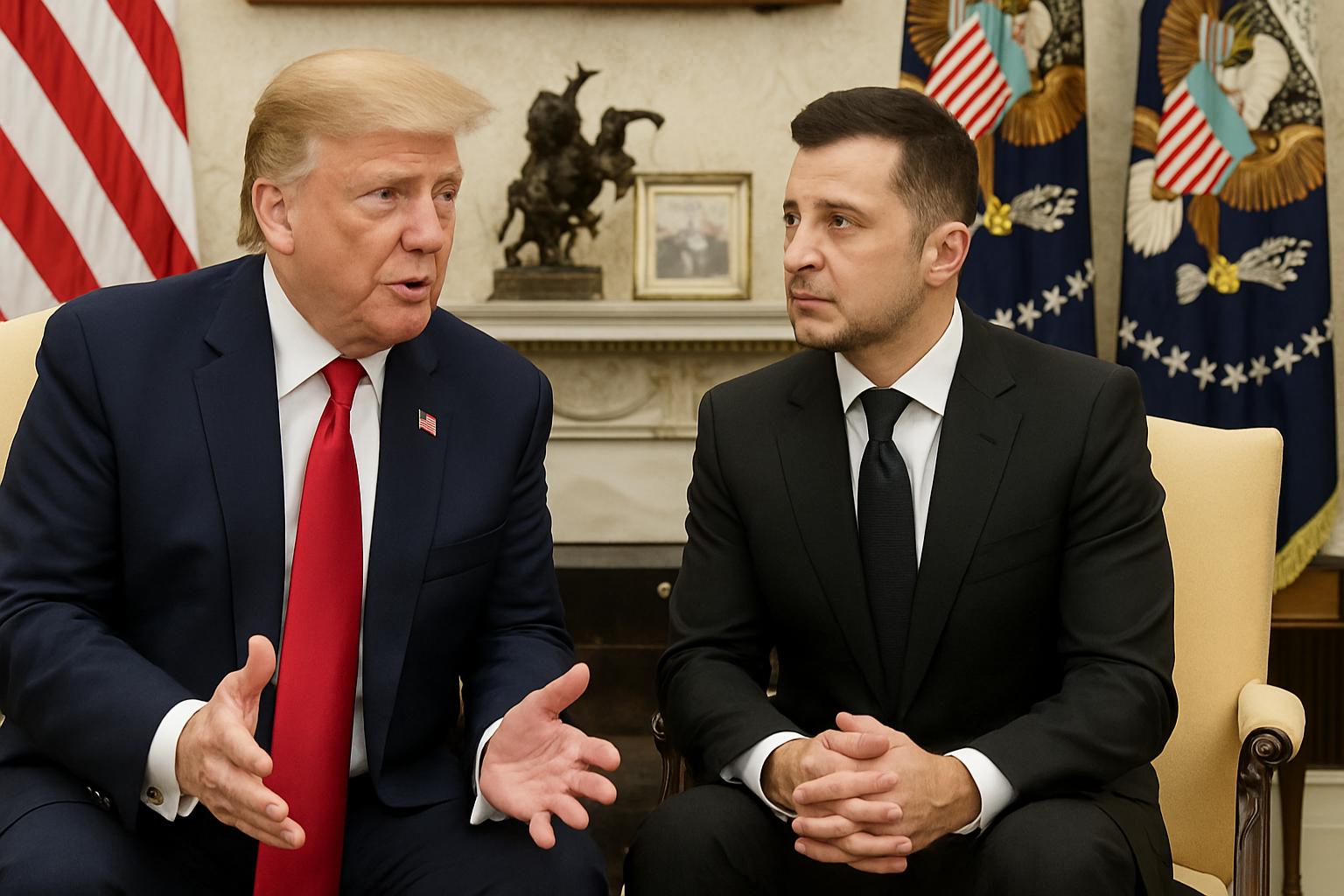
Washington — In a meeting with Ukrainian President Volodymyr Zelenskyy at the White House on Friday, U.S. President Donald Trump characterized the idea of supplying Tomahawk cruise missiles to Ukraine as premature, stating that diplomatic avenues toward peace with Russia should be exhausted first. The meeting follows a lengthy phone call Trump held with Russian President Vladimir Putin, and precedes a planned Trump–Putin summit in Budapest.
Zelenskyy arrived in Washington on Friday with a delegation of senior aides to press for enhanced military support, including long-range missiles capable of striking deep inside Russia. He met with Trump over a working lunch during which Ukraine’s demand for Tomahawk missiles was a central topic. Earlier in the day, Trump had engaged in a direct conversation with Putin, further complicating Ukraine’s expectations.
“We believe it is premature to transfer Tomahawks at this point,” Trump told the Ukrainian delegation. He added that he was optimistic about the possibility of persuading Putin to end the war, citing his prior phone call with the Russian leader. Trump also raised concerns about preserving U.S. reserves of such missiles, which have strategic value for American defense.
Zelenskyy, clad in a dark suit for his third visit to Washington under Trump’s presidency, acknowledged that he did not believe Putin was prepared for peace at this moment. Nevertheless, he expressed confidence that, with U.S. backing, Ukraine could chart a path toward resolving the conflict. “I’m confident, with your help, we can stop this war,” Zelenskyy said.
Earlier, Trump had announced a new summit with Putin, to be held in Budapest, marking their first high-level meeting since their August summit in Alaska failed to produce significant progress. Kremlin officials have since confirmed that the summit may take place within two weeks, though major logistical and diplomatic hurdles remain.
Zelenskyy’s hopes for missile support were tempered by Putin’s warnings. In the days leading up to the meeting, Putin cautioned that supplying Tomahawks could escalate the conflict and damage any ongoing peace negotiations. Trump said he took such warnings into account, suggesting that a hasty arms transfer might complicate diplomatic efforts.
Kyiv has lobbied U.S. officials for these long-range weapons for weeks, arguing that they could shift the balance of pressure on Moscow. But Trump made clear that he believed diplomacy should take priority over escalation. He also said he would not deplete the U.S. stockpile unnecessarily.
In public statements upon Zelenskyy’s arrival, Trump welcomed his guest outside the West Wing and acknowledged the ceasefire momentum in the Middle East, which Zelenskyy had congratulated him on. Zelenskyy referenced that success in his remarks, encouraging Trump to use it as leverage to seek peace in Ukraine as well.
Behind the scenes, unresolved questions linger, particularly about the makeup of each country’s negotiating team and the issue of Russian overflight rights. Hungary has pledged to provide access for any summit between the two presidents, despite the International Criminal Court’s arrest warrant for Putin. Hungarian President Viktor Orbán has insisted that Budapest is the ideal location for a USA–Russia peace summit.
Observers note that Trump’s position on Ukraine has shifted multiple times during his term. Earlier in his presidency, he expressed willingness to work with Putin and sometimes criticized Zelenskyy. Relations between the two leaders have warmed since then, though tension and unpredictability remain constant factors in policy decisions.
Russia continues to occupy a sizeable portion of Ukrainian territory, and recent moves by Moscow include capturing three villages in the Dnipropetrovsk and Kharkiv regions. Kyiv and its European allies characterize the Russian invasion as an illegal land grab, citing civilian casualties, mass displacement, and destruction across multiple regions.
As both leaders prepare for the summit, attention turns to how Trump balances pressure for military support with the risk of escalating the war. Ukraine’s negotiating posture depends heavily on the U.S. outcome, and Zelenskyy’s ability to persuade Trump could influence whether the United States moves toward approving Tomahawk delivery or maintains a cautious diplomatic posture.
Ultimately, Friday’s meeting underscored the fragility of current U.S. policy toward Ukraine: one hinging on a volatile combination of strategic restraint, armed support, and high-stakes diplomacy. Whether the forthcoming Budapest summit produces a credible peace framework—and whether Tomahawk missiles will be part of that framework—remains uncertain.