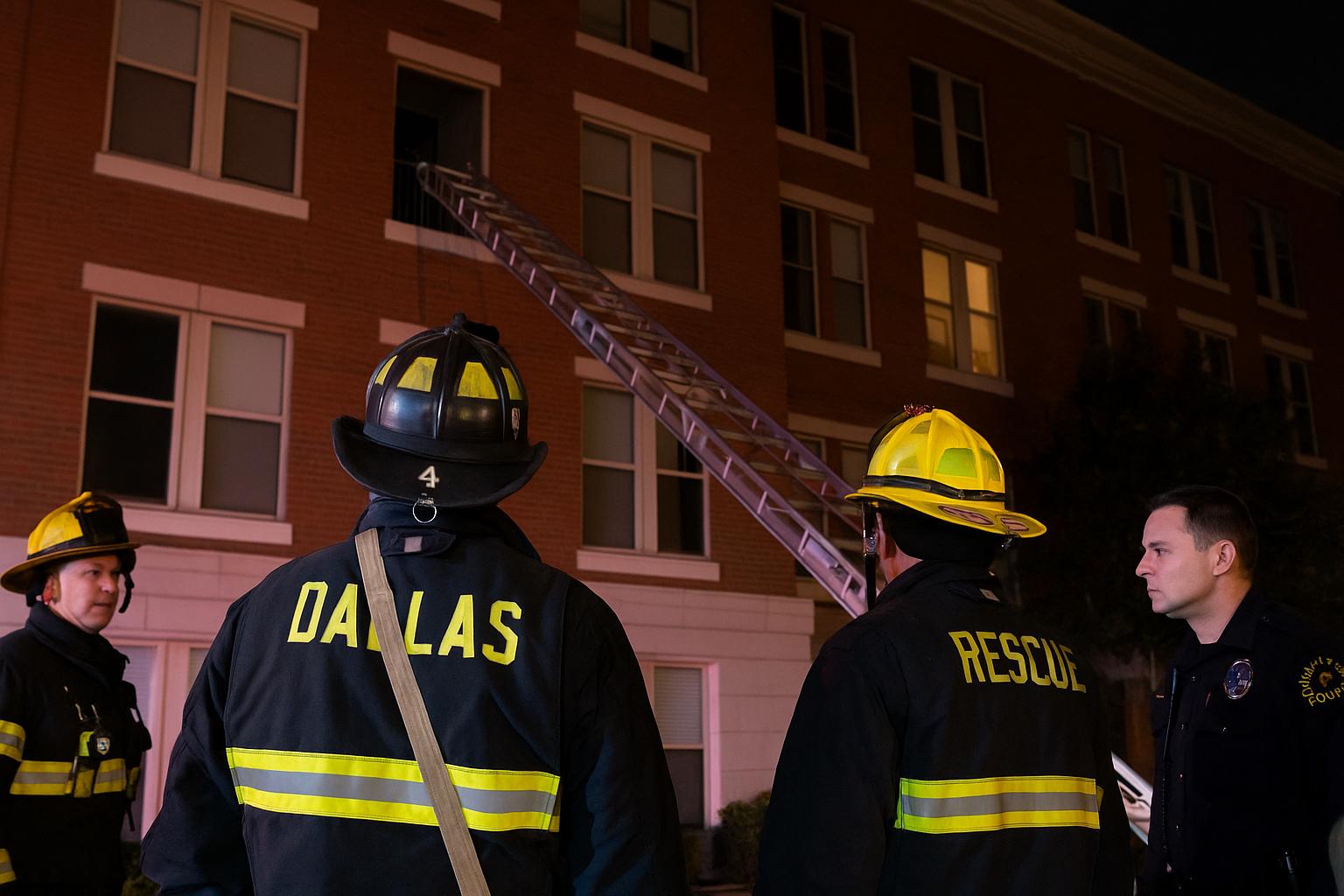
DALLAS — A late-night carbon monoxide scare prompted a swift response from Dallas Fire-Rescue after dangerous gas levels were detected inside a residential building in the Bishop Arts District. Authorities confirmed that hazardous materials (HazMat) crews were deployed to the Davis Building in the Oak Cliff area following reports of a carbon monoxide alarm just before 10:30 p.m. Wednesday.
When firefighters arrived on the scene, they found several residents evacuating as alarms sounded throughout the complex. Crews immediately began air quality testing and quickly confirmed the presence of dangerous carbon monoxide levels inside multiple units. The building was fully evacuated as a precaution while HazMat teams worked to locate the source of the gas.
According to investigators, the carbon monoxide originated from gasoline-powered equipment used by construction crews earlier in the day. The crews had been laying concrete near the property, and fumes from the machinery likely infiltrated the building’s ventilation system. The invisible gas then accumulated indoors, triggering the alarm systems.
Emergency responders acted quickly to ventilate the entire building, using industrial fans to clear the air and bring carbon monoxide levels back to normal. The process took approximately two hours, after which residents were safely allowed to return to their homes. Fortunately, no injuries or hospitalizations were reported.
Authorities credited the quick activation of the building’s carbon monoxide alarms for preventing a potential tragedy. Dallas Fire-Rescue officials emphasized that the early warning allowed residents to evacuate before the gas concentration reached life-threatening levels.
“This incident underscores just how vital working carbon monoxide detectors are,” a Dallas Fire-Rescue spokesperson said. “They alerted residents before anyone suffered serious harm. It’s a reminder that these devices save lives.”
Carbon monoxide, often called the “silent killer,” is an odorless and colorless gas that can cause dizziness, nausea, confusion, and even death when inhaled in high concentrations. It is produced by the incomplete combustion of fuels such as gasoline, propane, wood, or natural gas.
Investigators noted that carbon monoxide incidents tend to rise during colder months, as more people use gas heaters, generators, and other fuel-burning equipment. The timing of Wednesday night’s scare has prompted renewed warnings for Dallas residents to test their carbon monoxide detectors and ensure proper ventilation when using heating appliances.
Dallas Fire-Rescue officials also urged contractors and property managers to be mindful of how construction equipment can impact air quality in nearby residential areas. Gasoline-powered tools, such as concrete saws or generators, should never be operated indoors or near open air vents.
Residents praised the professionalism of the responding crews, many of whom remained on-site until the early hours of the morning to ensure the building was safe for reentry. The Dallas Fire Department confirmed that the Davis Building has since passed air-quality inspections, and no residual carbon monoxide remains.
City officials are using this incident as a teaching moment for the wider community. They encourage homeowners, landlords, and tenants to install carbon monoxide detectors on every floor of their homes, particularly near sleeping areas. These devices should be tested monthly and replaced every five to seven years, depending on manufacturer guidelines.
As winter approaches, authorities warn that similar cases could occur if residents are not vigilant. “Whether it’s a space heater, a vehicle in a garage, or construction equipment nearby, any source of fuel combustion poses a risk,” officials said. “This case ended safely, but it serves as a powerful reminder of the dangers of carbon monoxide and the importance of preparedness.”
The quick response from first responders and the effectiveness of modern alarm systems prevented what could have been a far more serious situation in Oak Cliff. For now, the Davis Building’s residents are back home, grateful that the warning systems worked exactly as intended — and that a dangerous night ended without harm.