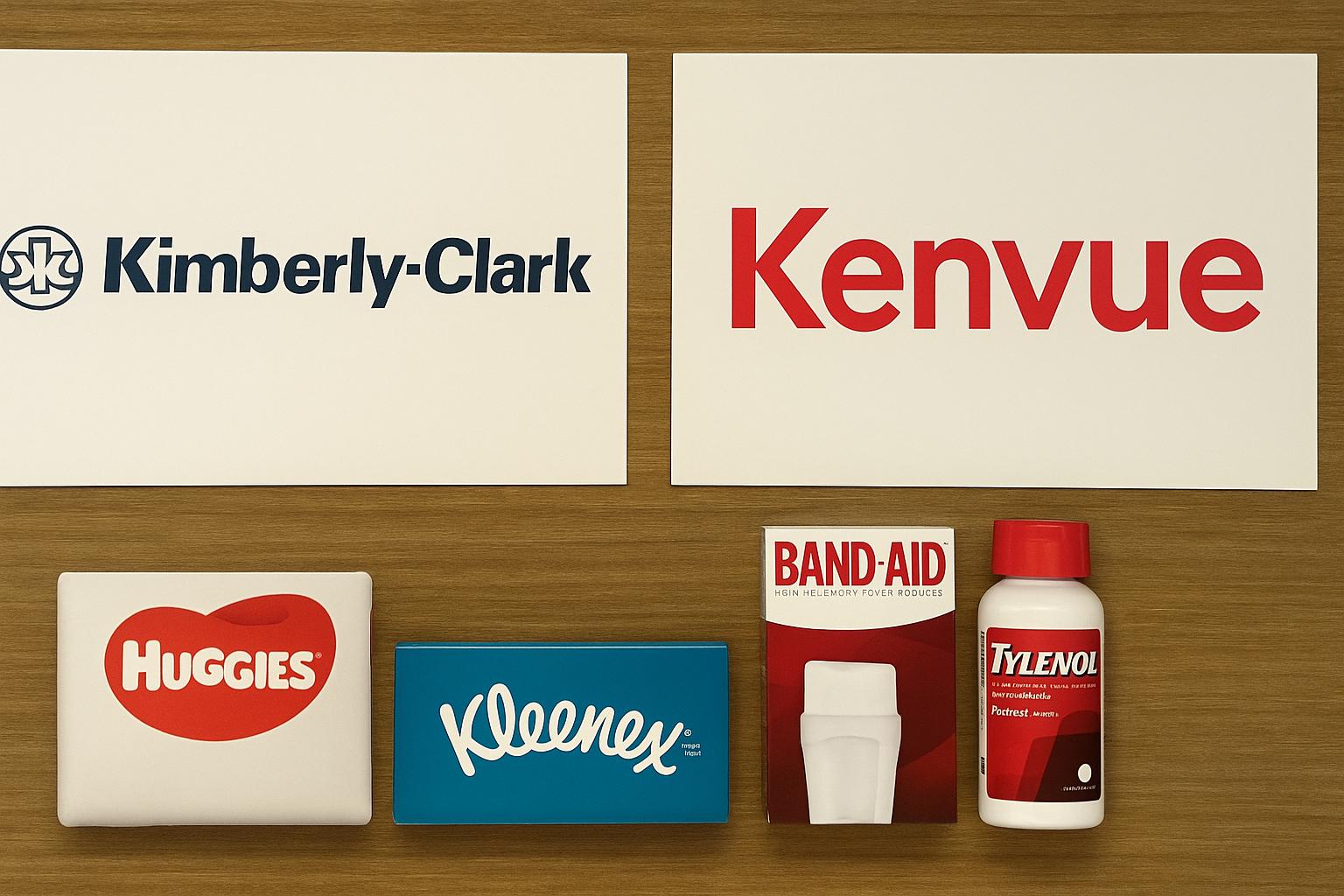
Kimberly-Clark announced plans to acquire Kenvue, the maker of Tylenol and Listerine, in a cash and stock deal valued at approximately $48.7 billion. The transaction marks one of the largest corporate takeovers of the year and will unite some of the world’s most recognized household and healthcare brands under a single company.
Following the merger, shareholders of Kimberly-Clark will hold about 54 percent of the combined entity, while Kenvue investors will own the remaining 46 percent. The combined company is projected to generate around $32 billion in annual revenue, driven by a wide portfolio that includes Kimberly-Clark’s Huggies diapers, Kleenex tissues, and Cottonelle toilet paper, along with Kenvue’s well-known health and wellness brands such as Tylenol, Listerine, Band-Aid, and Neutrogena.
Kenvue, headquartered in Summit, New Jersey, became an independent company only two years ago after being spun off from Johnson & Johnson. The separation was part of J&J’s strategic restructuring to split its slower-growing consumer health business from its more profitable pharmaceutical and medical device divisions. Despite a promising start, Kenvue has faced growing pressure from activist investors who have expressed concerns about its performance and strategic direction.
The news of the acquisition sparked contrasting market reactions. Kimberly-Clark’s stock, based in Irving, Texas, dropped roughly 13 percent on Monday, reflecting investor caution about the scale of the deal and potential integration challenges. Meanwhile, Kenvue’s shares surged more than 15 percent as shareholders welcomed the buyout premium and the stability offered by a merger with an established consumer goods company.
The acquisition also comes at a sensitive time for Kenvue, as Tylenol and its parent brand have been thrust into public controversy. Earlier this year, political figures, including President Donald Trump and Health Secretary Robert F. Kennedy Jr., made unverified claims linking Tylenol’s key ingredient, acetaminophen, to autism and vaccine-related concerns. The statements fueled confusion among consumers and expecting mothers, prompting the Food and Drug Administration to reiterate that while doctors should minimize acetaminophen use during pregnancy, there is no conclusive evidence linking it to autism.
Kenvue responded strongly to the public debate, reaffirming confidence in its scientific and medical research. In a statement on its website, the company said, “Nothing is more important to us than the health and safety of the people who use our products. We believe independent, sound science clearly shows that taking acetaminophen does not cause autism.” The statement emphasized that misinformation could endanger both parents and children by discouraging safe, evidence-based medical practices.
The company has also been undergoing leadership changes amid these challenges. In July, Kenvue announced the departure of CEO Thibaut Mongon as part of a strategic review prompted by investor pressure. Kimberly-Clark’s current Chairman and CEO, Mike Hsu, will take over as chairman and CEO of the combined company once the merger is finalized. Additionally, three members of Kenvue’s board will join Kimberly-Clark’s board of directors.
The merged company will retain its corporate headquarters in Irving, Texas, though significant operational presence will continue at Kenvue’s existing facilities across the United States and globally. Executives from both firms have stated that the merger will combine Kimberly-Clark’s global consumer reach and manufacturing capabilities with Kenvue’s healthcare expertise, creating a powerful, diversified business.
Under the terms of the agreement, Kenvue shareholders will receive $3.50 in cash and 0.14625 Kimberly-Clark shares for each Kenvue share held, equating to approximately $21.01 per share based on Kimberly-Clark’s closing stock price last Friday. Both companies expect to close the deal in the second half of next year, pending regulatory and shareholder approvals.
In addition to expanding market reach, the companies estimate that the merger will generate about $1.9 billion in cost savings within three years of closing, primarily through supply chain optimization, operational efficiencies, and brand integration. Analysts say these savings will be crucial to offset acquisition costs and reassure investors concerned about short-term financial strain.
If completed as planned, the merger will create one of the largest consumer health companies in the world, positioned to compete directly with global giants such as Procter & Gamble and Unilever. With a diverse product line spanning personal care, health, and hygiene, the new entity will have a significant footprint in households across North America and beyond, signaling a transformative shift in the global consumer goods industry.