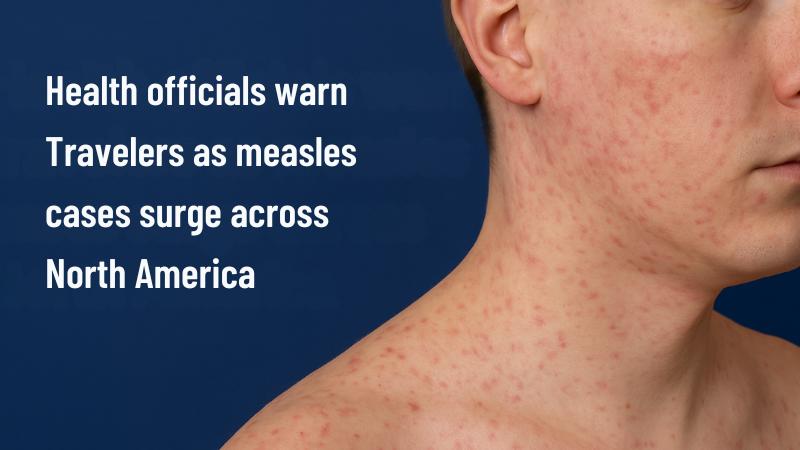
Health officials across North America are raising concerns over a growing surge in measles cases, urging travelers to remain cautious and ensure they are vaccinated. The warning follows multiple confirmed exposures at major U.S. airports, increasing fears of renewed transmission of the highly contagious disease that had been largely controlled for decades through widespread immunization.
The latest alert comes after an individual infected with measles was present at Philadelphia International Airport on Sunday, potentially exposing hundreds of travelers. Just weeks earlier, health authorities confirmed another exposure incident at Newark Liberty International Airport, prompting swift notifications to passengers and airlines. Officials say the public should take these warnings seriously, as airports and other transit hubs can become hotspots for viral spread due to constant passenger movement and close contact among travelers.
According to the Centers for Disease Control and Prevention (CDC), more than 1,600 confirmed cases of measles have been reported in the United States this year. The total represents a significant rise compared to previous years and highlights growing gaps in vaccination coverage across communities. Among those cases, 11 were reported in New Jersey, a state with one of the recent airport exposure incidents. Health departments are now tracing contacts and advising those possibly exposed to monitor symptoms closely.
Medical professionals warn that measles remains one of the most contagious viral infections, capable of spreading through airborne droplets when an infected person coughs or sneezes. Symptoms typically begin with high fever, cough, and runny nose before a characteristic red rash appears. The virus can linger in the air for up to two hours, putting unvaccinated individuals at particular risk, especially in crowded indoor spaces like airports.
Dr. Kisha Davis of the American Academy of Family Physicians emphasized that the increase in cases is deeply troubling but preventable. “It’s very concerning that we are seeing this illness rise again, especially when we know that simple and effective steps can prevent it,” she said. “Getting vaccinated remains the safest and most reliable way to protect yourself and those around you.” She added that travelers should confirm their immunization status before any trip, particularly if they plan to visit areas with reported outbreaks.
Public health experts are attributing the recent resurgence to declining vaccination rates and misinformation about vaccine safety. The measles, mumps, and rubella (MMR) vaccine is more than 97% effective after two doses and has been the cornerstone of measles prevention since its introduction. However, even small drops in vaccination coverage can weaken community immunity, allowing outbreaks to reemerge. Health agencies continue to stress the importance of maintaining high vaccination rates, not only to protect individuals but also to safeguard those who cannot be vaccinated due to medical conditions.
Officials are also reminding international travelers that measles outbreaks have been reported in several other regions, including parts of Europe and Asia. With global travel returning to pre-pandemic levels, the potential for imported cases has increased, further emphasizing the need for preventive action. The CDC recommends that adults and children alike verify their vaccination history before traveling abroad or within the United States.
As health departments work to contain the latest cases, experts say awareness and timely action are essential to stop further spread. Measles, though largely preventable, can lead to severe complications such as pneumonia and encephalitis, particularly in young children and those with weakened immune systems. The resurgence serves as a reminder of the ongoing importance of vaccination programs and public health vigilance.