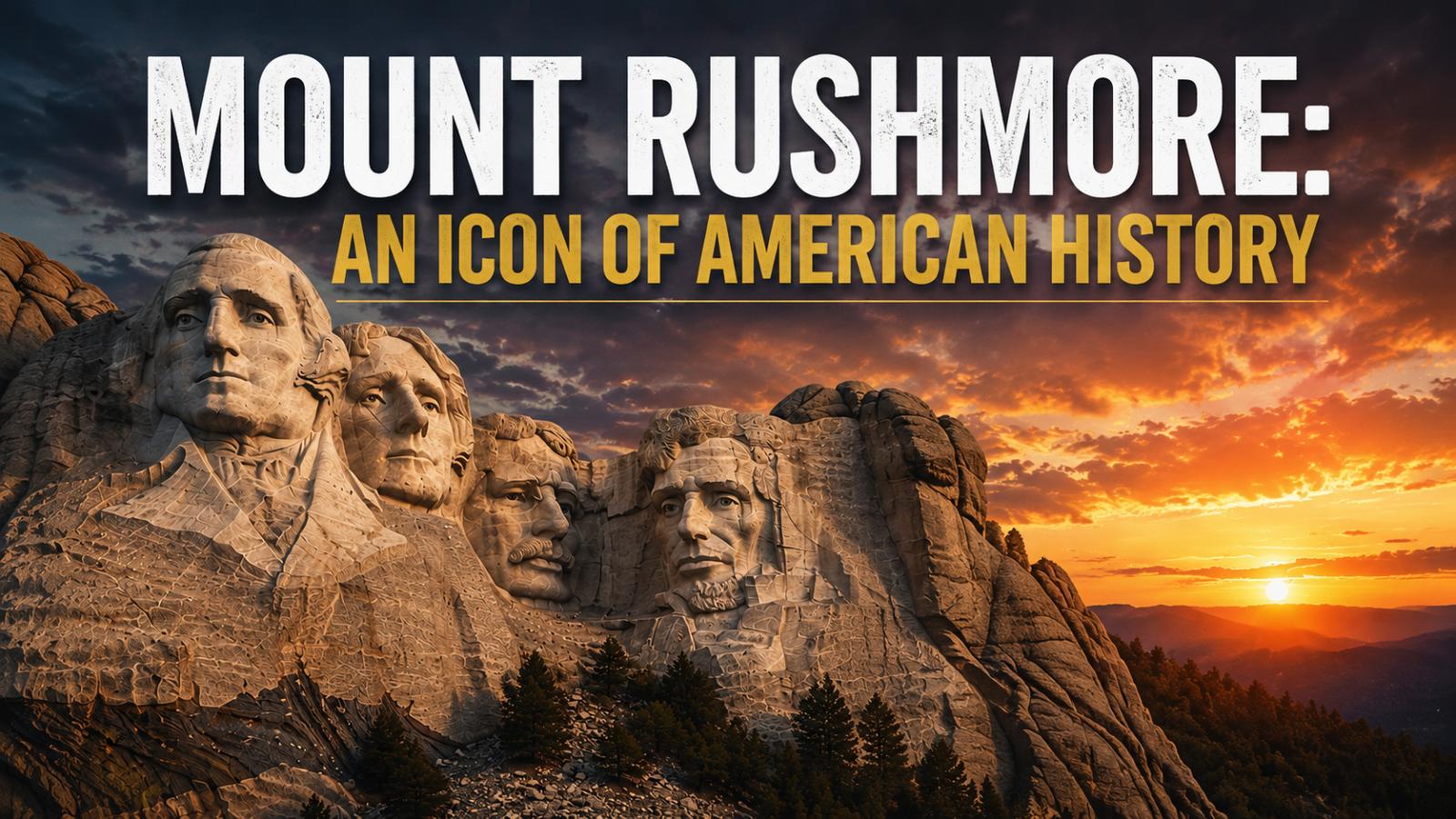
Mount Rushmore, located in the Black Hills of South Dakota, is one of the most recognized landmarks in the United States. This monumental granite sculpture features the 60-foot faces of four U.S. presidents: George Washington, Thomas Jefferson, Theodore Roosevelt, and Abraham Lincoln. These iconic figures were chosen for their pivotal roles in the birth, expansion, and preservation of the United States.
The Vision of Doane Robinson
The idea for Mount Rushmore was conceived in the 1920s by historian Doane Robinson, who sought to create a monument that would attract tourists to South Dakota. Robinson’s vision caught the attention of renowned sculptor Gutzon Borglum, who was chosen to bring the idea to life. Borglum's monumental designs, paired with the project’s potential, created the foundation for what would become an enduring symbol of American history.
The Monument's Construction
Construction on the monument began in 1927 and took 14 years to complete, though it was halted in 1941 due to Borglum’s death and World War II. While Borglum had envisioned carving the presidents' bodies down to the waist, the project was limited by funding, and only the heads were completed. Despite these challenges, the monument stands as an impressive engineering feat. More than 400 workers, including local miners, used dynamite and hand tools to carve the faces into the granite rock, with meticulous details that have withstood the test of time.
Symbolism and Fame
Mount Rushmore has become an emblem of American democracy, freedom, and the leadership that shaped the nation. It draws nearly 3 million visitors annually, making it one of the top tourist destinations in the United States. Each president chosen for the monument represents a key period in U.S. history—Washington symbolizes the nation's founding, Jefferson represents its expansion, Roosevelt stands for its development, and Lincoln embodies its preservation during the Civil War.
Controversy Surrounding Mount Rushmore
While Mount Rushmore is celebrated for its grandeur, it has also sparked significant controversy. The land on which the monument sits is sacred to Native American tribes, particularly the Lakota Sioux, who consider the Black Hills to be their ancestral home. The U.S. government took control of the Black Hills in violation of the 1868 Treaty of Fort Laramie. This action has led to ongoing protests by Native American groups, calling for the return of the land. Despite these tensions, Mount Rushmore remains a national symbol of heritage, though its presence has not been without complexity.
Fun Facts About Mount Rushmore
There are numerous fascinating facts surrounding this monument. Gutzon Borglum’s original plan was more ambitious than what we see today. He intended to carve not only the presidents’ faces but also their bodies and scenes of American history. Unfortunately, the project’s scope was limited due to funding and time constraints.
The faces themselves are astonishing in detail, with each president’s face measuring 60 feet tall. The sculpting process was a monumental task, requiring over 400 workers, and dynamite was used to speed up the process before finer tools were employed for detailing. One interesting feature is the size of the noses—each is a staggering 20 feet long, adding to the monument’s impressive scale.
Mount Rushmore’s Legacy
Beneath the monument lies a hidden vault, designed to house important historical documents, including the U.S. Constitution and the Declaration of Independence. Though the vault remains empty, it symbolizes the historical significance of the site. Mount Rushmore was officially designated a national memorial in 1937, and continues to stand as a testament to the legacy of the U.S. presidents it represents.
Whether visiting during the bustling summer months or the quieter late spring and fall, Mount Rushmore continues to awe visitors with its breathtaking scale, symbolism, and deep connection to American history. It remains a beacon of democracy, pride, and ongoing dialogue about the nation's history, making it a must-see destination for those seeking to understand the foundations of America.