Ladakh’s Hidden Geothermal Landscape
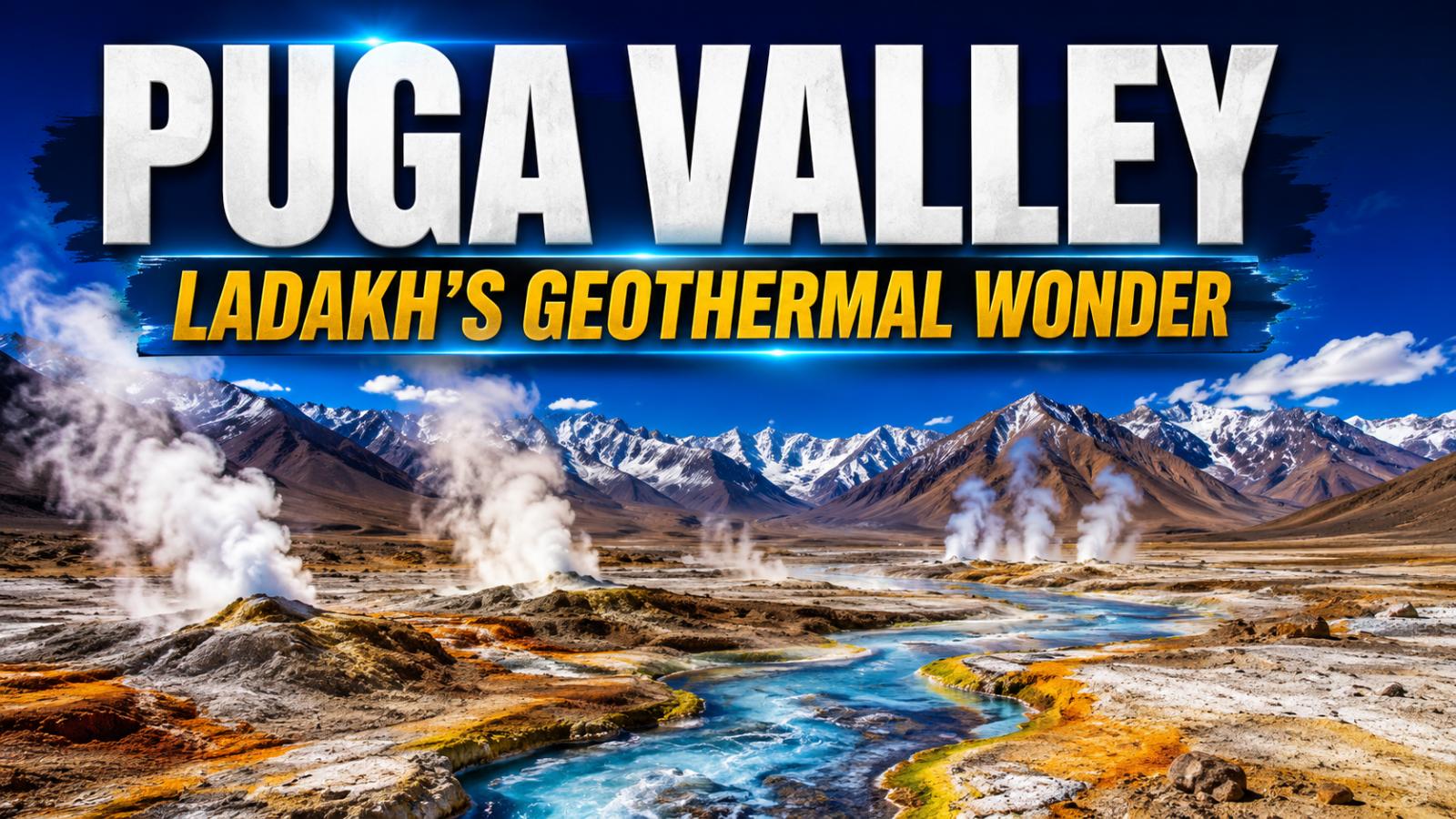
Puga Valley, located in the Changthang region of eastern Ladakh, is one of India’s most unusual natural landscapes. Set within a high-altitude cold desert, the valley is known for steaming hot springs, bubbling mud pools, sulfur deposits and mineral-rich wetlands. Unlike Ladakh’s more crowded tourist routes, Puga offers a raw geological experience where visible geothermal activity rises from the valley floor against the backdrop of barren Himalayan mountains. The area lies around 170 km east of Leh and is often described as one of India’s most promising geothermal zones.
Why Puga Valley Matters
The importance of Puga Valley goes beyond tourism. Scientists and energy researchers have studied the region for decades because of its strong geothermal signals. Natural hot springs and underground heat make it a potential site for clean energy development, and ONGC has been working on India’s first geothermal power project in the valley. Reports in 2026 said drilling work for the first hot spring well was moving forward, giving new attention to Ladakh’s role in India’s renewable energy plans.
A Rare Travel Experience
For travelers, Puga Valley is not a luxury destination but an offbeat stop for those interested in nature, geology and remote Himalayan scenery. The landscape includes steaming channels, marshy patches, salt and sulfur crusts, and wide open views of the Changthang plateau. Wildlife such as yaks, horses and high-altitude birds may be seen in nearby wetlands, though visitors must keep distance and avoid disturbing the fragile ecosystem. Access requires careful planning because roads are remote, weather can change quickly, and facilities are limited.
Responsible Tourism Is Essential
Puga Valley’s beauty is also its weakness. The hot springs, wetlands and mineral deposits are delicate, and careless tourism can damage the very features that make the area special. Visitors should avoid stepping into unstable geothermal zones, leaving plastic waste, or driving across marshland. The valley represents a powerful mix of travel, science and clean energy potential. Its future depends on balancing renewable energy development, local livelihoods, environmental protection and responsible tourism in one of Ladakh’s most extraordinary landscapes.