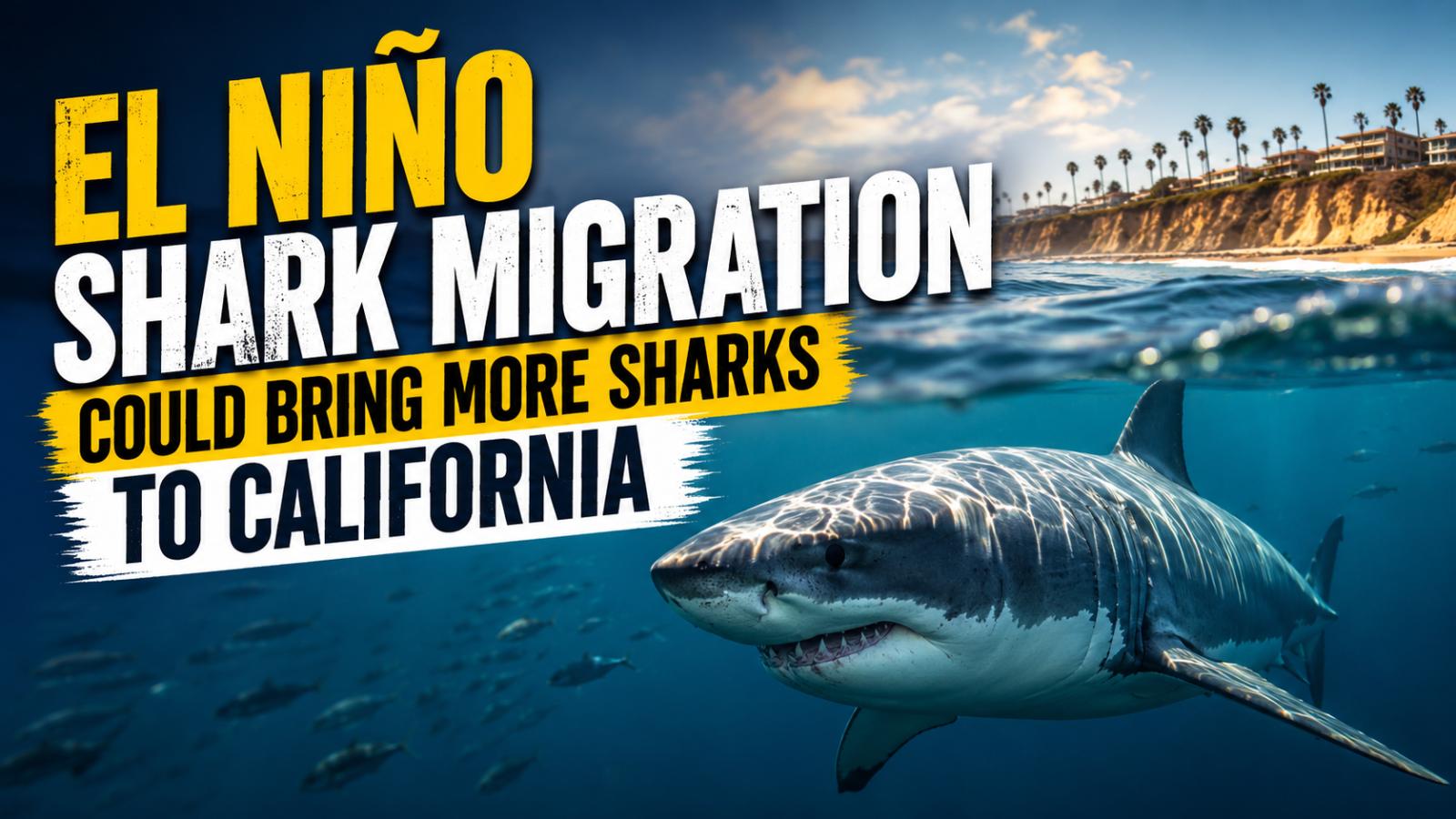
Strengthening El Niño conditions could change shark activity along California’s coastline this summer. Warmer Pacific waters may shift juvenile white sharks and other species into different coastal areas, although experts emphasize that shark bites remain extremely rare.
Juvenile White Sharks May Shift Their Range
Chris Lowe, director of the Shark Lab at California State University, Long Beach, has said El Niño conditions could increase the number of juvenile white sharks observed along parts of the Southern California coast.
White sharks depend heavily on water temperature, available prey and suitable nursery habitats. As ocean conditions change, younger sharks may move northward or gather in locations where cooler water and food are more readily available.
Research conducted by the Shark Lab has tracked hundreds of white sharks in Southern California. The findings have helped scientists understand how warming waters can alter where juvenile sharks spend their time. California State University, Long Beach, has also reported that white shark nursery areas appear to be gradually shifting north.
California Shark Season Could Begin Earlier
Juvenile sharks commonly appear near Southern California beaches when seasonal water conditions become suitable. During stronger warming periods, however, their arrival times and movement patterns may change.
Researchers have suggested that El Niño could potentially double the number of juvenile white sharks recorded in some areas. Other warm-water species, including smooth hammerheads, tiger sharks and bull sharks, may also travel farther north than usual.
That does not mean California beaches will experience an invasion or an inevitable surge in attacks. Shark sightings may rise simply because more sharks and more beach visitors are using the same coastal waters during summer.
Warm Pacific Waters Signal Strong El Niño
NASA confirmed that El Niño was underway in June 2026 after satellite measurements detected elevated sea surface heights across the central and eastern Pacific. Warmer seawater expands, producing higher sea levels that satellites can measure.
The Sentinel-6 Michael Freilich satellite recorded warm water moving east across the equatorial Pacific. NASA said waters near parts of South America had risen around 15 centimetres above long-term averages by mid-May.
NOAA experimental forecasts released in July indicated that the event could continue strengthening through autumn and possibly rank among the strongest El Niño events observed during the past century. However, describing it as definitively the worst El Niño in nearly 150 years would be premature because the event has not yet reached its expected peak.
Shark Bites Remain Uncommon
The United States records more reported unprovoked shark bites than any other country, partly because of its extensive coastline and large number of swimmers and surfers. The International Shark Attack File recorded 65 confirmed unprovoked cases worldwide in 2025, with 38% occurring in the United States.
Even so, the overall risk to an individual swimmer remains very low. Lowe has repeatedly stressed that juvenile white sharks frequently share coastal waters with surfers without causing an incident.
Beach visitors should follow lifeguard instructions, avoid swimming near fishing activity or large groups of feeding animals and stay out of the water when beaches close because of shark sightings. El Niño may influence where sharks appear, but current evidence does not support predictions of a dramatic surge in attacks.