- devara
- 05 May 2025
- #Entertainment #JioStar #Indian Media #Uday Shankar #OTT India #YouTube
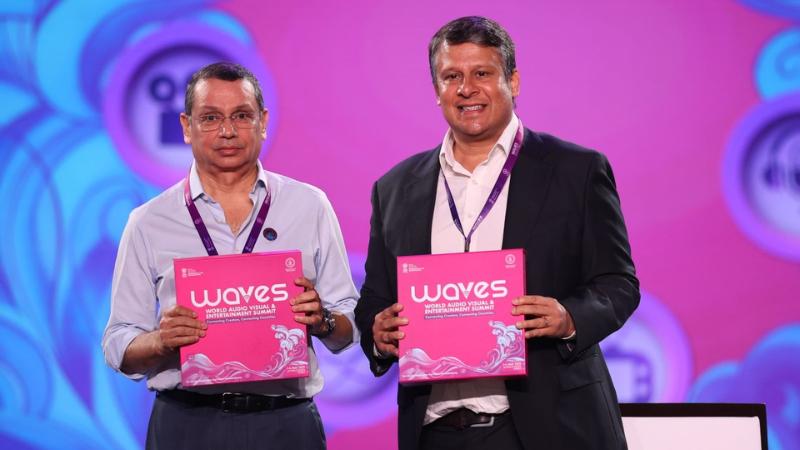
India's media and entertainment industry is on the brink of a monumental transformation, driven by aggressive investment and deep innovation, as revealed in a compelling fireside chat between Uday Shankar, Vice Chairman of JioStar, and Vivek Couto, Managing Director of Media Partners Asia, during the WAVES conference. The session, titled “Media in India: Past 25 Years and Journey Ahead to 2047,” offered an insider’s look at how India has emerged as one of the most vibrant and promising media markets globally. Shankar opened the conversation by tracing the arc of India's screen revolution from the introduction of satellite television in the early 90s to the present-day dominance of streaming. He emphasized that India’s trajectory has been unique compared to the West, with affordability and local innovation catalyzing widespread adoption of television and later, digital platforms. He credited India's explosive video consumption to strong local enterprises and an unmatched appetite for content.
Couto noted the enabling role of government policies such as FDI deregulation and the rise of platforms like Hotstar. This, he said, democratized access to content. Shankar agreed but added a critical point the Indian audience has outpaced content creators. He argued that reliance on global content formats was insufficient for sustained growth and called for a sharper focus on content tailored for Indian tastes and culture, which could then travel globally. One of the most striking moments came when Shankar revealed JioStar’s content investment plans. He stated that the company spent ₹25,000 crore ($3B) in 2024, is projected to invest ₹30,000 crore in 2025, and over ₹32,000–₹33,000 crore in 2026, totaling over $10 billion in content across three years. This commitment significantly surpasses YouTube’s recently announced $2.53 billion investment, underscoring JioStar’s intent to lead in the Indian and global media space.
Shankar also addressed the stagnation in North Indian cinema, pointing to a lack of creativity and an aging talent pool as key challenges. He contrasted this with the dynamic resurgence of South Indian cinema, particularly in the Tamil and Telugu industries, which continue to innovate and expand their global appeal. Couto queried the state of theatrical viewing and the broader distribution ecosystem. Shankar cited limited screen availability, expensive movie-going experiences, and outdated storytelling in Bollywood as barriers. He highlighted the need to decentralize content creation and move beyond Mumbai-centric narratives.
Discussing JioStar’s performance after its recent media merger, Shankar expressed satisfaction with the early results. Contrary to the popular belief that Pay TV is in decline, he claimed growth in both Pay TV and streaming services, thanks to their hyper-focus on Indian audiences. He acknowledged India’s price-sensitive market and argued for innovation in monetization strategies beyond conventional subscription and advertising models. Couto posed three concluding questions. First, he asked about the future of TV and streaming over the next five years. Shankar forecasted “enormous” growth, driven by innovation, deeper internet penetration, and tapping into smaller cities and towns with decentralized economic activity.
The second question involved when an Indian media company could rise to global dominance akin to Netflix, ByteDance, or Tencent. Shankar believes it is possible if Indian companies break free from outdated monetization models and embrace product-level and content innovation. He underscored that traditional revenue streams are plateauing globally, giving Indian firms a fresh chance to lead with new models. Finally, Couto asked about regulation and whether all screens TV and digital should be treated the same. Shankar warned against a one-size-fits-all regulatory approach. Television and digital platforms, he argued, serve different purposes and are at different stages of maturity. He advocated for tailored regulations to support each segment’s unique growth path. The chat revealed JioStar’s ambitious roadmap that blends massive content investment, a sharp focus on India-first strategies, and bold aspirations to reshape the global media narrative. As Uday Shankar put it, the Indian consumer is evolving rapidly, and the industry’s challenge is to catch up with vision, investment, and creativity.