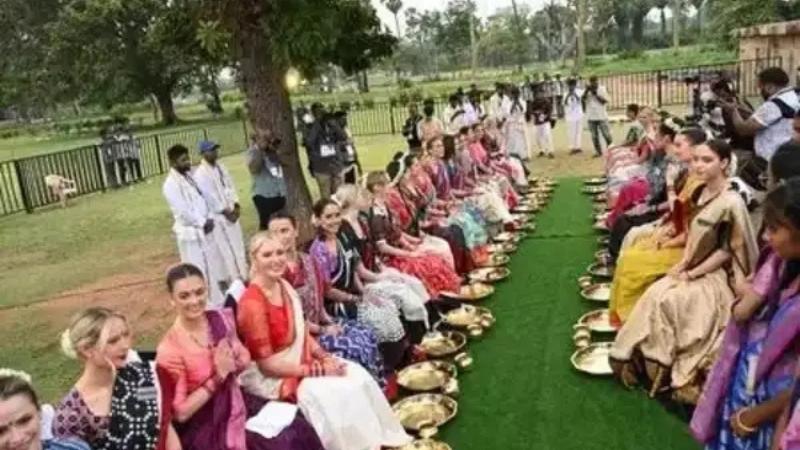
A recent event involving Miss World 2025 contestants has ignited a political and cultural firestorm in Telangana. The controversy erupted after a video surfaced showing women volunteers washing and wiping the feet of international beauty pageant participants before their entry into the historic Ramappa temple, located in Mulugu district. This act, which was meant as a ceremonial welcome, has been widely criticized by political parties and social groups who view it as a blow to the dignity and self-respect of Telangana’s women.
The ancient Ramappa temple, recognized as a UNESCO World Heritage site, was included in the itinerary for the ongoing Miss World event in India. Contestants from over 100 countries were taken to visit the temple as part of a cultural showcase. However, the gesture of washing their feet, which organizers claimed was rooted in traditional Indian hospitality, has not been received well by many locals and political leaders.
The video quickly went viral on social media, sparking widespread outrage. Union Minister for Coal and Mines G. Kishan Reddy, who also heads the Telangana BJP unit, condemned the act, calling it humiliating and reminiscent of colonial-era practices. He accused the Congress-led state government of promoting servility and degrading Indian women in a sacred space. The Ramappa temple is also in close proximity to the revered Sammakka-Saralamma shrine, adding to the sensitivity of the issue.
Kishan Reddy further alleged that this act was part of a larger pattern by the Congress party, which he claimed has historically demonstrated submissiveness toward foreign entities. He demanded an apology from both the state Chief Minister Revanth Reddy and Congress national leaders Sonia Gandhi and Rahul Gandhi for what he described as blasphemous and insulting behavior toward the state’s women and cultural heritage.
The Bharat Rashtra Samithi (BRS), the main opposition party in Telangana, echoed these sentiments and launched a scathing attack on the ruling Congress government. Senior BRS leaders, including former ministers Sabitha Indra Reddy, Satyavati Rathod, Sunita Laxma Reddy, and MLA Kova Laxmi, claimed that Dalit, tribal, and economically disadvantaged women were allegedly compelled to perform the act. The BRS has appealed to Sonia Gandhi to immediately address the situation and demanded a public apology from the Chief Minister.
In a letter addressed to the Congress leadership, the BRS accused the government of humiliating Telangana’s women and degrading the state's cultural values on an international platform. The letter cautioned that ignoring the public sentiment around the issue could alienate millions of Telangana residents and especially provoke a backlash from women voters.
Supporters of the event have argued that the ceremony was meant to reflect Indian values of respect and hospitality toward guests. However, critics argue that such traditions must be applied thoughtfully, especially when international attention is involved. Many on social media have labeled the act as inappropriate, colonial, and outdated, urging political leaders to ensure that women are not subjected to such rituals in the name of tradition.
The incident has triggered a wider conversation around the treatment of women, cultural symbolism, and the balance between showcasing heritage and maintaining dignity. While the Miss World organizers have not officially commented on the controversy, the Telangana government now faces mounting pressure to respond decisively. With the political opposition rallying around the issue and public sentiment rising, it remains to be seen how the Congress administration will navigate the backlash. The episode has become a focal point for debates around women's respect, political symbolism, and cultural presentation in India’s global events.