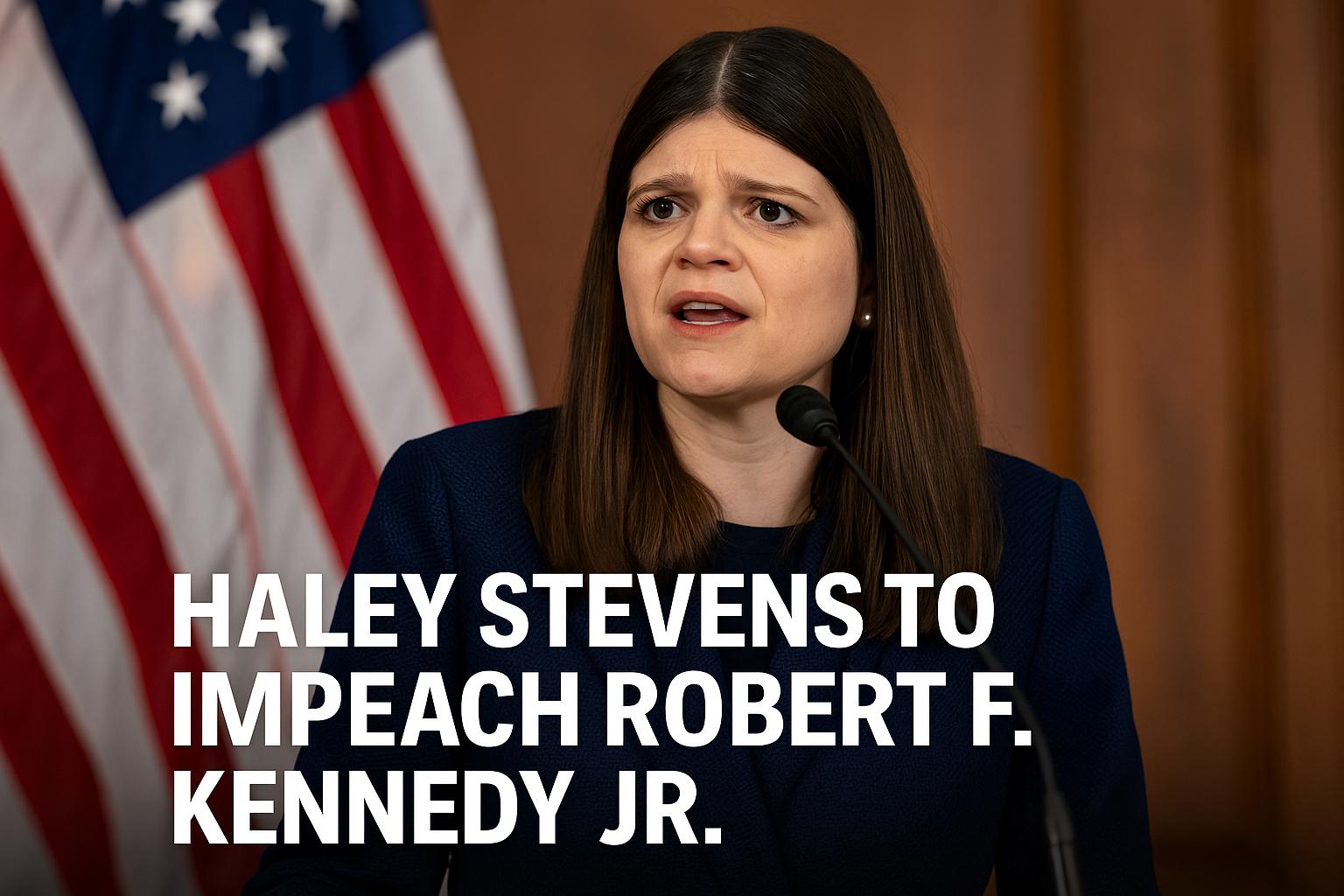
US Congresswoman Haley Stevens announced on Thursday, September 25, that she will introduce articles of impeachment against Health and Human Services Secretary Robert F Kennedy Jr. The move marks an escalation of her opposition to Kennedy’s policies, which she described as creating “healthcare chaos” across the country. In her post, Stevens stated that the time for patience has ended, declaring “enough is enough” and pledging to pursue formal impeachment proceedings. Earlier this month, she had called on Kennedy to resign, criticizing his controversial vaccine mandate and what she called a dangerous public health agenda.
The decision comes at a time of deep turmoil within the Department of Health and Human Services. Under Kennedy’s leadership, the department has faced a growing crisis, with key officials resigning in protest against his policies. Stevens’ announcement underscores the rising tensions within the administration and reflects broader concerns about the state of the nation’s healthcare leadership.
Kennedy has faced mounting criticism from lawmakers, health experts, and even his own staff. His policies, particularly surrounding vaccines, have been described by critics as unsafe and damaging to public health. The controversy reached new heights when several senior officials at the Centers for Disease Control and Prevention stepped down last month. Among those who resigned were CDC Director Susan Monarez, Demetre Daskalakis, Director of the CDC’s National Center for Immunization and Respiratory Diseases, Debra Houry, former CDC Chief Medical Officer and Deputy Director, Daniel Jernigan, a veteran of over 30 years with experience in pandemic preparedness, and Jennifer Layden, Director of Public Health Data and Technology. Their departure highlighted the level of discontent within the department.
The resignations were a direct response to Kennedy’s vaccine policies, particularly changes made to immunisation schedules for children and pregnant women. Those who resigned expressed deep concern that the CDC was being steered away from evidence-based science and toward policies that they believed could endanger public health. Several of the officials released statements voicing frustration at the lack of transparency within the department, claiming that open scientific debate was no longer tolerated. They stressed that their opposition was rooted in a commitment to protecting communities from preventable disease outbreaks.
Stevens pointed to these resignations as proof that Kennedy’s leadership has failed. She argued that the chaos created by his policies had undermined trust in the healthcare system at a time when clarity and stability are crucial. According to her, the cost of his agenda is being paid not only by the public but also by the credibility of US health institutions. The congresswoman insisted that removing Kennedy from office is necessary to restore integrity and confidence in public health management.
Kennedy, however, has remained defiant. He has continued to push forward with his controversial policies, dismissing the backlash as politically motivated. Supporters of his approach argue that he is challenging long-standing norms that require scrutiny and reform, particularly in vaccine policy. Yet the criticism from within his own department suggests that his style of governance has created division rather than consensus.
The unfolding crisis has sparked a broader debate about leadership in public health. Analysts say that while disagreements on policy are not uncommon, the scale of resignations and the decision by a sitting congresswoman to pursue impeachment reflect a rare level of discontent. Stevens’ impeachment push could intensify partisan divides in Congress, with debates likely to center on whether Kennedy’s actions constitute grounds for removal or whether the move is more political than substantive.
Regardless of the outcome, the events highlight the fragile state of America’s healthcare institutions in the face of leadership turmoil. At a time when public trust in health authorities is critical, the controversy surrounding Kennedy Jr has underscored the challenges of balancing political agendas with scientific responsibility. For now, Stevens’ announcement signals the beginning of what could be a lengthy and contentious battle in Washington, one that may shape the future of healthcare policy and the credibility of the nation’s health department for years to come.