World Cup Ebola travel risk remains low for fans in the United States, but federal screening rules have expanded as health agencies monitor the outbreak in Central and East Africa.
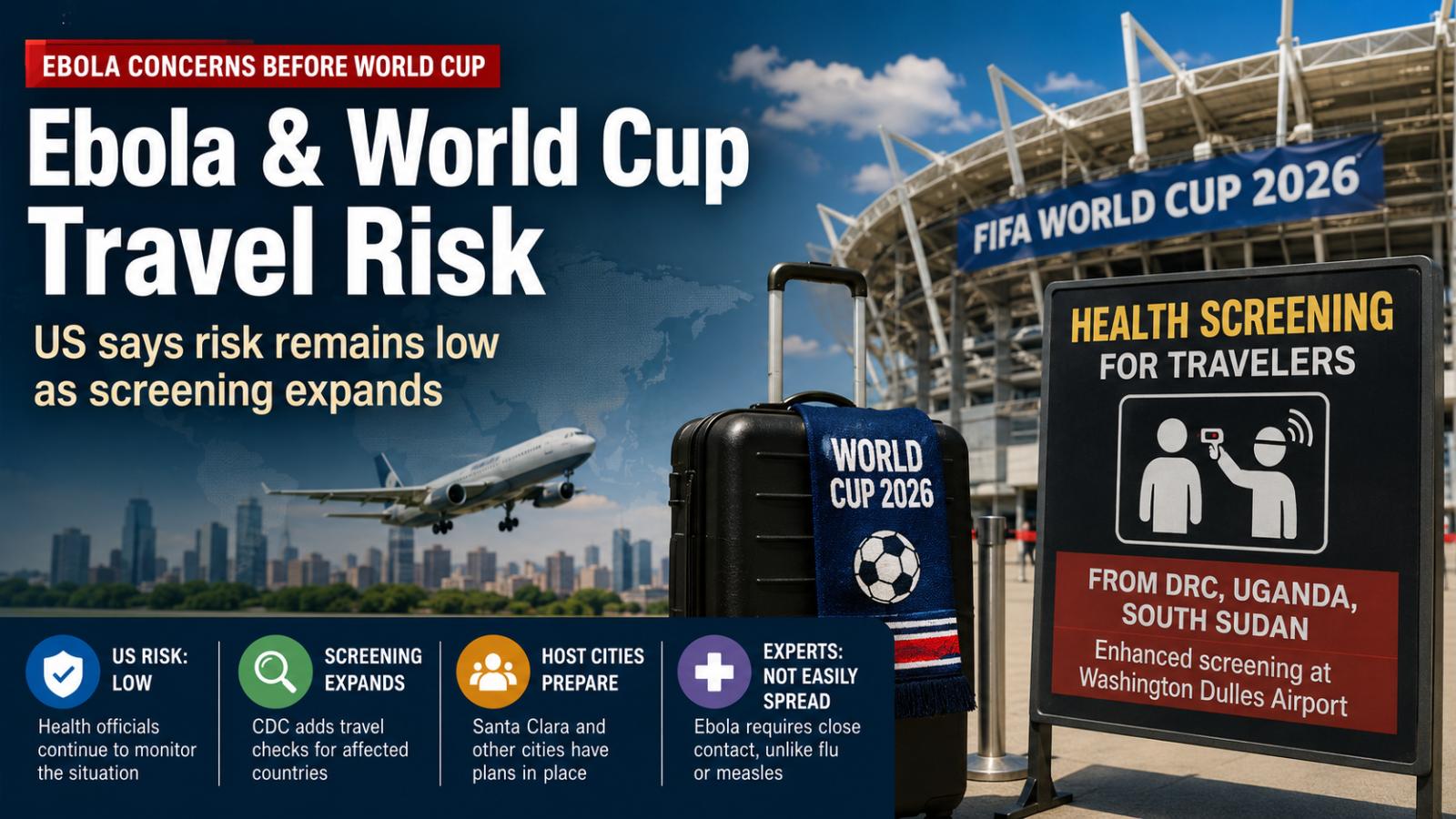
The CDC said foreign nationals who were in the Democratic Republic of Congo, Uganda or South Sudan within 21 days before arrival are temporarily restricted from entering the United States. U.S. citizens, nationals and lawful permanent residents may still enter, but affected travelers are being routed to Washington Dulles International Airport for enhanced public health screening beginning at 11:59 p.m. EDT on Wednesday, May 20, 2026.
CDC Ebola Screening Adds Travel Checks Before World Cup
Screening at Dulles may include a travel-history questionnaire, symptom review, contact-information collection and temperature checks. The CDC says travelers without symptoms can continue to their final destinations but should monitor for Ebola symptoms for 21 days after leaving affected countries.
The measures come as the FIFA World Cup brings large international crowds to U.S. host cities. Santa Clara County, which will host six matches, says it has been preparing for months and has a plan to monitor travelers from affected areas.
Why US Officials Say Fan Risk Remains Low
The WHO said on Friday, May 22, 2026, that Ebola risk is very high at the national level in the Democratic Republic of Congo and high regionally, but low globally. Reuters reported that WHO listed 82 confirmed cases in Congo, seven confirmed deaths, 177 suspected deaths and nearly 750 suspected cases.
Health experts say Ebola is dangerous but does not spread the way respiratory viruses do. Dr. Monica Gandhi, an infectious disease physician at UCSF, told NBC Bay Area that Ebola generally requires close exposure to bodily fluids from severely ill people, making widespread spread through World Cup travel less likely than illnesses such as measles or influenza.
The stronger reader takeaway is not that World Cup fans should panic, but that travelers connected to affected countries should follow CDC rules, monitor symptoms and expect added screening. For host cities, the bigger public-health challenge may be managing broader infectious disease risks as international crowds gather.