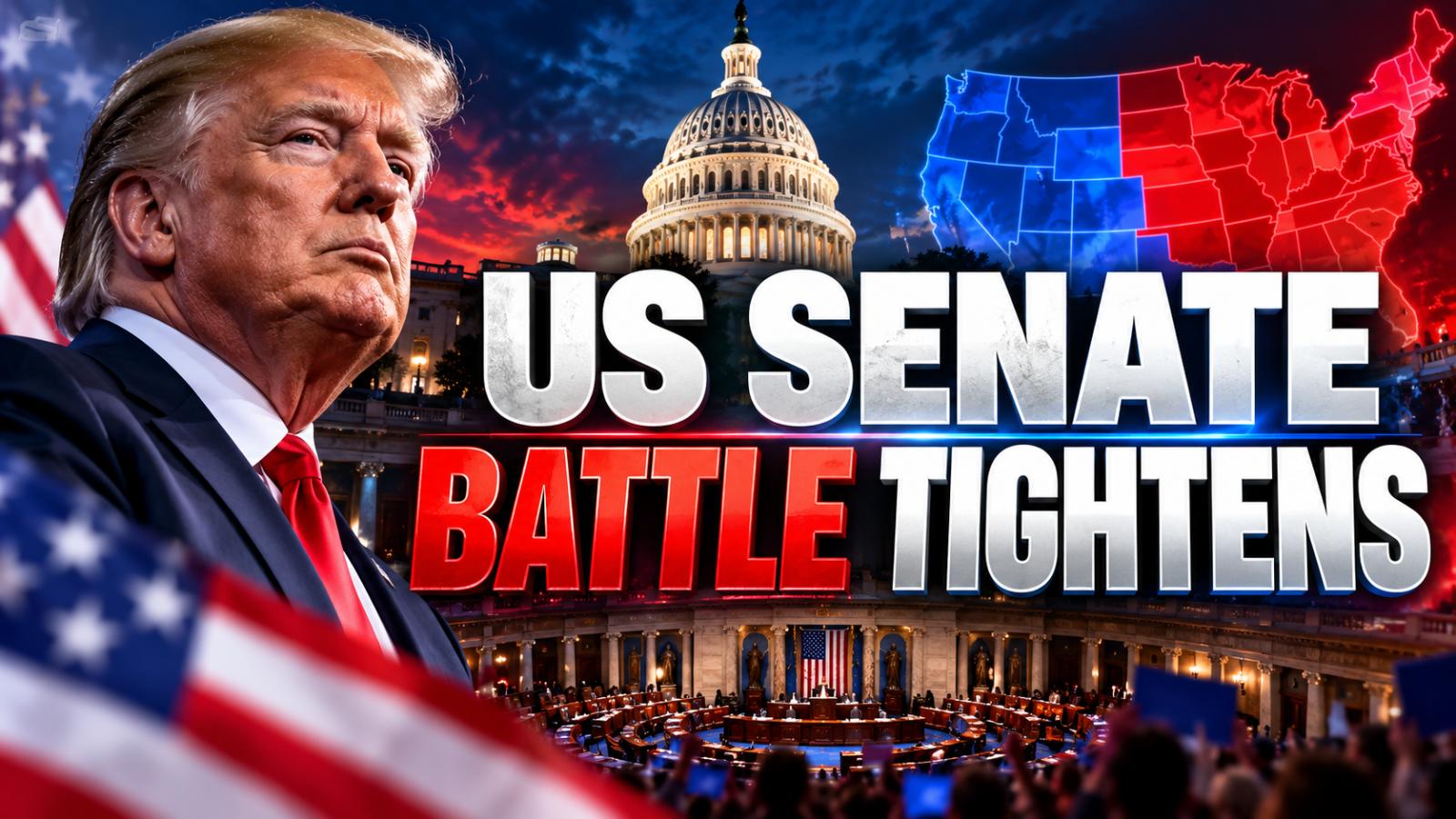
The 2026 Senate battle has tightened sharply ahead of the November 3 midterms, with Senate control now hinging on a small group of competitive states. Decision Desk HQ gives Democrats a narrow edge, while toss-ups in Iowa, Ohio, Maine and Texas could decide which party controls the chamber.
Senate Control
Republicans entered the cycle with a 53-47 Senate majority, so Democrats need a net gain of four seats to take outright control because Vice President JD Vance can break a 50-50 tie. Decision Desk HQ’s model, updated October 4, gives Democrats a 56% chance of winning the Senate and a 76% chance of taking the House. The numbers show a tougher political environment for Republicans as Election Day approaches.
Toss-Ups
The Senate map has shifted from earlier forecasts. Decision Desk HQ currently rates Iowa, Ohio, Maine and Texas as toss-ups. Iowa and Ohio are nearly even at 51% for the Democratic side, Maine stands at 52%, and Texas at 56%. Alaska and Michigan are now rated Lean Democratic, while New Hampshire is Likely Democratic. That makes the fight for Senate control fluid rather than fixed around the seven-state list cited in earlier reports.
Alaska Race
Alaska has become one of the cycle’s biggest surprises. Democrat Mary Peltola is challenging Republican Sen. Dan Sullivan in a state that normally gives the GOP an advantage in federal races. Decision Desk HQ rates Alaska Lean Democratic with a 61% Democratic win probability. Earlier polling also showed Peltola running competitively against Sullivan, forcing Republicans to defend territory they once expected to hold more comfortably.
Texas Race
Texas is also drawing national attention. Republican Ken Paxton faces Democrat James Talarico in a contest that has become far more competitive than Republicans would normally expect in the state. Decision Desk HQ places Texas in the toss-up category and gives the Democratic side a 56% chance. A Democratic pickup there would significantly improve the party’s path to a Senate majority.
Trump Impact
President Donald Trump remains central to the midterm campaign as Republicans try to protect both chambers of Congress. His rallies and endorsements aim to energize GOP voters, but the same national environment lifting Democratic House prospects is reshaping Senate contests. With less than a month until Election Day, forecasts remain snapshots rather than results, and late shifts in turnout or independent voters could still change several races.