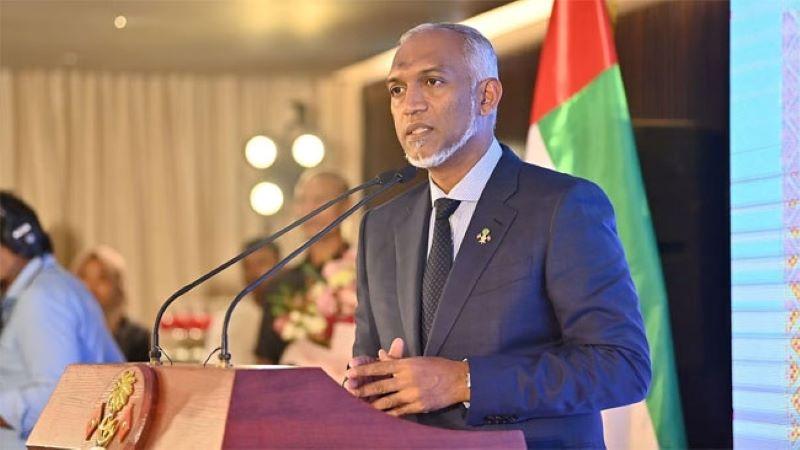
In a landmark media event, Maldives President Mohamed Muizzu set a new global record for the longest press conference by a head of state, addressing reporters continuously for nearly 15 hours. The extensive session, held on Saturday, began at 10:00 a.m. local time and concluded well past midnight, surpassing the previous record of 14 hours set by Ukrainian President Volodymyr Zelenskyy in 2019. The record-breaking press meet comes amid growing scrutiny of Muizzu’s administration and his evolving stance on key bilateral relationships, particularly with India.
According to the President’s Office, Muizzu, aged 46, fielded hundreds of questions from journalists, many submitted in advance by citizens, pausing only briefly for prayer breaks. “The conference extended past midnight, a new world record by a president, with President Muizzu continuously responding to questions from journalists,” the official statement read.
This feat has now replaced the previous benchmarks: Ukraine's 14-hour session in 2019 and a 7-hour session held by Belarusian President Alexander Lukashenko prior to that. Beyond the duration, Muizzu’s press conference is being seen as a strategic move to project transparency, reinforce press freedom under his administration, and address controversies that have shadowed his presidency since taking office in 2023.
The timing of the press event also coincided with the Maldives' rise in the 2025 World Press Freedom Index published by Reporters Without Borders (RSF), moving up two places to the 104th rank out of 180 countries. This marginal improvement is being touted by the administration as evidence of a shift toward greater openness, though critics argue the gains are too modest to signal major systemic change.
A key highlight of the marathon session was Muizzu’s updated position on military agreements signed between the Maldives and India by the previous government. Known for his pro-China stance and for spearheading the controversial 'India Out' campaign during the 2023 elections, Muizzu’s election platform had prominently featured allegations that such agreements undermined Maldivian sovereignty.
However, during the press conference, Muizzu appeared to soften his position. He acknowledged that bilateral discussions with India were ongoing and emphasized that there were no “serious concerns” regarding the military pacts. He reiterated his earlier pledge to disclose the contents of these agreements but pointed to confidentiality clauses as the primary reason for the delay in making them public.
“Bilateral discussions are ongoing. There are no issues. However, we are trying to disclose through the bilateral discussions since I made a pledge. There are no concerns,” Muizzu stated, according to the Maldivian news portal adhadhu.com. This apparent backtracking has not gone unnoticed. Former Foreign Minister and current opposition MDP (Maldivian Democratic Party) chief Abdulla Shahid sharply criticized the president’s statements. In a strongly worded post on social media platform X, Shahid accused Muizzu of misleading the public during his campaign and called for a formal apology.
“After years of false claims, President Muizzu has now confirmed there are no ‘serious concerns’ with the bilateral agreements between the Maldives and India. He won the 2023 presidential election on the back of a campaign that claimed these agreements threatened our sovereignty and territorial integrity,” Shahid wrote. Observers note that Muizzu’s latest statements mark a significant departure from his earlier combative tone regarding India. It also raises questions about the true motivations behind the ‘India Out’ movement, which critics argue was politically opportunistic rather than based on substantive threats to national interest.
The change in narrative could reflect both international pressure and domestic political recalibration, especially as Muizzu’s administration seeks to balance relations between global powers India and China, both of which have vested interests in the Indian Ocean region.
For the Maldives, a nation of strategic maritime significance, the management of foreign military presence and diplomatic partnerships continues to be a subject of domestic debate and international attention. Muizzu’s record-breaking press conference, while notable for its length, also appears aimed at resetting some of these narratives while boosting his image as an accessible and transparent leader. Whether the long session yields lasting political goodwill remains to be seen, but it has undeniably placed both the Maldivian president and his country's diplomatic positioning under the global spotlight.