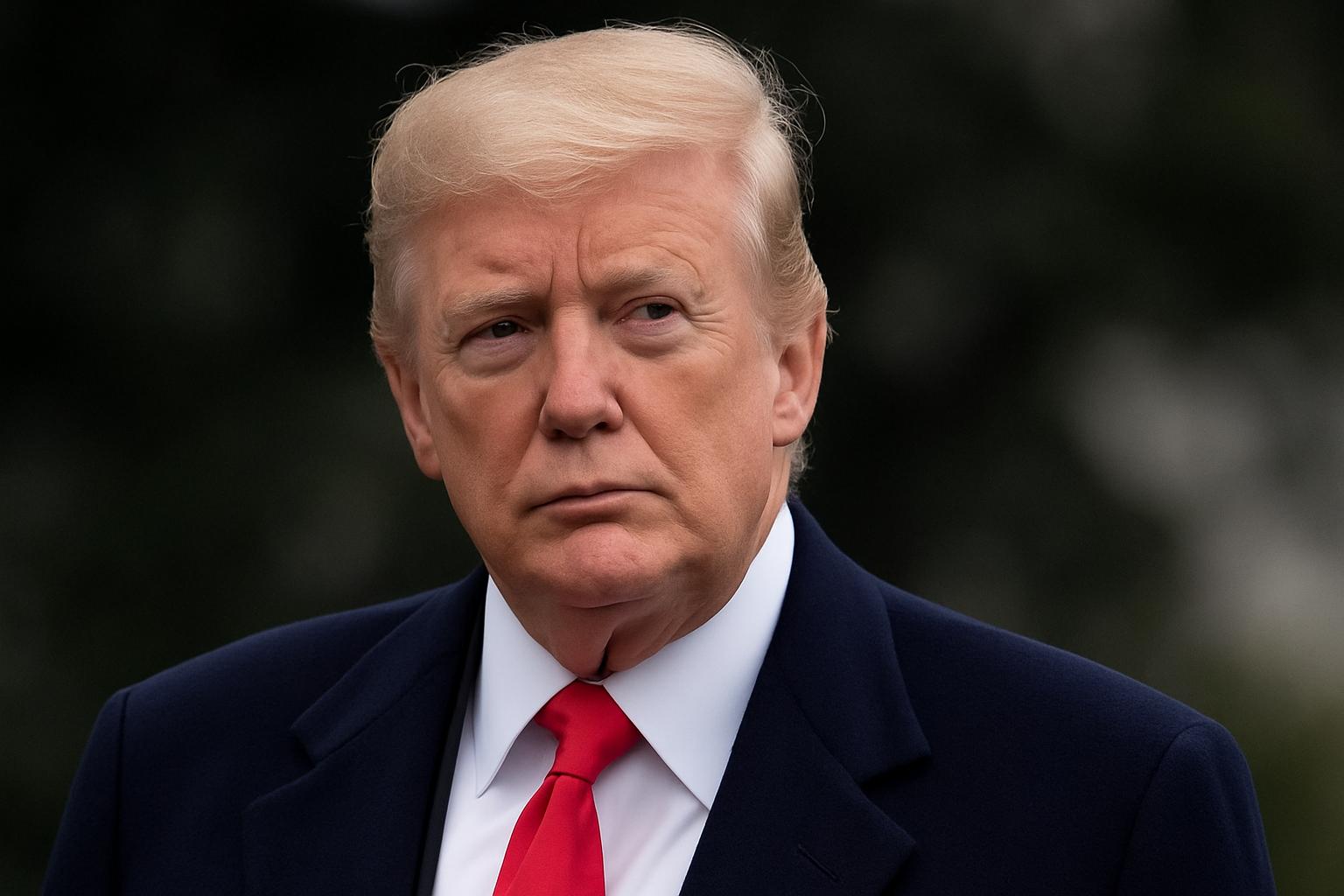
Washington: US President Donald Trump has announced sweeping new tariffs on imported pharmaceutical products, a move that could trigger widespread consequences for the global drug trade and India’s pharmaceutical sector in particular. Effective October 1, 2025, Washington will impose tariffs of up to 100 percent on branded and patented pharmaceutical drugs unless the manufacturing companies are building their production facilities within the United States. The president emphasized that “building” will be defined as projects where ground has already been broken or construction is underway. In such cases, those products would be exempt from the new tariffs.
This announcement reflects Trump’s renewed push to link trade policies with domestic manufacturing and national security arguments. It also marks an extension of his tariff-driven economic strategy, which in recent months has included import duties on other industries. In addition to pharmaceuticals, new tariffs will also cover furniture, kitchen cabinets, bathroom vanities, and heavy trucks, with duties ranging from 25 percent to 50 percent. The president stated that these measures are necessary “for national security and other reasons,” framing the initiative as a way to reduce the budget deficit and strengthen domestic supply chains.
For India, the implications of this policy are serious. America is India’s largest export destination for pharmaceutical goods, accounting for nearly one-third of the country’s total pharma exports. In the financial year 2024, Indian drugmakers exported pharmaceutical products worth $27.9 billion, of which $8.7 billion went to the US. Data from the first half of 2025 showed that Indian exports to America were already on track to grow further, with shipments of $3.7 billion in just six months. This underlines the dependence of Indian companies on the US market.
India plays a vital role in ensuring affordable healthcare in the United States. Reports suggest that nearly 45 percent of all generic medicines and about 15 percent of biosimilars used by American patients originate from Indian manufacturers. Companies such as Sun Pharma, Dr Reddy’s Laboratories, Aurobindo Pharma, Zydus Lifesciences, and Gland Pharma earn between 30 to 50 percent of their global revenues from the US market. These firms could see their margins squeezed if tariffs are broadened to include complex generics or specialty drugs, even though the announcement explicitly targeted branded and patented pharmaceuticals, a segment generally dominated by multinational giants.
The broader concern lies in the uncertainty about how strictly these measures will be applied and whether they will eventually extend beyond branded drugs. The US healthcare system relies heavily on Indian generics to control drug prices and maintain supply levels. If costs rise sharply due to higher tariffs or compliance pressures, the burden is likely to fall on American consumers and insurance providers. Drug shortages and inflation in the healthcare sector could follow, given that Indian companies often operate on thin profit margins and may have little room to absorb additional costs.
From India’s perspective, the situation places its pharmaceutical exporters in a difficult position. While some of the larger firms may explore expanding operations in the US to sidestep the tariffs, this involves significant capital investment and regulatory challenges. Smaller companies that lack the resources to build American plants might lose out on a critical export market. This development comes against the backdrop of previous tariff actions, where Washington had already imposed higher duties on several Indian goods, including penalties linked to energy trade with Russia.
Analysts suggest that the move may trigger both economic and diplomatic negotiations, as India could push back against measures that disproportionately impact its high-value export sector. Given that Indian pharmaceuticals have become an essential part of US drug supply chains, trade talks are likely to intensify in the months leading up to October 2025. For now, Indian drugmakers and policymakers are watching closely, aware that this decision could reshape a partnership that has long been built on mutual benefit—affordable medicines for the US and vital revenue for India.