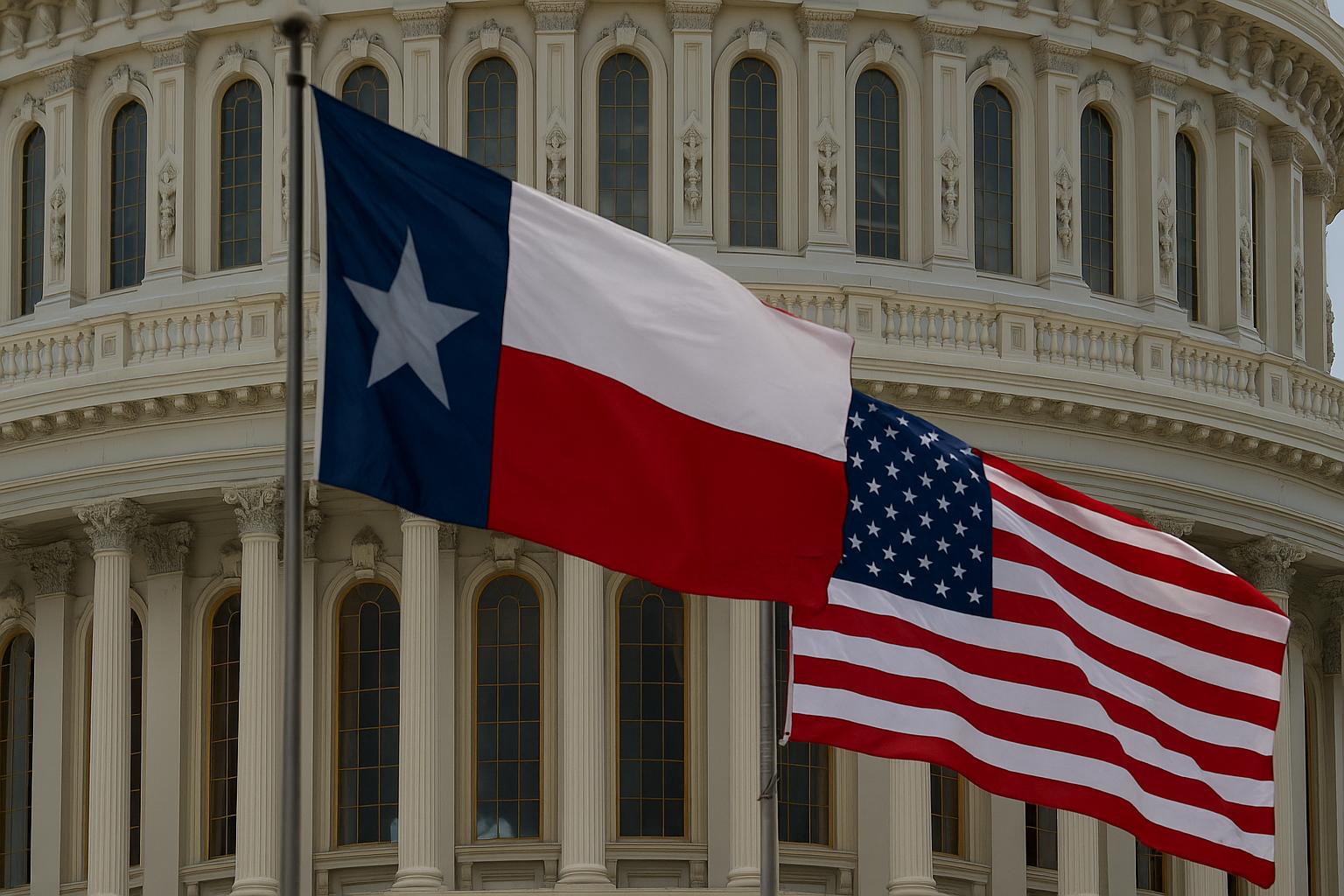
President Donald Trump has directed the deployment of 400 members of the Texas National Guard to Illinois, Oregon, and other states, according to an announcement from Illinois Governor J.B. Pritzker on Sunday night. The decision has drawn strong criticism from Pritzker and other state officials, who accuse the administration of overstepping its authority and disregarding state sovereignty. The governor revealed that the federal government did not coordinate with Illinois before the decision was made, a move he described as an unprecedented act of aggression against the state.
In a statement, Governor Pritzker said that no one from the federal government reached out to discuss or coordinate the deployment. “We must now start calling this what it is: Trump’s invasion,” he said, condemning the federal government’s decision to override the state’s objections. He asserted that the plan began with federal agents and now extends to using federalized members of the Illinois National Guard and troops from Texas. The governor described this as a violation of state authority and a troubling step toward militarizing domestic policy.
The announcement came a day after Pritzker disclosed that the administration planned to nationalize hundreds of National Guard members against state wishes. Alongside the Texas deployment, the federal government has ordered the mobilization of at least 300 Illinois National Guard members for a 60-day period to protect federal properties in Illinois. According to a Pentagon memorandum shared by Illinois officials, the troops are being deployed to secure federal facilities, including immigration enforcement centers and other federal assets.
Pritzker stated that Trump’s Department of War issued what he described as an ultimatum, forcing him either to call up the Illinois National Guard or face the nationalization of those members under federal command. He criticized this approach as coercive and politically motivated, accusing the administration of bypassing state leadership and undermining the principles of federalism. The Department of Homeland Security had earlier requested the deployment of up to 100 troops to protect Immigration and Customs Enforcement facilities in Illinois, a move that had already sparked controversy among local leaders.
The Illinois governor called on Texas Governor Greg Abbott to withdraw support for Trump’s decision, arguing that it is inappropriate for a president to deploy another state’s military forces without the consent of the receiving state. “There is no reason a president should send military troops into a sovereign state without their knowledge or consent,” Pritzker stated. His remarks echoed growing frustration among state and local officials who see the move as a federal overreach that could escalate tensions rather than promote security.
Chicago Mayor Brandon Johnson also denounced the decision, saying that deploying National Guard troops from Texas would only intensify conflict. He described it as part of what he called the administration’s unconstitutional attack on local governance. Both Pritzker and Johnson have consistently opposed the use of the National Guard for law enforcement purposes, arguing that local and state authorities are capable of maintaining order without military intervention.
Pritzker reaffirmed his position that Illinois does not need military troops on the ground, emphasizing that local law enforcement agencies are already coordinating effectively to ensure public safety. He referenced ongoing efforts around the Broadview Immigration and Customs Enforcement facility, stressing that state and local authorities are working together to protect both security and the right to peaceful protest. “I will not call up our National Guard to further Trump’s acts of aggression against our people,” he said.
The conflict between Trump and Illinois officials marks another chapter in an ongoing battle over federal power and state rights. The president has repeatedly claimed that he has the authority to send the National Guard into cities like Chicago to address violence or unrest, despite legal rulings that challenge such actions. A recent court decision in California found that Trump exceeded his authority when he sent Guard members to Los Angeles earlier in the year, but the administration continues to assert federal power over state forces in cases it deems necessary for national security.
Trump has previously stated that he could “straighten out Chicago” if state leaders requested federal intervention, blaming Governor Pritzker and other officials for opposing his proposals. “All they have to do is ask us,” he said. “I want to go into Chicago, but I have this incompetent governor who doesn’t want us.” In response, Pritzker has said he will not ask for assistance, arguing that doing so would provide Trump with legal justification to claim state cooperation in court.
The standoff highlights the broader political divide between the White House and Democratic-led states over issues of federal control, law enforcement, and the use of military power domestically. As tensions escalate, Illinois leaders have pledged to resist what they view as federal intrusion into state affairs, while the administration insists its actions are necessary to maintain national order and protect federal property. The situation remains fluid, with both legal and political implications that could shape the future balance of power between states and the federal government.