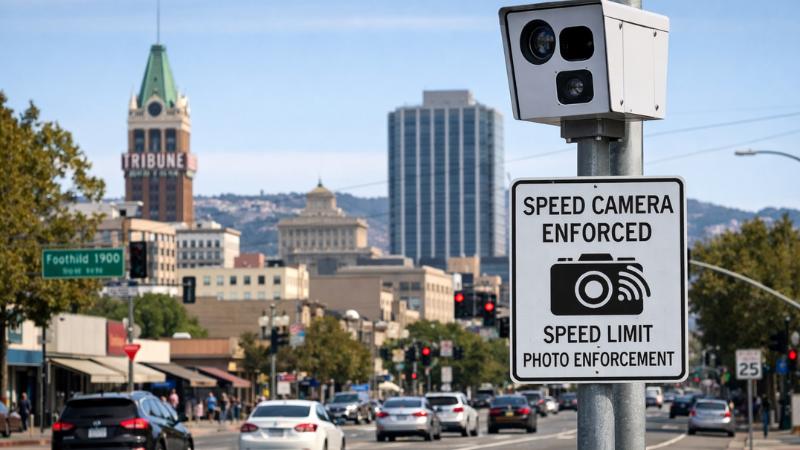
Oakland has activated 18 new speed cameras across the city as part of a broader effort to address speeding and improve traffic safety on local streets. The cameras are now operational, though drivers will not immediately receive citations. City officials have implemented a 60-day grace period during which warnings will be issued instead of fines, allowing motorists time to adjust to the new enforcement system.
Mayor Barbara Lee is scheduled to outline additional details of the initiative during a news conference on Friday morning, where officials are expected to explain how the program will function and what residents can expect once full enforcement begins. The rollout marks a significant step in Oakland’s ongoing efforts to reduce serious injuries and fatalities caused by traffic collisions.
City transportation officials said the locations for the cameras were selected based on extensive traffic and safety data. The 18 sites have experienced a disproportionate number of severe and fatal collisions in recent years or regularly see thousands of vehicles traveling at least 11 miles per hour above the posted speed limit each day. Excessive speed has been identified as a leading factor in many of the city’s most serious crashes, particularly on busy corridors with high pedestrian and cyclist activity.
The new cameras are intended to encourage drivers to slow down and comply with posted speed limits, rather than to generate revenue. Officials emphasized that the goal of the program is prevention, not punishment, and that reducing vehicle speeds can significantly lower the risk and severity of crashes. Studies cited by the city indicate that even small reductions in speed can greatly improve survival rates in collisions involving pedestrians and cyclists.
During the 60-day grace period, registered vehicle owners who exceed the speed threshold at camera locations will receive informational notices by mail. These notices are designed to educate drivers about the new system, highlight the dangers of speeding, and provide an opportunity to change driving behavior before citations carry financial penalties. Once the grace period ends, speeding violations recorded by the cameras will result in mailed tickets.
Oakland officials have framed the program as part of a long-term traffic safety strategy aimed at making streets safer for everyone, including drivers, pedestrians, and cyclists. The city has faced persistent challenges with high-speed traffic on certain arterial roads, and leaders say traditional enforcement methods alone have not been sufficient to address the problem consistently.
As the cameras begin operating, city leaders are urging residents to be mindful of speed limits and to view the program as a public safety measure rather than a punitive one. Further information about fine amounts, payment options, and any potential income-based adjustments is expected to be shared as the program moves closer to full enforcement.