Bullet Ant Ritual of the Amazon
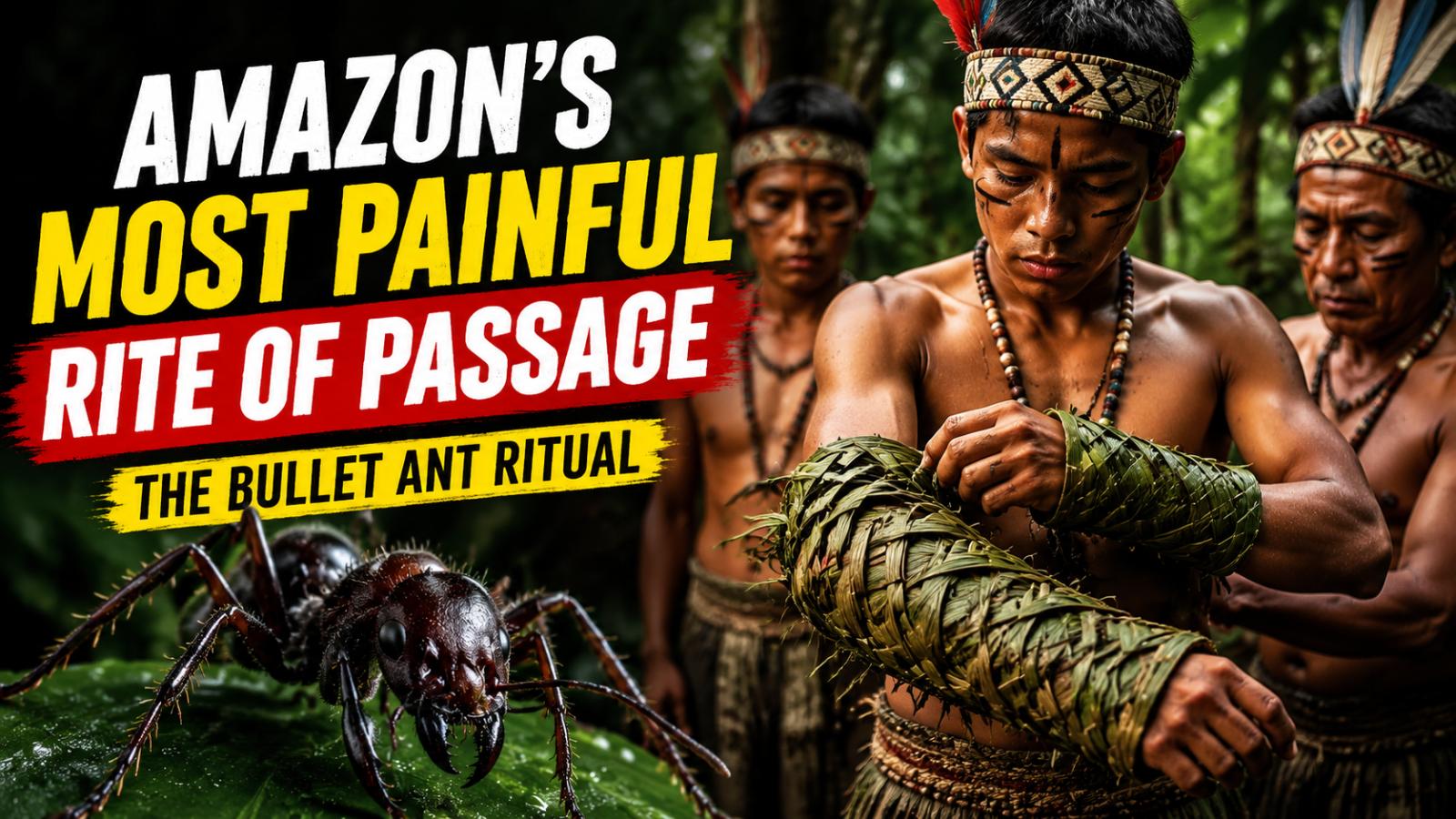
Deep in the Amazon rainforest, the Sateré-Mawé people practice one of the most intense coming-of-age rituals known to anthropology. The ceremony centers around the bullet ant, an insect whose sting is widely considered among the most painful in the world. For the community, however, the ritual is not about pain alone but about discipline, courage, and readiness for adulthood.
The Role of Bullet Ant Gloves
During the initiation process, young boys are required to wear handmade gloves woven from natural fibers and leaves. Inside these gloves, dozens or even hundreds of bullet ants are carefully placed. Before the ritual begins, the ants are temporarily subdued using natural methods. Once the ceremony starts, the ants become active, and the initiate must endure repeated stings for several minutes.
Meaning Behind the Pain
The Sateré-Mawé believe the experience builds mental strength and resilience. Enduring the stings without showing weakness is seen as proof of maturity and readiness to take on adult responsibilities. The ritual is not performed as punishment but as a structured cultural test designed to shape character and identity within the tribe.
Physical and Sensory Experience
When the ants sting, the pain is immediate, intense, and overwhelming. Many describe it as a sharp, burning sensation that radiates through the body. The experience requires immense control, as participants must remain still while the ants continue to sting. This phase of the ritual is considered the most challenging and symbolic moment of transformation.
Cultural Significance
For the Sateré-Mawé community, the ritual is deeply rooted in tradition and passed down through generations. It represents a connection between nature, survival skills, and social identity. The ceremony also reinforces unity within the tribe, as elders guide and support the younger participants throughout the process.
Modern Interpretation
While outsiders often view the ritual as extreme, within the culture it holds spiritual and social importance. Anthropologists see it as a powerful example of how human societies use physical endurance tests to mark transition into adulthood. Despite modernization around the Amazon, the tradition continues to be preserved as a core part of Sateré-Mawé identity.