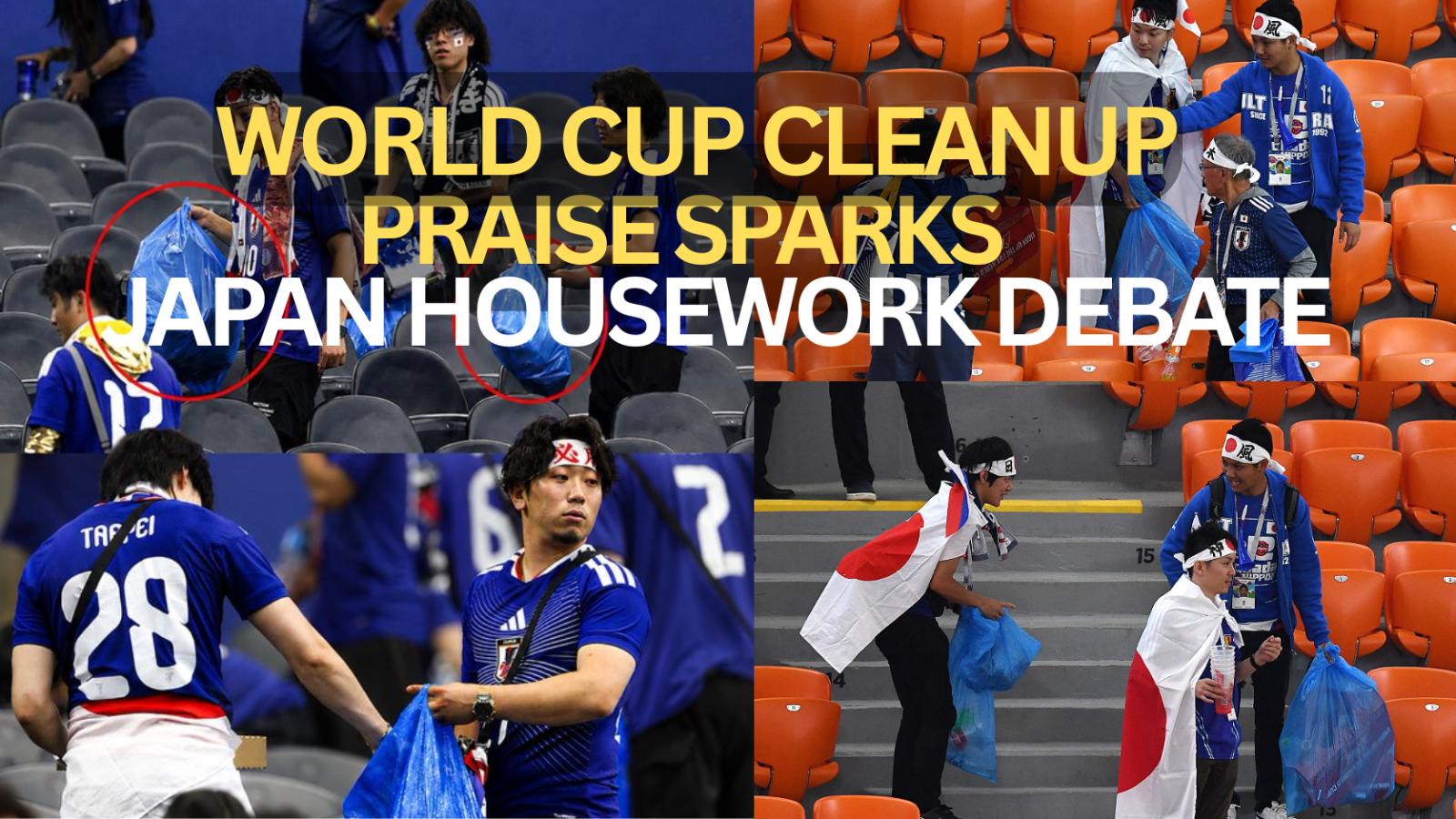
The Japan housework gender gap is drawing renewed attention after images of Japanese fans cleaning stadium seats during the FIFA World Cup 2026 won international praise. A viral post argued that the same sense of responsibility should extend to chores and unpaid care work at home.
Viral post links stadium cleanup to unpaid work
The post urged Japanese men to “share unpaid care work at home,” arguing that their contribution to household responsibilities remains among the lowest internationally. Based on the engagement figures supplied, it received more than two million views and 61,000 likes.
Some social media users suggested that public cleanup may be more appealing because it earns visible praise, while routine domestic work frequently goes unnoticed. Others responded with satire, suggesting that husbands might help more if they wore a national team uniform while completing household chores.
Japan housework gender gap remains wide
The discussion reflects a broader imbalance in Japanese households. OECD data from 2021 showed that women in Japan spent more than three hours a day on unpaid work, compared with 47 minutes for men.
A Japanese government survey from 2021 found an even wider difference in dual-income households with children younger than six. Women spent more than seven hours a day on housework and caregiving, while men spent less than two hours.
Why the World Cup cleanup debate matters
The criticism is not aimed at ending Japan’s stadium cleanup tradition. Instead, it asks whether the civic values celebrated in public are being practiced consistently in private life.
By connecting football culture with household responsibilities, the discussion has transformed an internationally admired World Cup tradition into a wider debate about gender equality, caregiving and the fair division of chores in Japanese homes.